Visualize points and routes with GeoJSON in Amazon Quick Sight layer maps

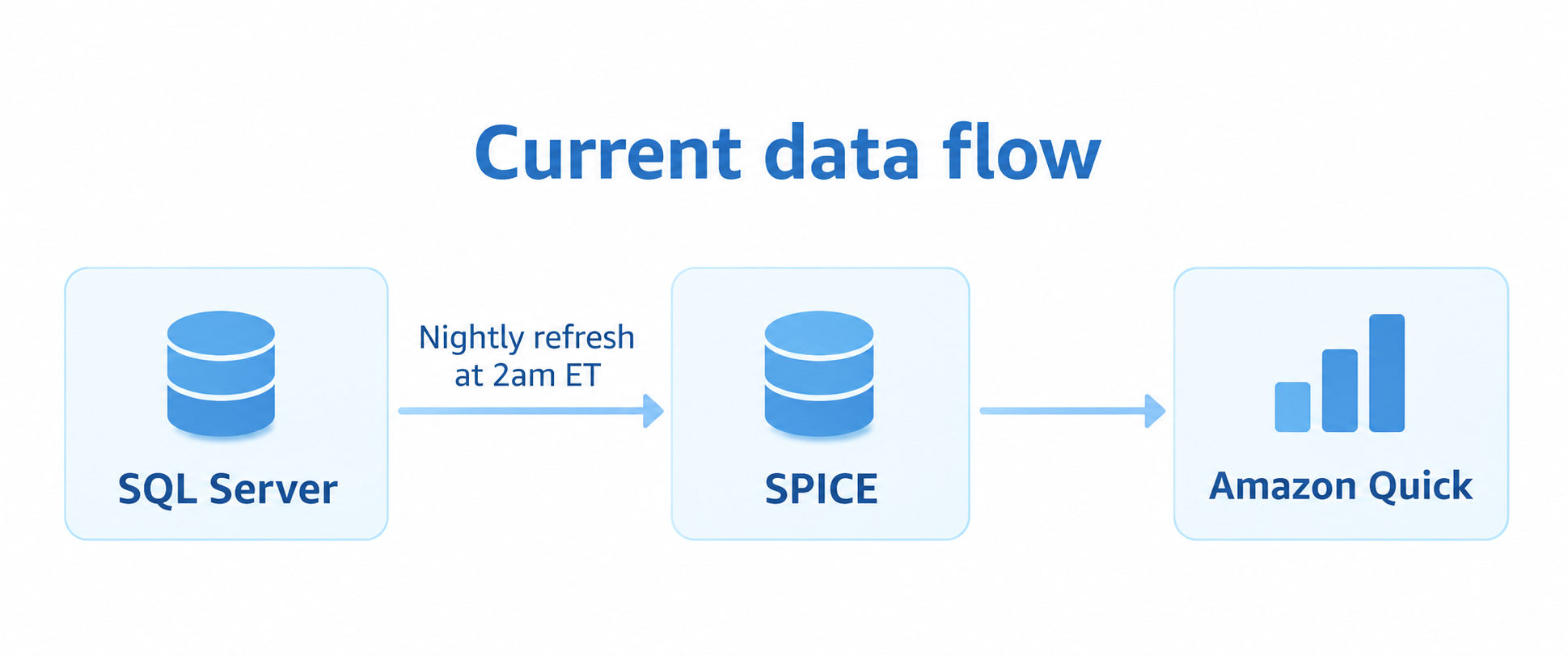
With Amazon Quick Sight layer maps, you can now plot points and routes, like store locations across a city or flights leaving an airport. Geospatial maps help businesses spot patterns that are tied to location, like how a region is performing or where customers are concentrated. Amazon Quick Sight supports this with multiple map types, … Read more
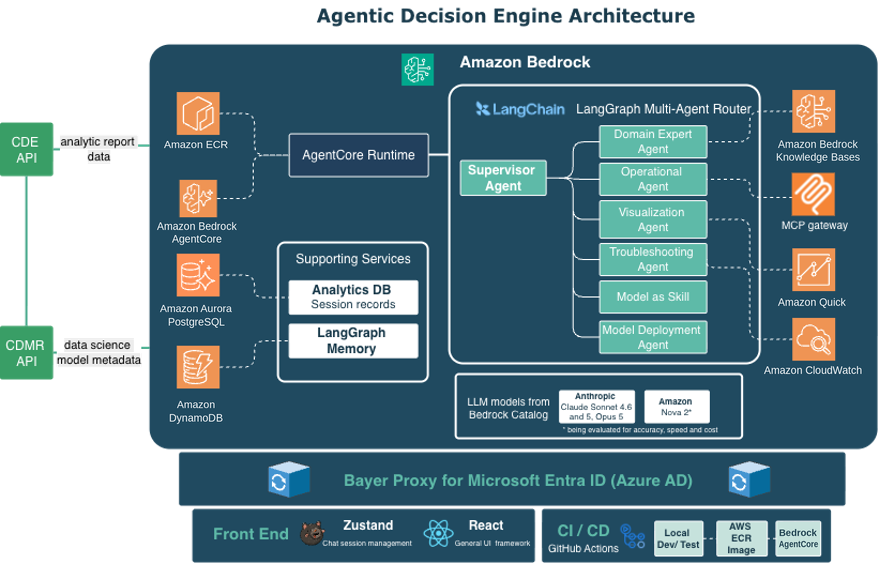

How Bayer Crop Science built an agentic decision engine on Amazon Bedrock AgentCore with AWS Unified Operations

Plant breeding decisions depend on data that spans genomics, field trials, imagery, environmental conditions, and model outputs. Bayer Crop Science runs hundreds of machine learning (ML) model configurations against this data across crops, regions, and teams, and each run needs to be repeatable and governed. To meet that requirement, Bayer built the Connected Decision Engine … Read more

Amazon Polly delivers a major upgrade to its Generative engine

Amazon Polly Generative engine now offers more natural and accurate speech output. We’re introducing an upgrade to the Amazon Polly Generative engine that delivers more expressive, more accurate speech output with low latency. The upgrade adds 14 new voices across 9 locales, including general availability of Generative voices in Hindi and Finnish for the first … Read more

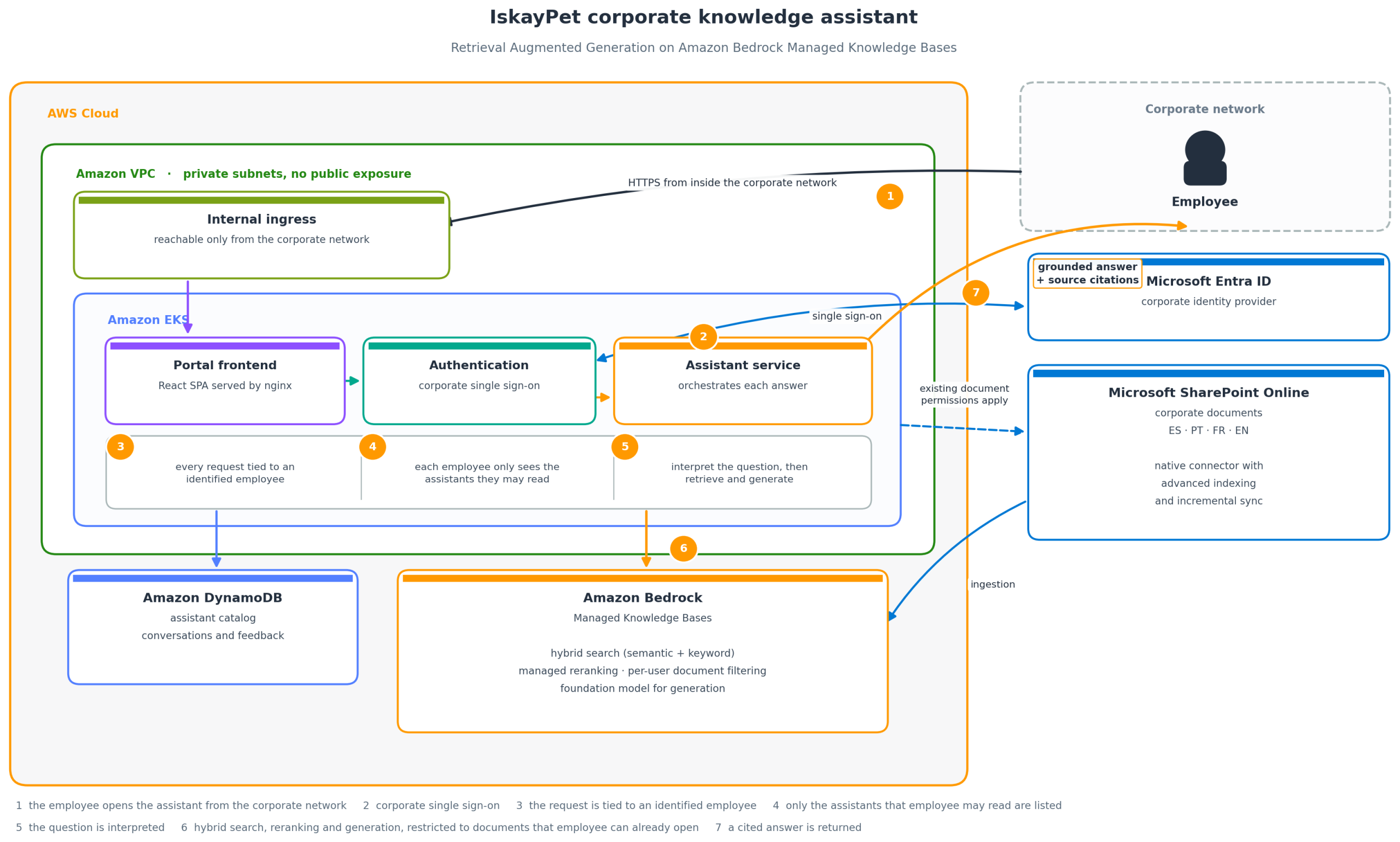
How IskayPet unified corporate knowledge with Amazon Bedrock Managed Knowledge Bases

IskayPet’s office teams had a knowledge challenge. Answers to everyday operational questions, such as a return policy, a veterinary protocol, or an onboarding step, lived in hundreds of Microsoft SharePoint documents spread across four languages and three countries. Finding the right information in large document repositories took a long time. Every new store, country, or … Read more

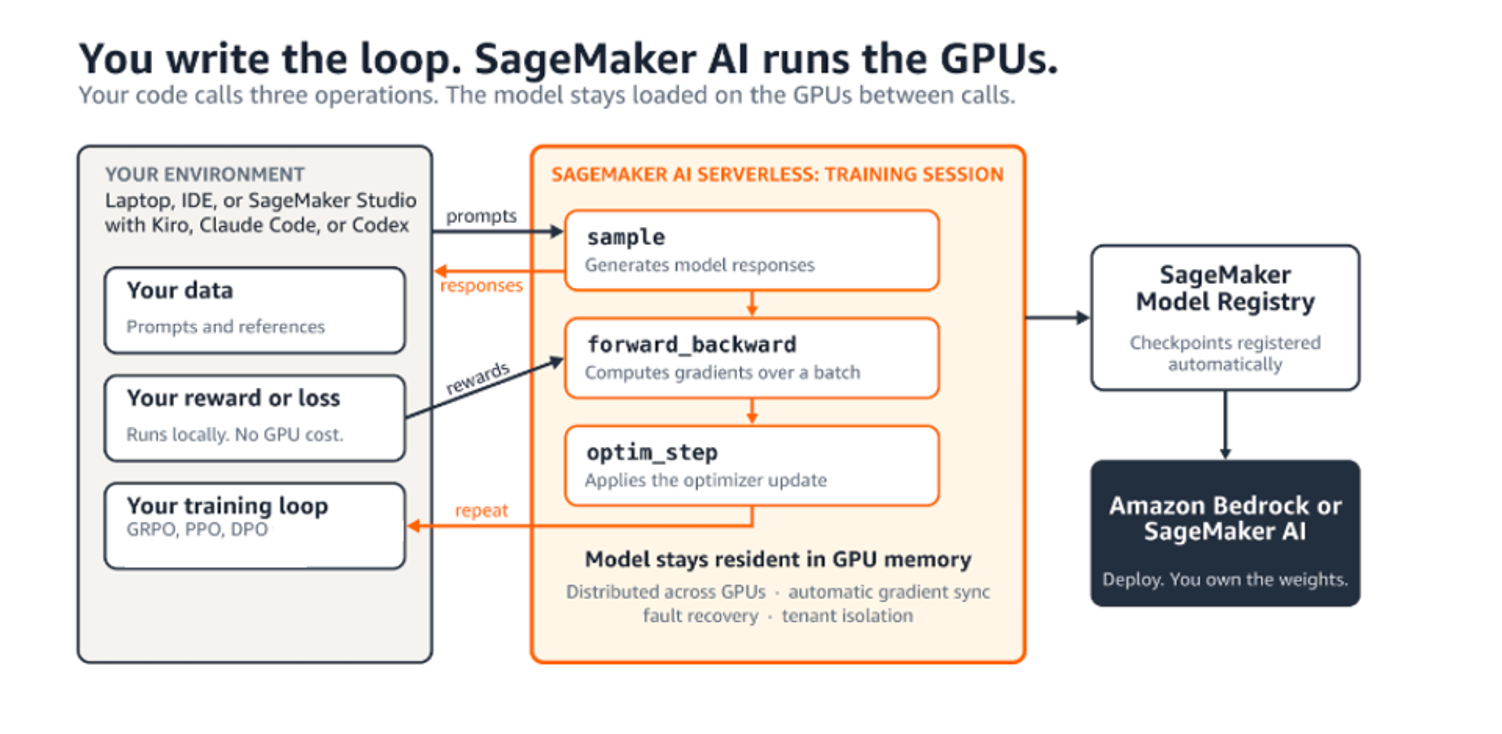
Announcing new ways to customize models with SageMaker AI, without managing GPUs

Companies getting real results from AI aren’t only using foundation models (FMs) off the shelf. They’re customizing open-weight models using post-training techniques such as reinforcement learning. A model trained on your business context, product catalog, or clinical vocabulary will be more accurate for your task and cost less to run. When you build agents, your … Read more

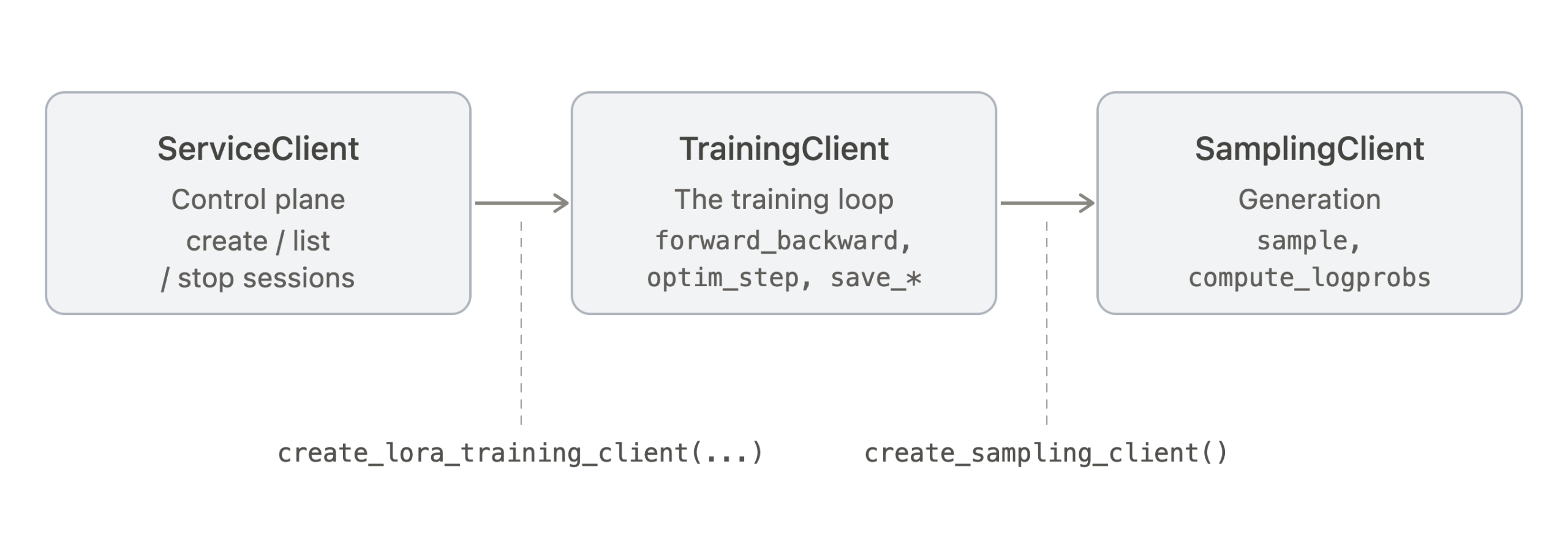
Write your own training loop — without managing GPUs — with Amazon SageMaker training session APIs

Fine-tuning a large language model (LLM) today usually forces a tradeoff between training loop control and operational simplicity. With fully managed services you select a base model, provide data and hyperparameters, and the service owns everything else, which works well when a standard, prepackaged recipe fits your problem. Less managed services give you more control, … Read more

Deploy AI in a HIPAA-eligible environment with Amazon Quick

Healthcare organizations want the same thing from AI that every other business wants: faster answers, less manual work, and insights that reach decision-makers in time to act on them. However, what makes the healthcare industry different is that the data is uniquely complex, deeply contextual, and strictly regulated. So this post starts with a few … Read more

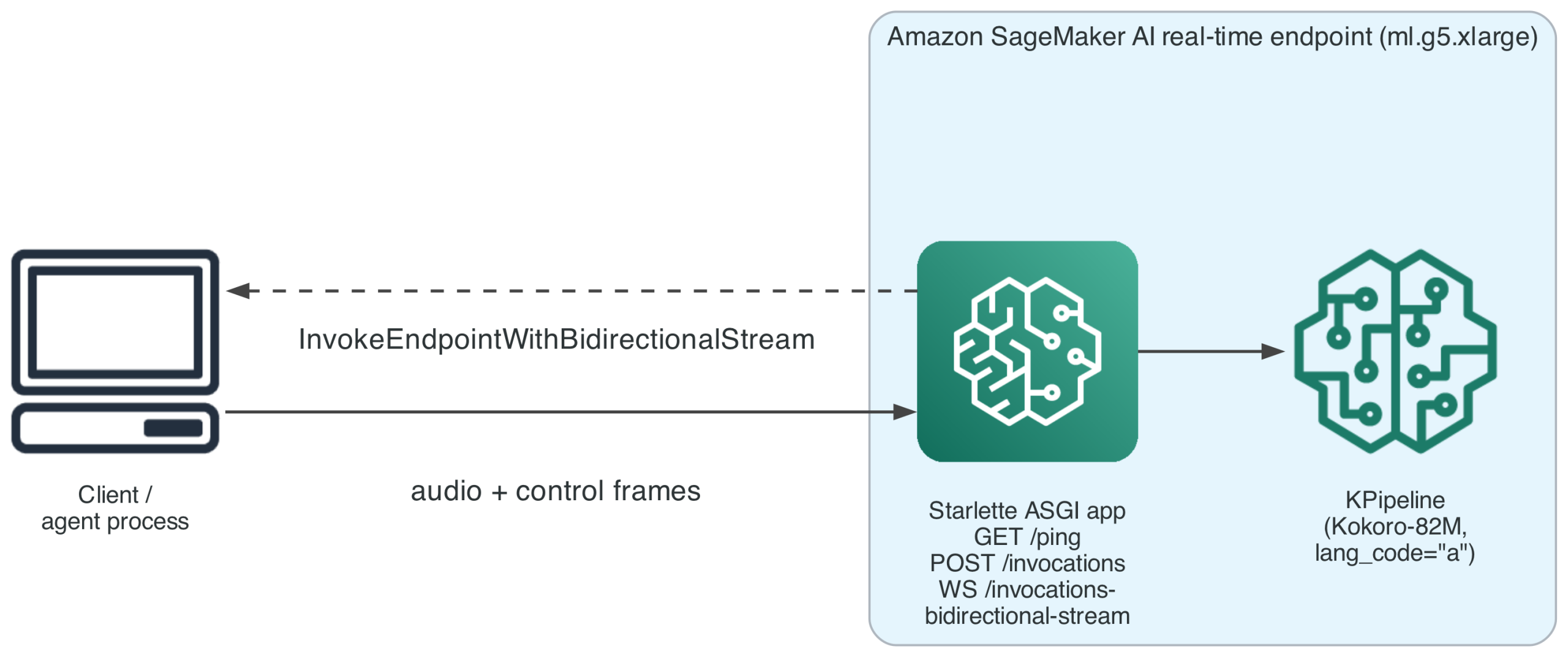
Stream low-latency speech from AI agents using Kokoro TTS on Amazon SageMaker AI

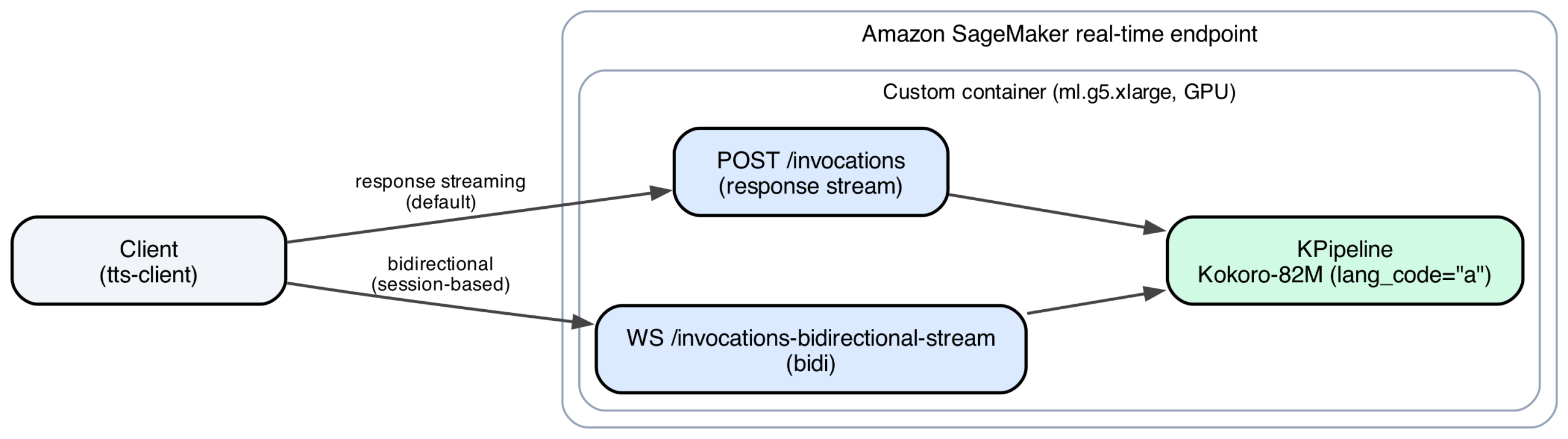
A customer asks an AI voice agent a question and waits. The agent already has an answer, it’s midway through generating a long, multi-paragraph response, but the customer hears nothing for five seconds. By the time an answer arrives, the customer is frustrated, confused, and no longer paying attention. Text-to-speech integrations create exactly that gap. … Read more

Stop guessing auto scaling targets for TTS on Amazon SageMaker AI

A traffic spike hits your self-hosted text-to-speech (TTS) endpoint, and requests start queueing. Latency climbs past your service level objective (SLO) right when the most callers are listening. The auto scaling policy behind that endpoint was supposed to prevent this, but the target value it scales on was a guess, and guesses like that fail … Read more

How Rescale built an AI triage agent with Strands Agents and AI-DLC

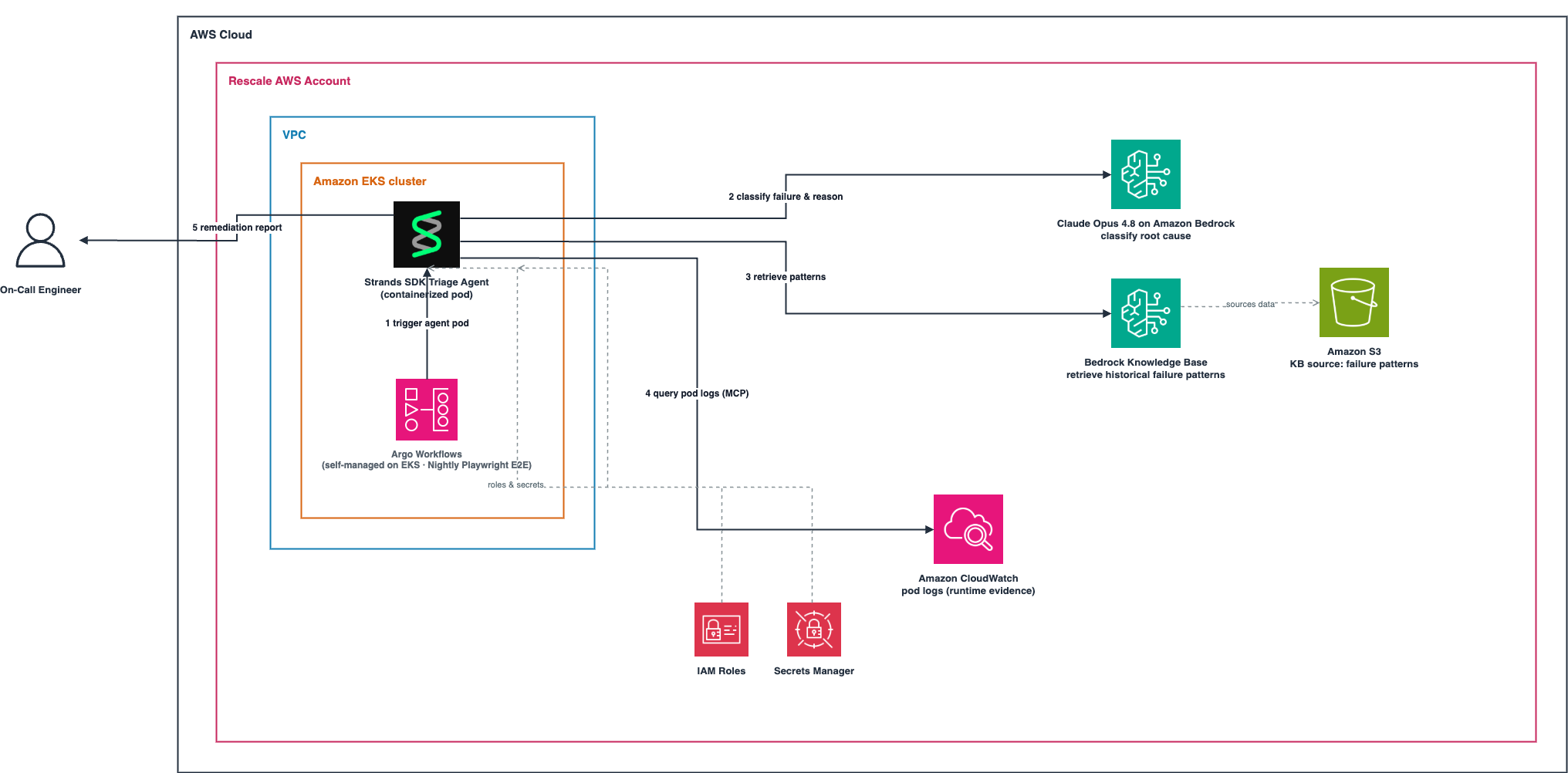
Every engineering team knows the ritual, and Rescale was no exception. A nightly test suite fails. An on-call engineer pulls the logs, classifies the root cause, and routes it to the right team, only to repeat the process the next morning. At scale, across distributed services and dozens of repositories, this ritual becomes a full-time job … Read more

Securing Quick access from corporate networks with AWS PrivateLink

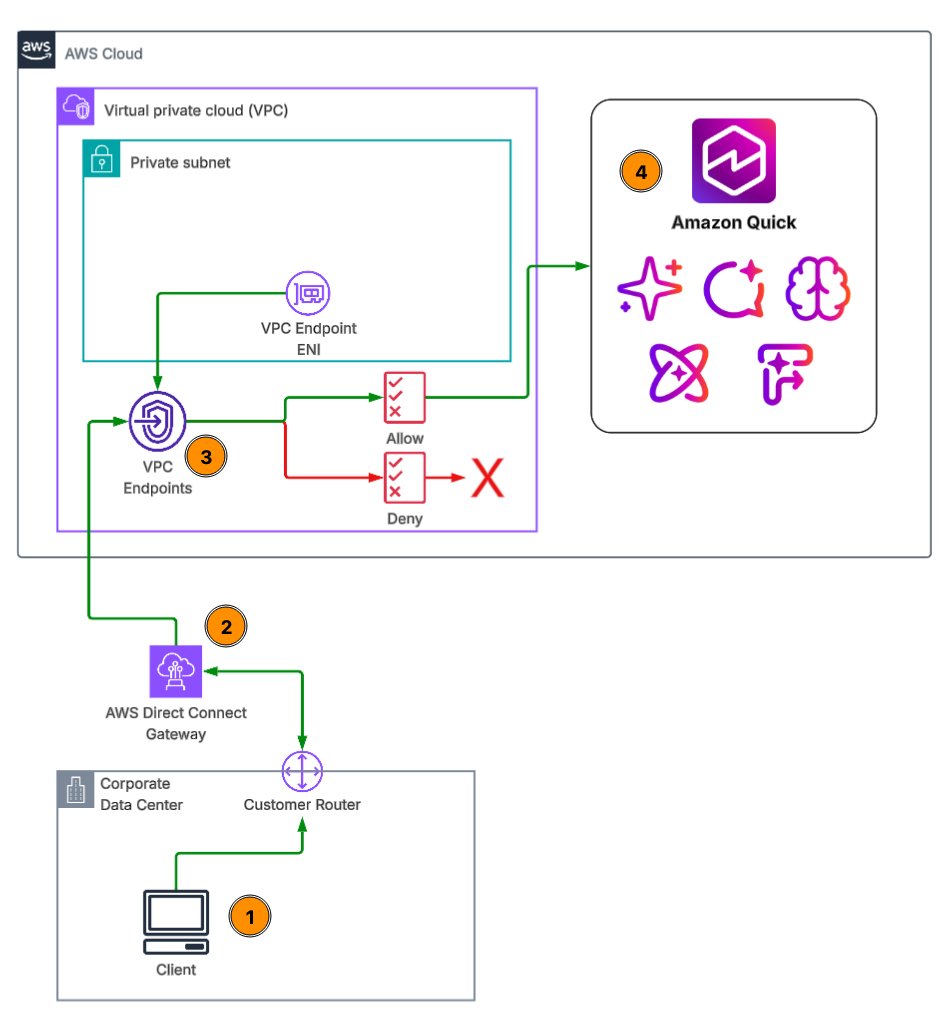
When enterprise data sits behind a corporate firewall or in a private on-premises data center, there’s no direct network path from AWS, even though the AI agents and dashboards in Amazon Quick can query virtually any data source. Administrators must make sure their sensitive enterprise data isn’t exposed to the public internet while being accessible … Read more

Adaptive agentic intelligence framework using Strands Agents

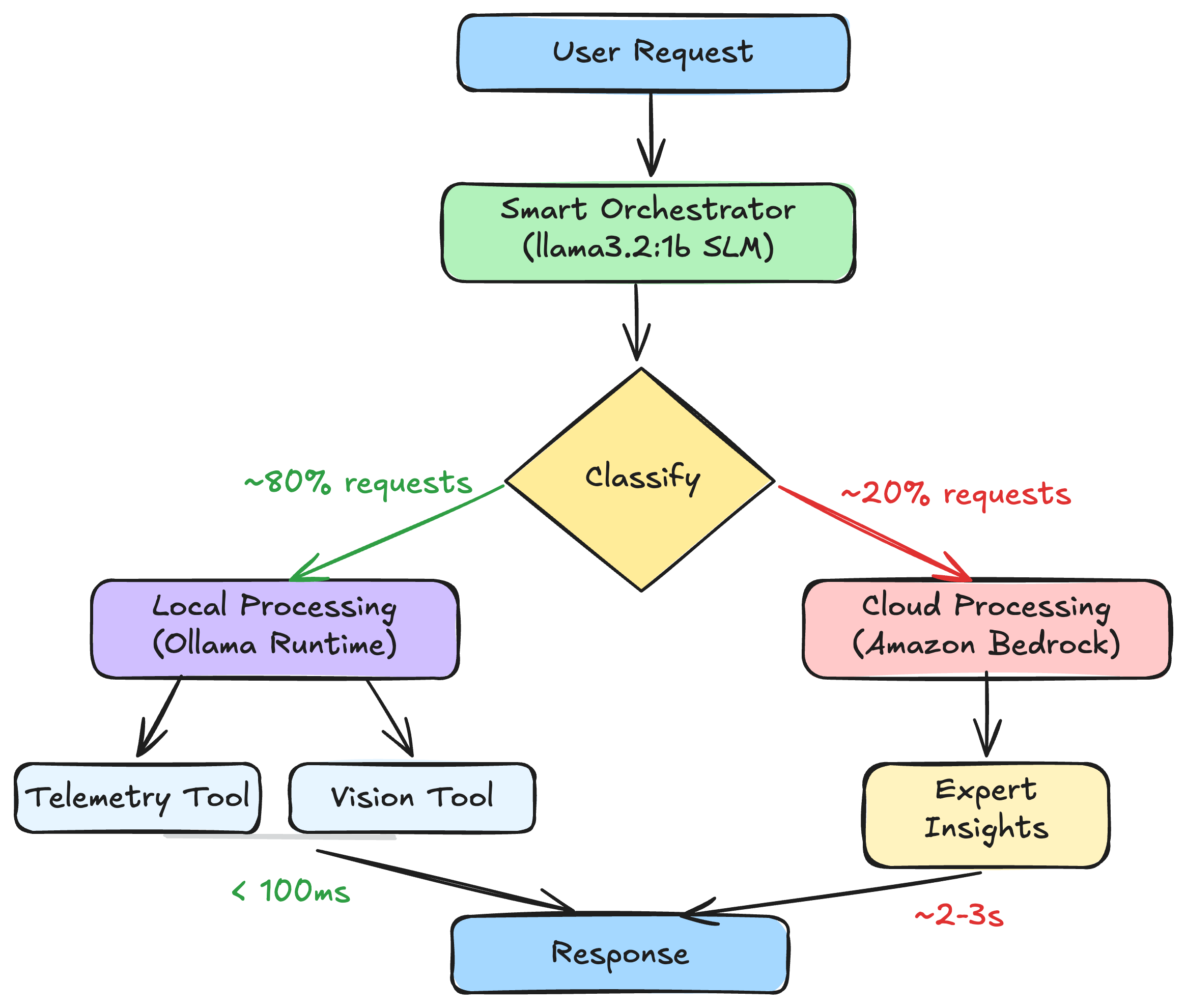
Organizations building AI agents face a common challenge: Every request, whether a routine status check or complex analysis, typically gets routed to a single large, expensive model. This one-size-fits-all approach can drive up API costs, introduce unpredictable latency, and remove the possibility of offline operation. Even routine queries that could resolve locally end up requiring … Read more

Train Qwen3 on AWS Trainium with torchtitan

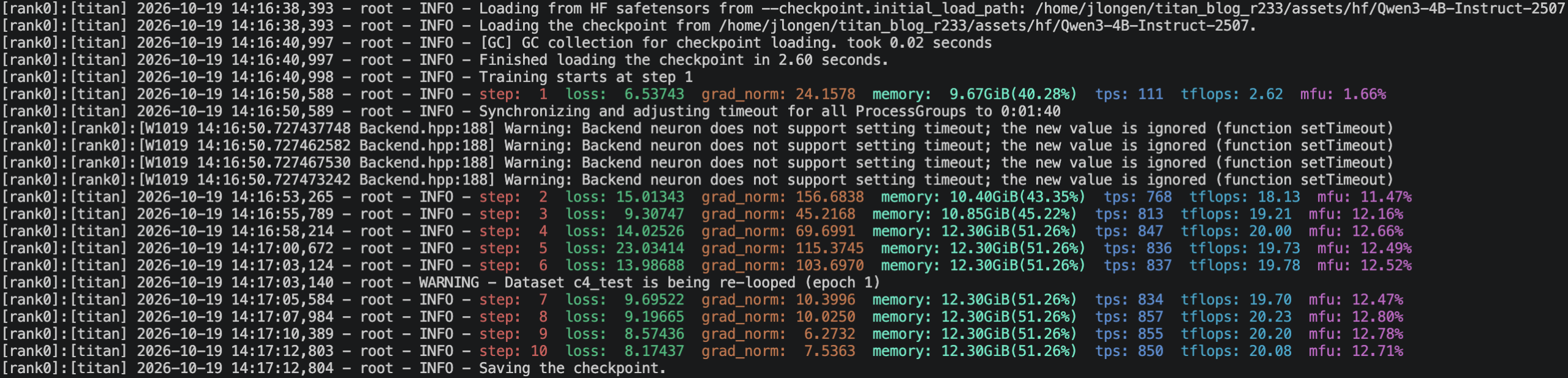
Using torchtitan on AWS Trainium means using it the way you always have. TorchNeuron registers Trainium as a native PyTorch device, which lets torchtitan use it through standard PyTorch interfaces. You can use these configurations to pre-train from random initialization or fine-tune published weights. You can also customize the model implementation and kernels for your … Read more

How U.S. Hunger connects leaders and data using Amazon Quick

For U.S. Hunger, feeding families takes more than delivering food to them. It takes understanding the people behind each request, the pressures they face, and the business that makes the mission possible. That means connecting information across the organization. Its mission is to feed families today and unite them to a healthier tomorrow. U.S. Hunger … Read more

Beyond the KV cache: Training and serving i14’s Laplace 3B linear attention model on AWS Trainium2 with native PyTorch

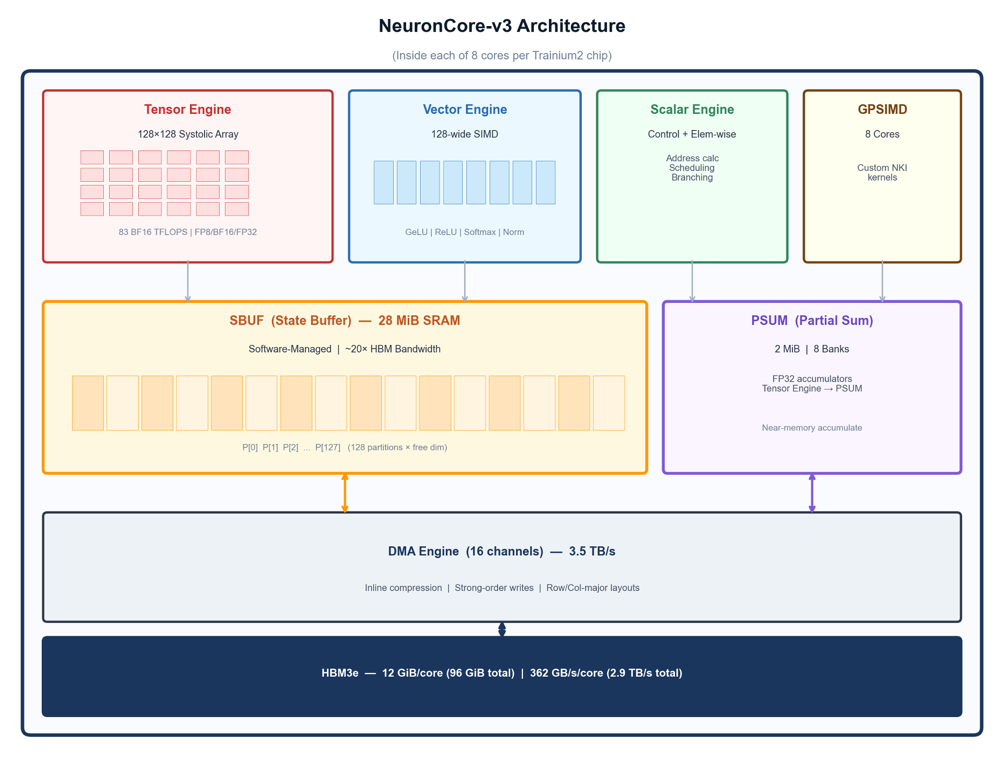
Most large language models (LLMs) use transformer architectures with softmax attention. During inference, their key-value (KV) cache grows with the conversation or document context. This can reduce concurrency, increase serving cost, and force agentic applications to discard useful history. i14 designed Laplace 3B as a linear attention alternative. Its recurrent state stays at 29.5 MB … Read more

Work management context for AI agents with Smartsheet MCP on AWS

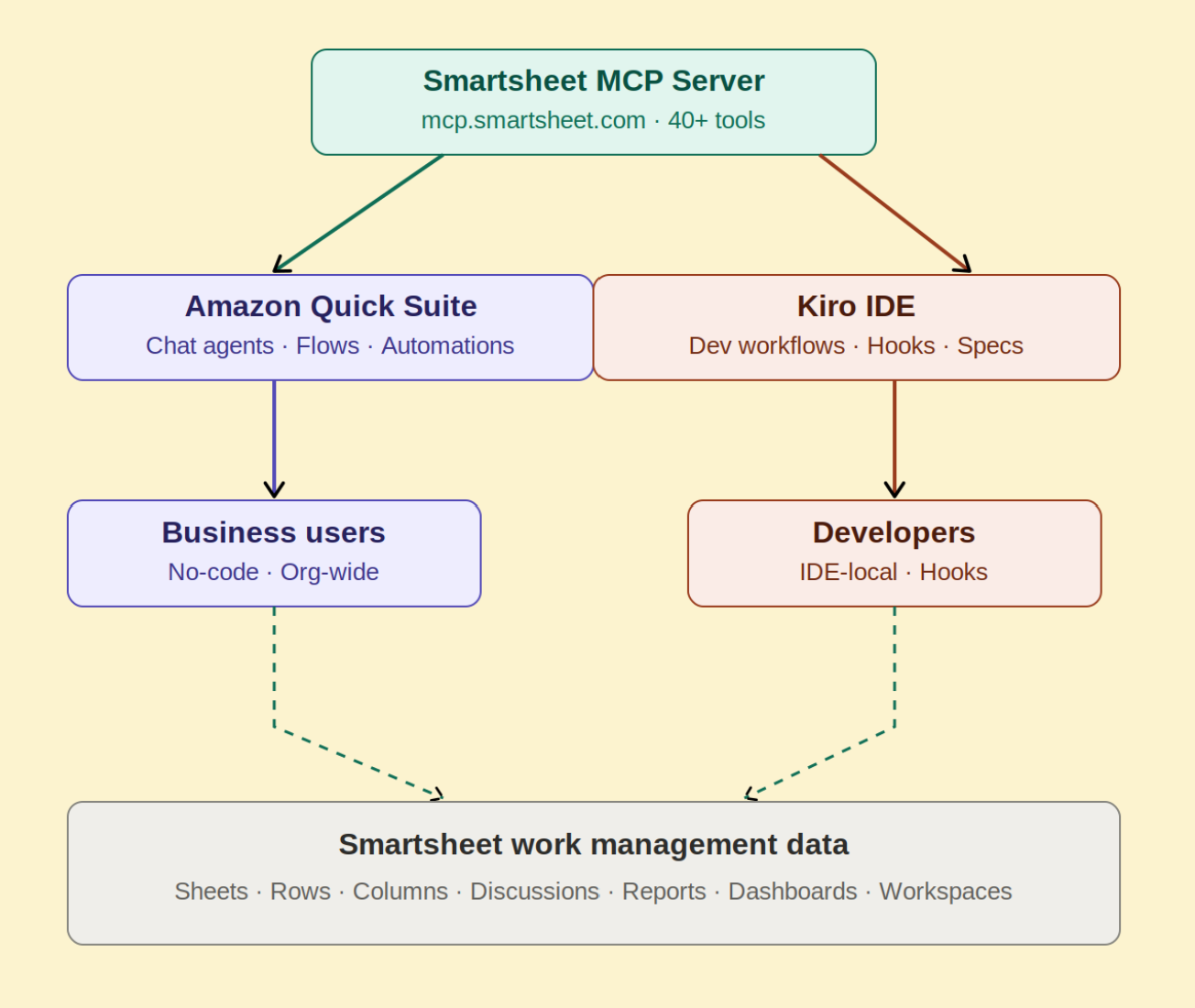
AI agents are most useful when they can act on the real work happening across your organization. Work management involves complex, cross-functional tasks such as updating project timelines, reassigning tasks, and surfacing status. AI agents can support you with these without anyone switching tools. Smartsheet, the work management platform for managing projects, portfolios, and operations, … Read more
From data to decisions: Conversational supply chain intelligence with Amazon Quick and Amazon Bedrock AgentCore

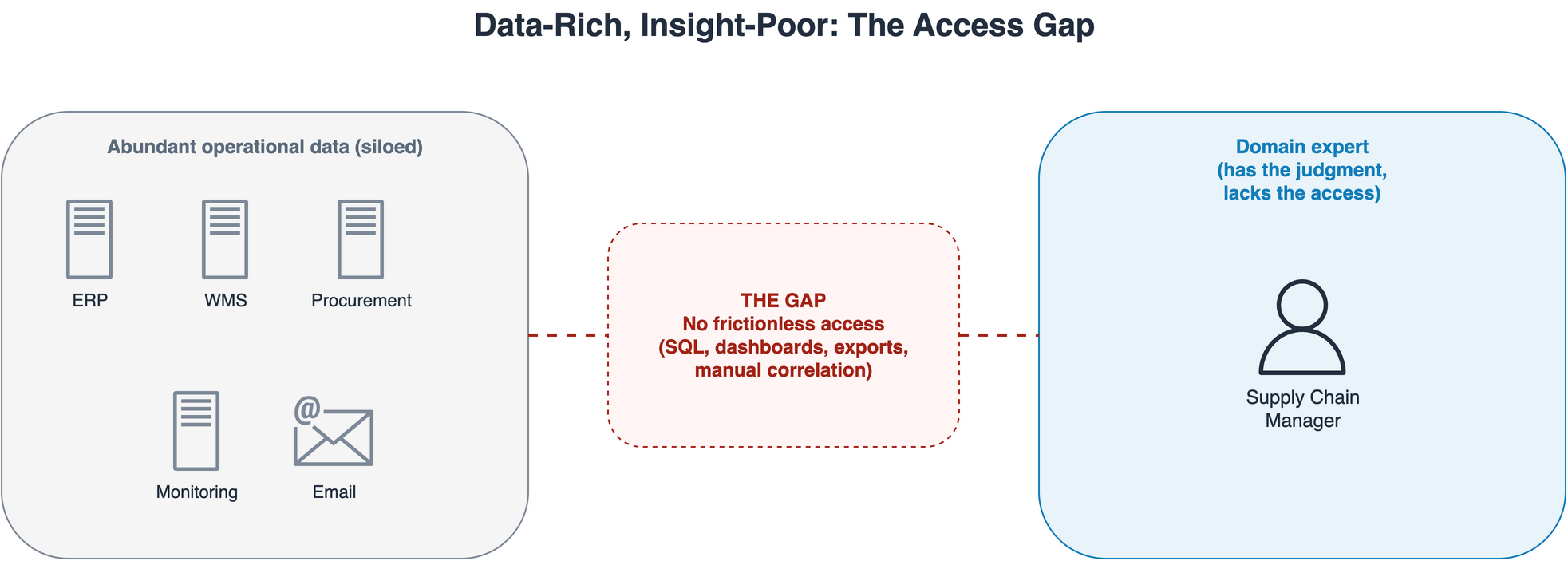
Giving supply chain teams direct access to the systems behind their decisions. Every supply chain generates constant signals: orders in approval, shifting lead times, slowing ports, drifting prices, disruptions. The problem isn’t scarce data. It’s the distance between the data and the decision-maker. Answering “which top-revenue SKUs are exposed to the current port closure, and … Read more

Fine-tuning GPT-OSS-20B for multilingual reasoning on Amazon SageMaker HyperPod

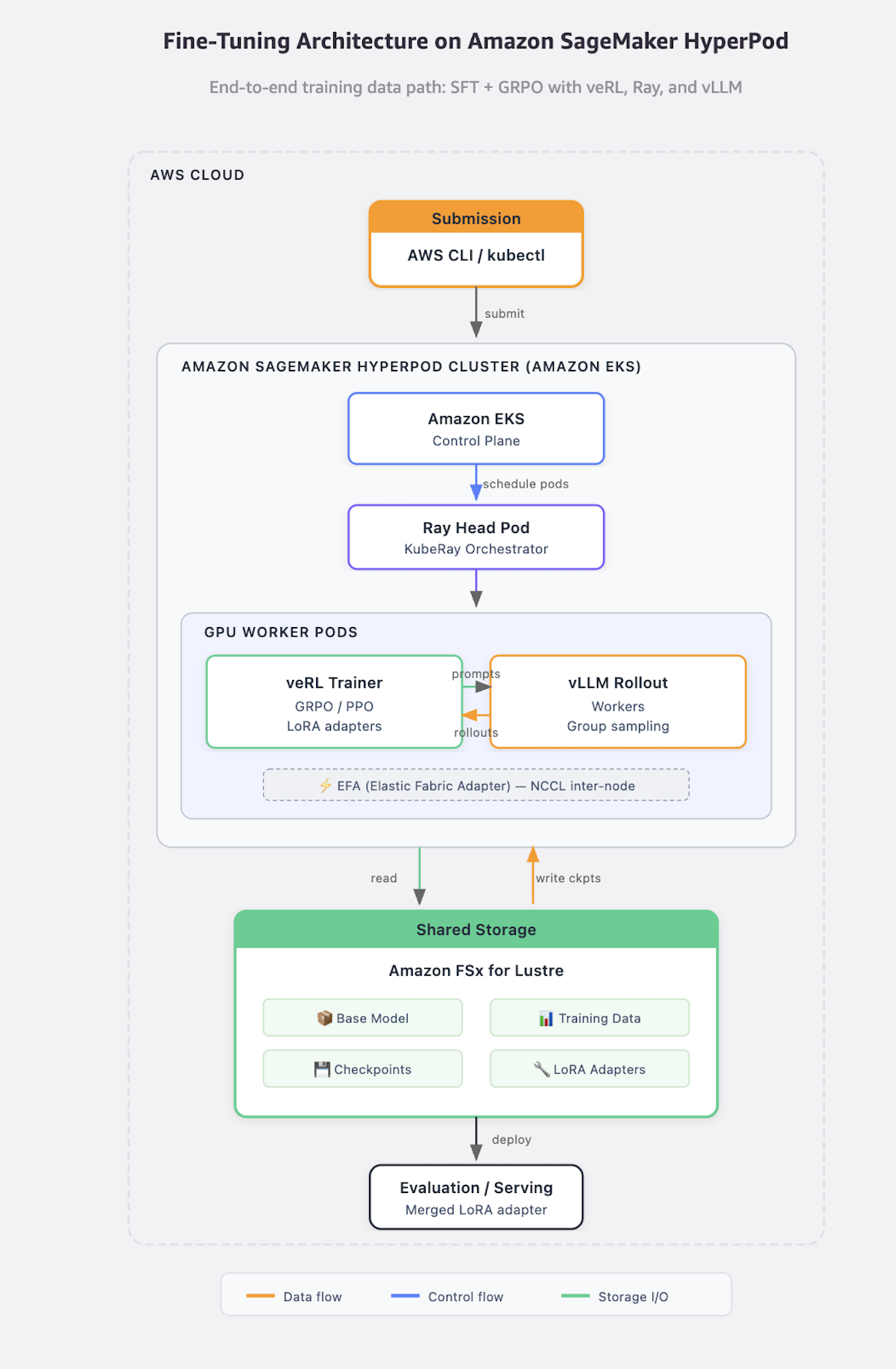
GPT-OSS-20B is an open-weight reasoning model that thinks in English. Ask it to reason in French, German, Spanish, or Italian and it acknowledges the instruction, then produces its chain-of-thought in English anyway. On a 50-example multilingual reasoning test, the base model reasoned in the correct target language only 22 percent of the time. That 22 … Read more
How Octave built a secure multi-tenant AI foundation on Amazon Bedrock

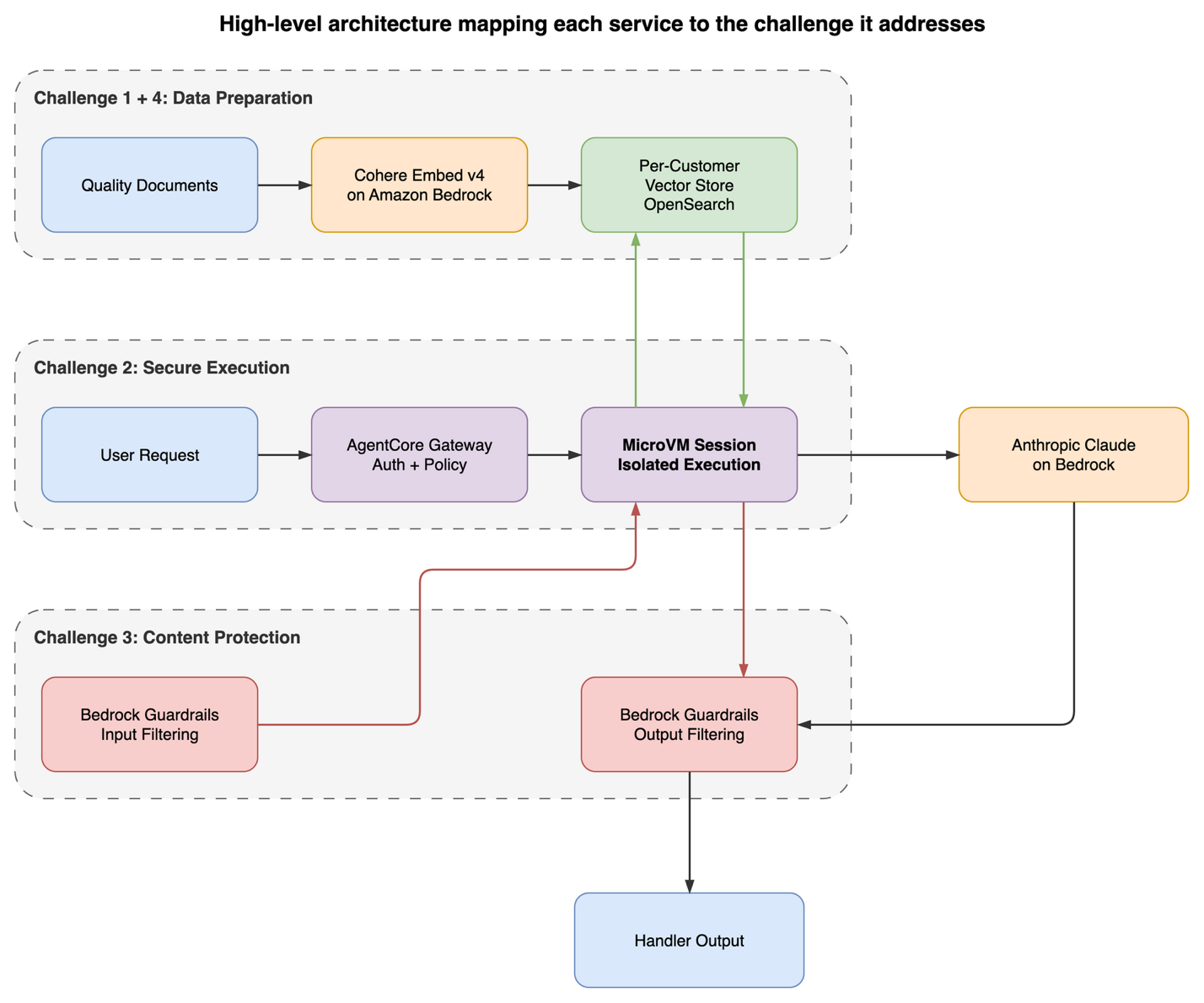
In quality management for regulated industries, the institutional memory that resolves a problem is almost always buried somewhere in a customer’s history. A similar defect investigated last year, a Corrective and Preventive Action (CAPA) that fixed the root cause, an audit finding that flagged the same gap. That knowledge sits in billions of documents no … Read more

Access OpenAI GPT models on Amazon Bedrock from Canada with cross-Region inference

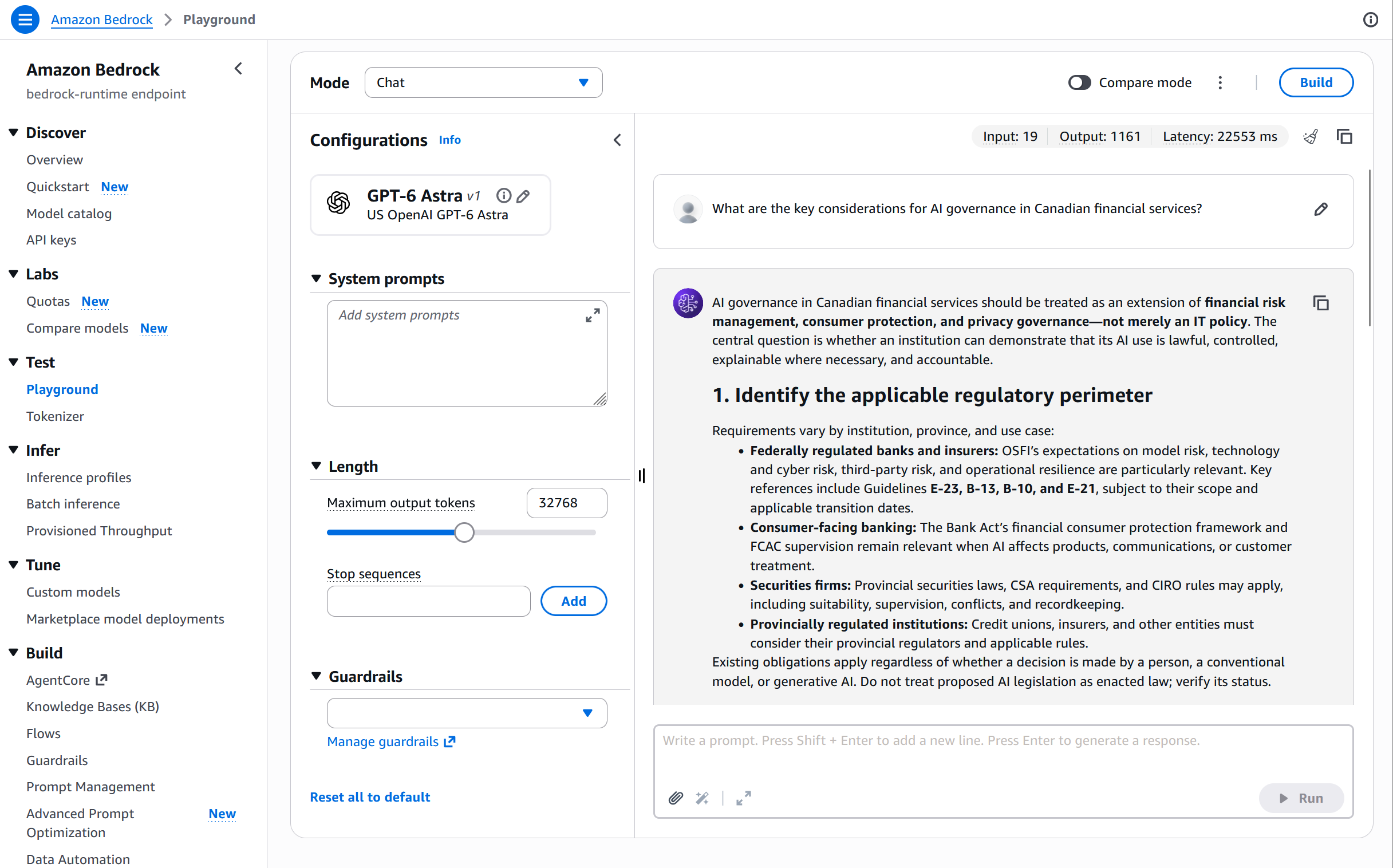
Canadian organizations building generative AI applications on Amazon Bedrock often need the latest foundation models (FMs), such as OpenAI GPT-6.1, OpenAI GPT-6, and GPT-5.6, accessible from the Canadian AWS Regions. With Amazon Bedrock cross-Region inference (CRIS), you can now access these models from Canada. OpenAI GPT-5.6 models (Sol, Terra, and Luna), GPT-6 (Astra, Sol, and … Read more

Build a semantic layer for agentic AI on AWS with Denodo and Amazon Bedrock AgentCore

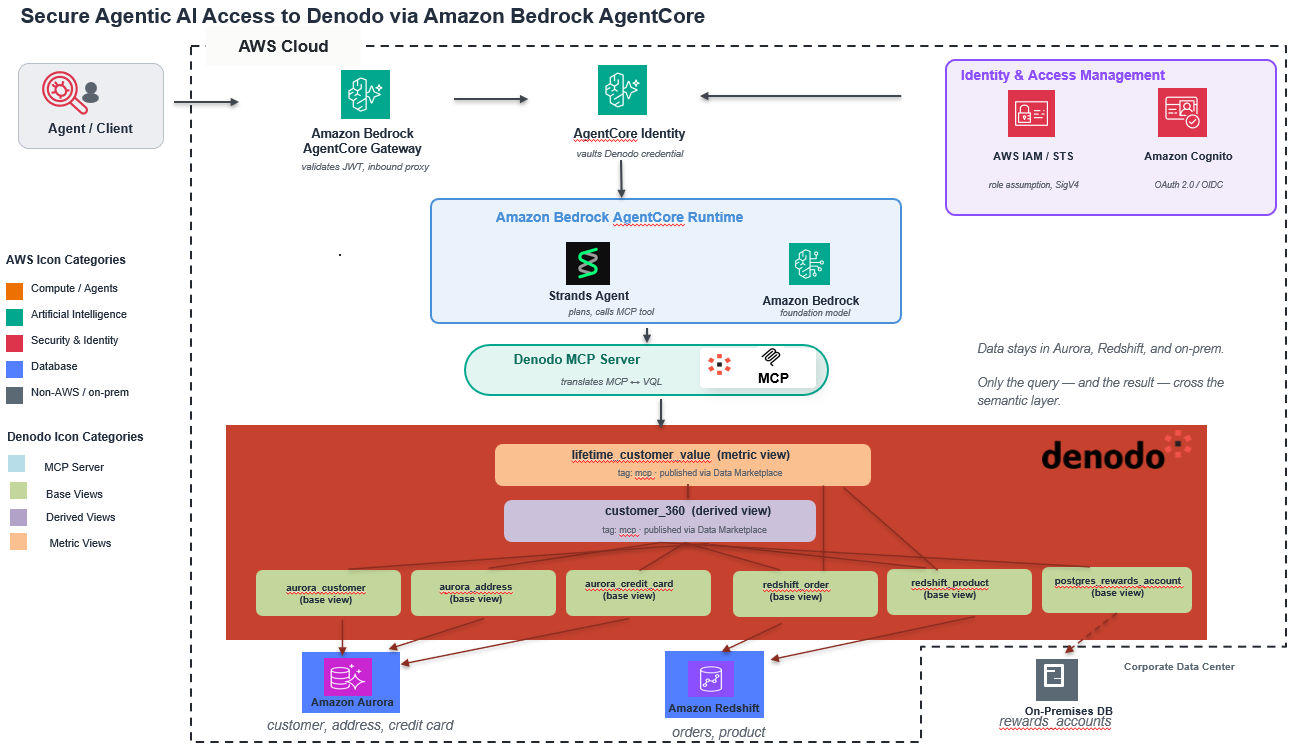
Agentic AI applications need governed access to live enterprise data. That data can live in operational systems, analytical warehouses, SaaS applications, other clouds, or on premises. In the previous post in this series, we built a semantic layer on AWS using Stardog’s knowledge graph over Amazon Aurora and Amazon Redshift. A Strands agent on Amazon … Read more

Build a semantic layer for agentic AI on AWS with Strategy Mosaic and Amazon Bedrock AgentCore

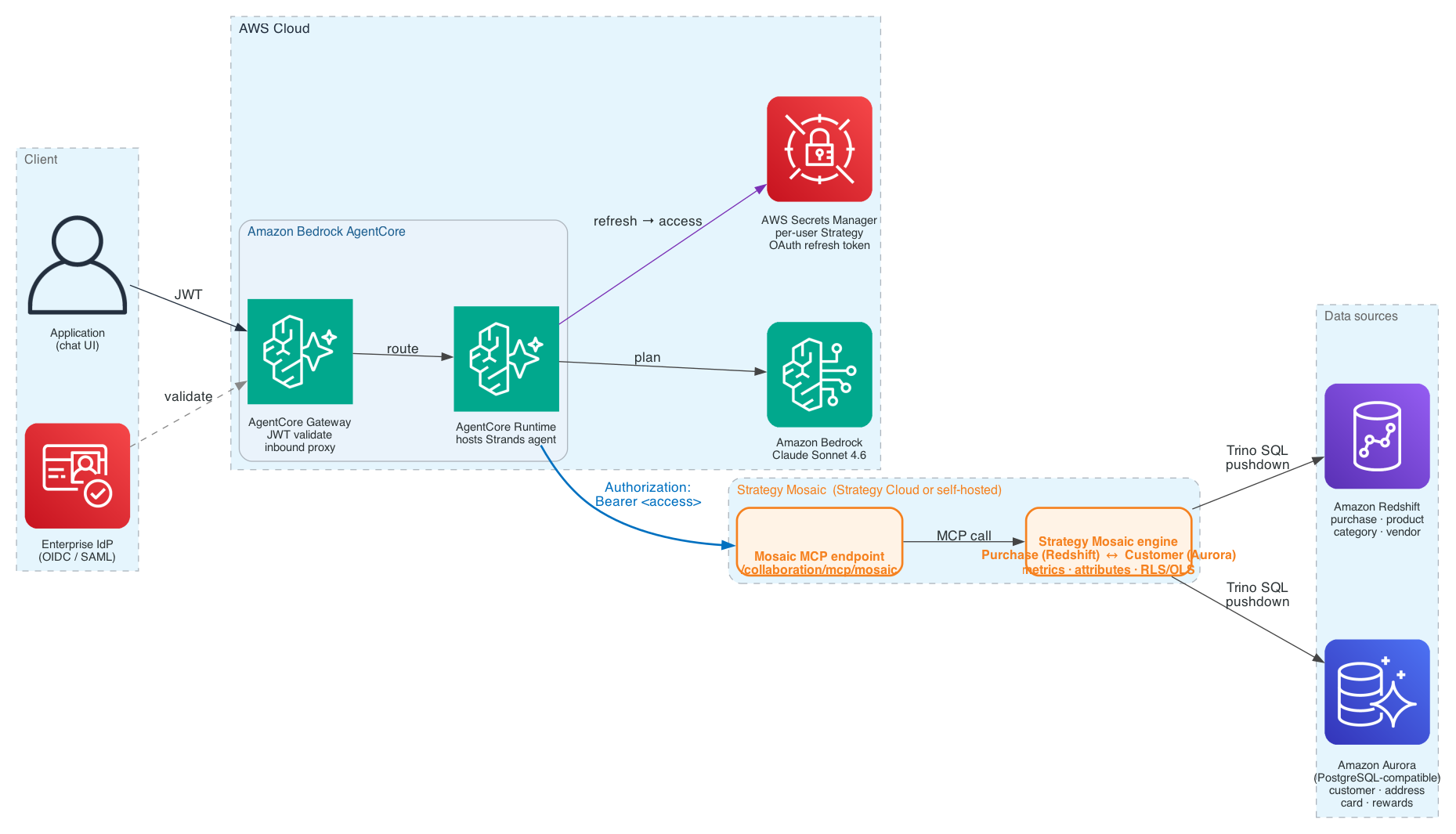
This post is co-written with Zhili Cheng, Principal Product Manager, George Earle, Director, AI Engineering, and Kyler K, Sales Engineer of Strategy. In the first post in this series, we built a semantic layer on AWS using Stardog’s knowledge graph over Amazon Aurora and Amazon Redshift and ran a Strands agent on Amazon Bedrock AgentCore … Read more

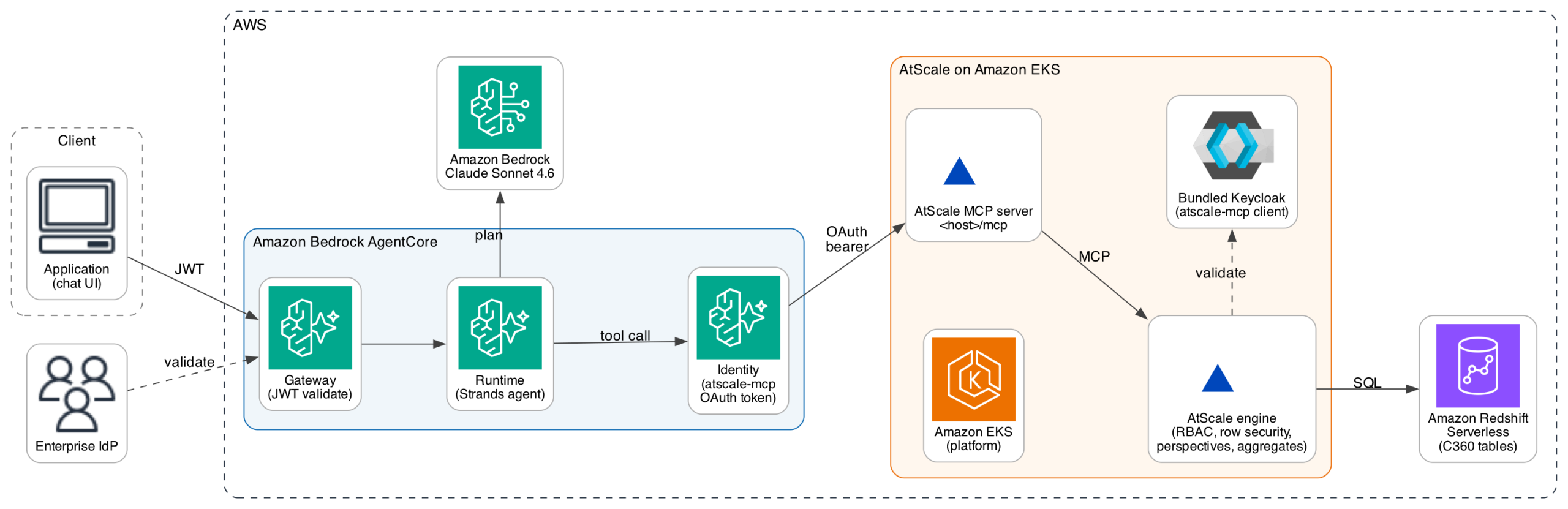
Build a semantic layer for agentic AI on AWS with AtScale and Amazon Bedrock AgentCore

In the first post in this series, we built a semantic layer on AWS using Stardog’s knowledge graph over Amazon Aurora and Amazon Redshift. We ran a Strands agent on Amazon Bedrock AgentCore against that layer. The second post kept the same customer 360 (C360) pattern and swapped in Denodo’s data virtualization platform, extending the … Read more

Structured outputs for Anthropic Claude models on Amazon Bedrock

Amazon Bedrock now supports structured outputs for all Anthropic Claude models, on both the bedrock-runtime and bedrock-mantle endpoints, where the model is available. Whether you call Claude through Boto3 and the bedrock-runtime APIs or through the Messages API and the bedrock-mantle endpoint, you can now receive schema-compliant JSON responses that conform to a defined structure. … Read more

Pegasus 1.5 from TwelveLabs is now available in Amazon Bedrock

On Oct 9, 2026 we announced the availability of TwelveLabs’ Pegasus 1.5 on Amazon Bedrock. Pegasus 1.5 is a video language model that turns long-form video into structured, timestamped metadata. You describe the moments that matter to your workflow, and the model returns every matching segment as JSON. Video represents a significant and complex category … Read more

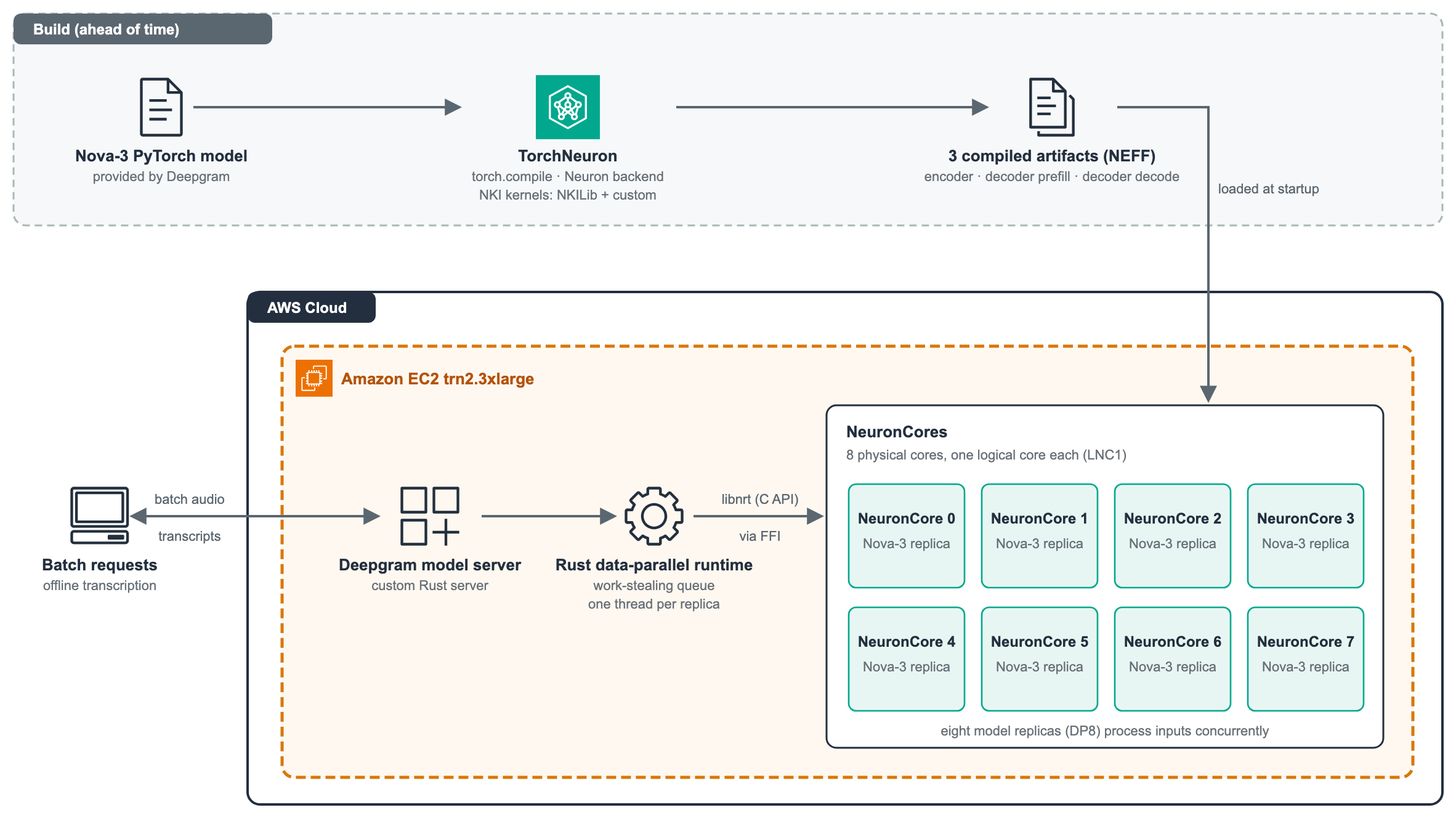
How Deepgram optimized voice AI at scale with AWS Trainium

As voice becomes a first-class modality for AI, Deepgram’s models span speech-to-text, text-to-speech, and voice agents. They now process quadrillions of audio tokens a year for more than 200,000 developers and 1,400 organizations. Customers use them through the Deepgram API or run them in their own environments, including on Amazon SageMaker AI. For Deepgram, serving … Read more