Manage end-user OAuth consent for AI agents with Amazon Bedrock AgentCore
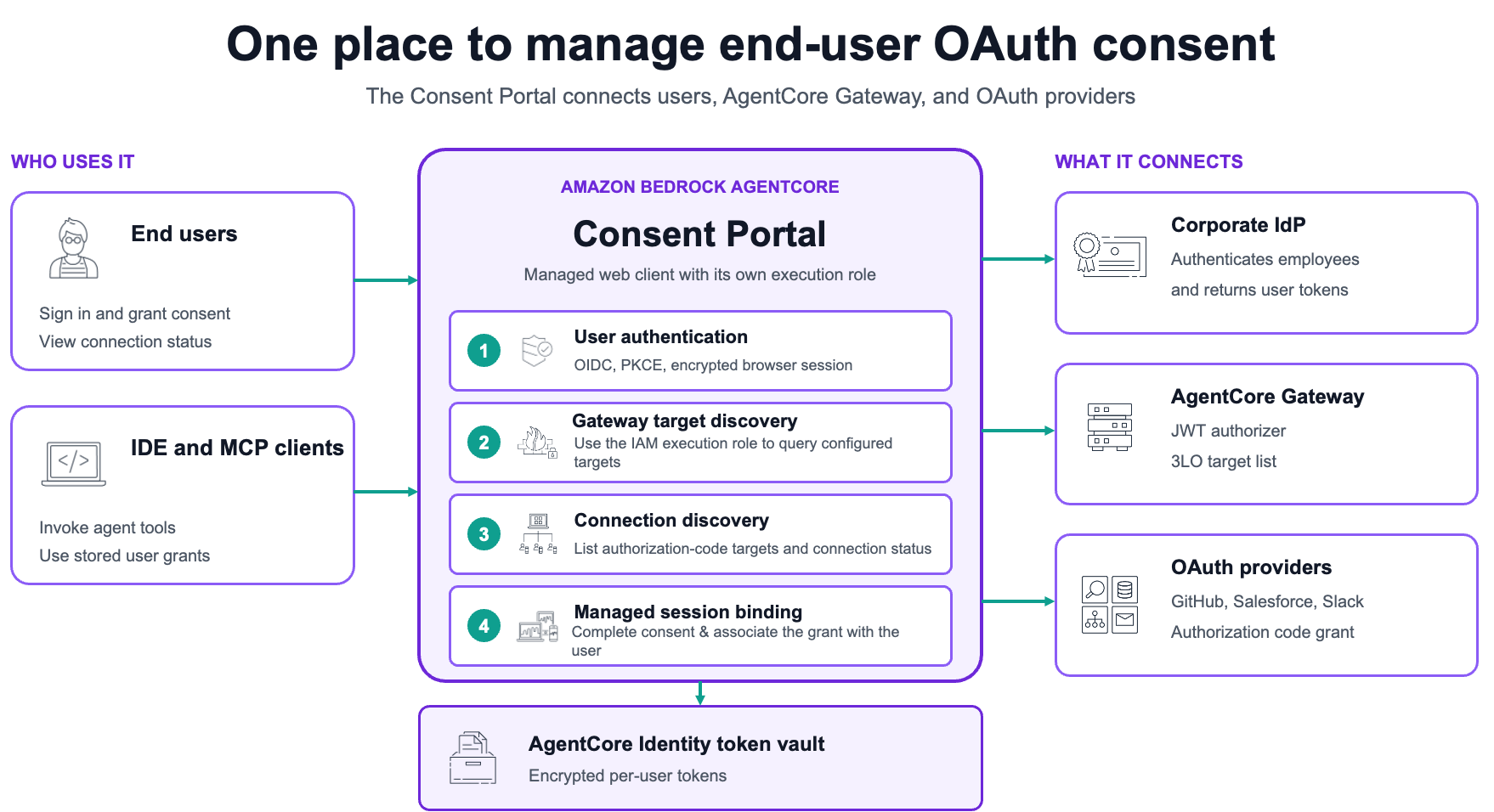
AI agents often need to access services such as GitHub and Slack on a user’s behalf. Before an agent can act, the user must authenticate with the provider and explicitly approve the requested access. The application must then securely associate the resulting OAuth grant with the user who authorized it. This process is called session … Read more
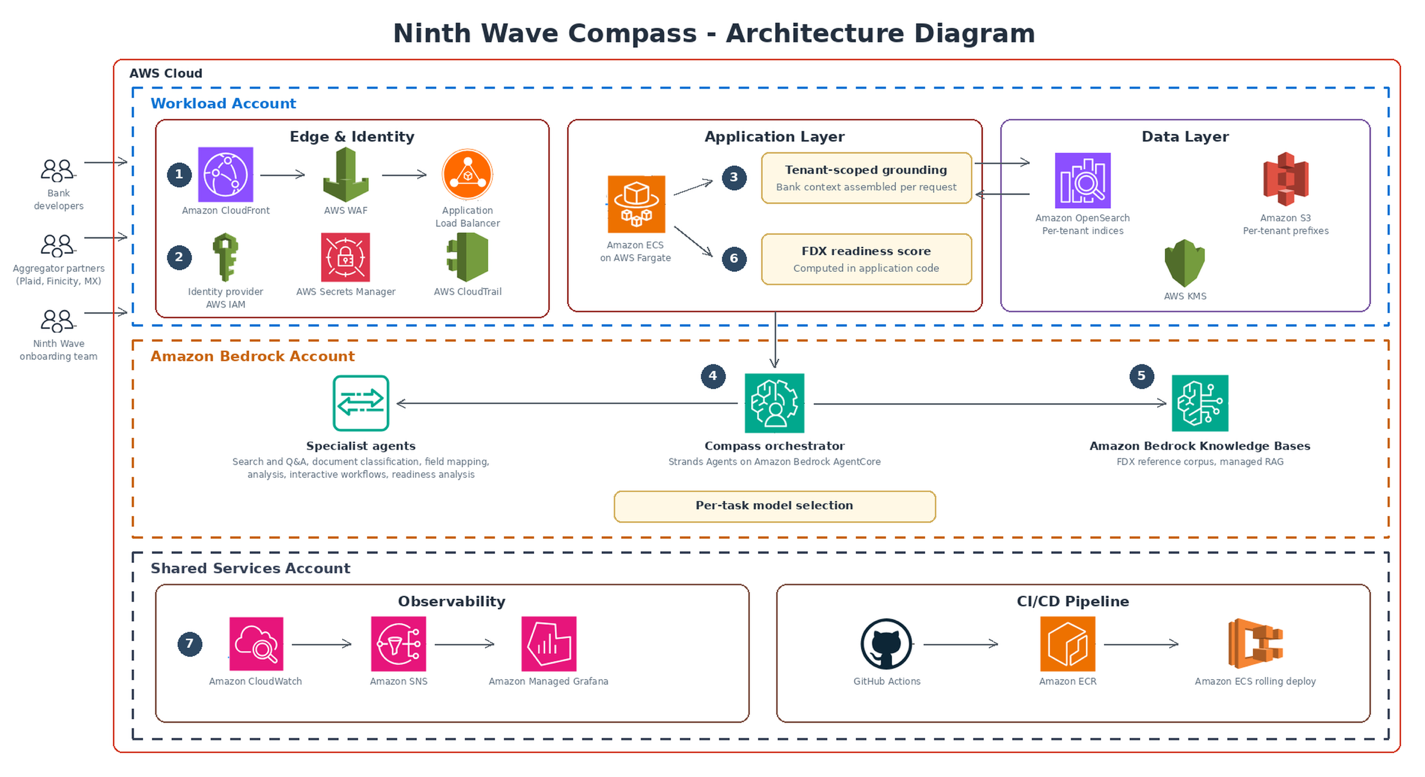
How Ninth Wave built AI-powered open finance onboarding on Amazon Bedrock

Financial institutions participating in open finance (the network where banks share customer-authorized financial data with third-party applications through standardized APIs) face a persistent integration challenge. Every bank exposes APIs with its own field names, formatting conventions, and gaps relative to the Financial Data Exchange (FDX) standard. Validating those APIs, mapping fields, and scoring readiness for … Read more

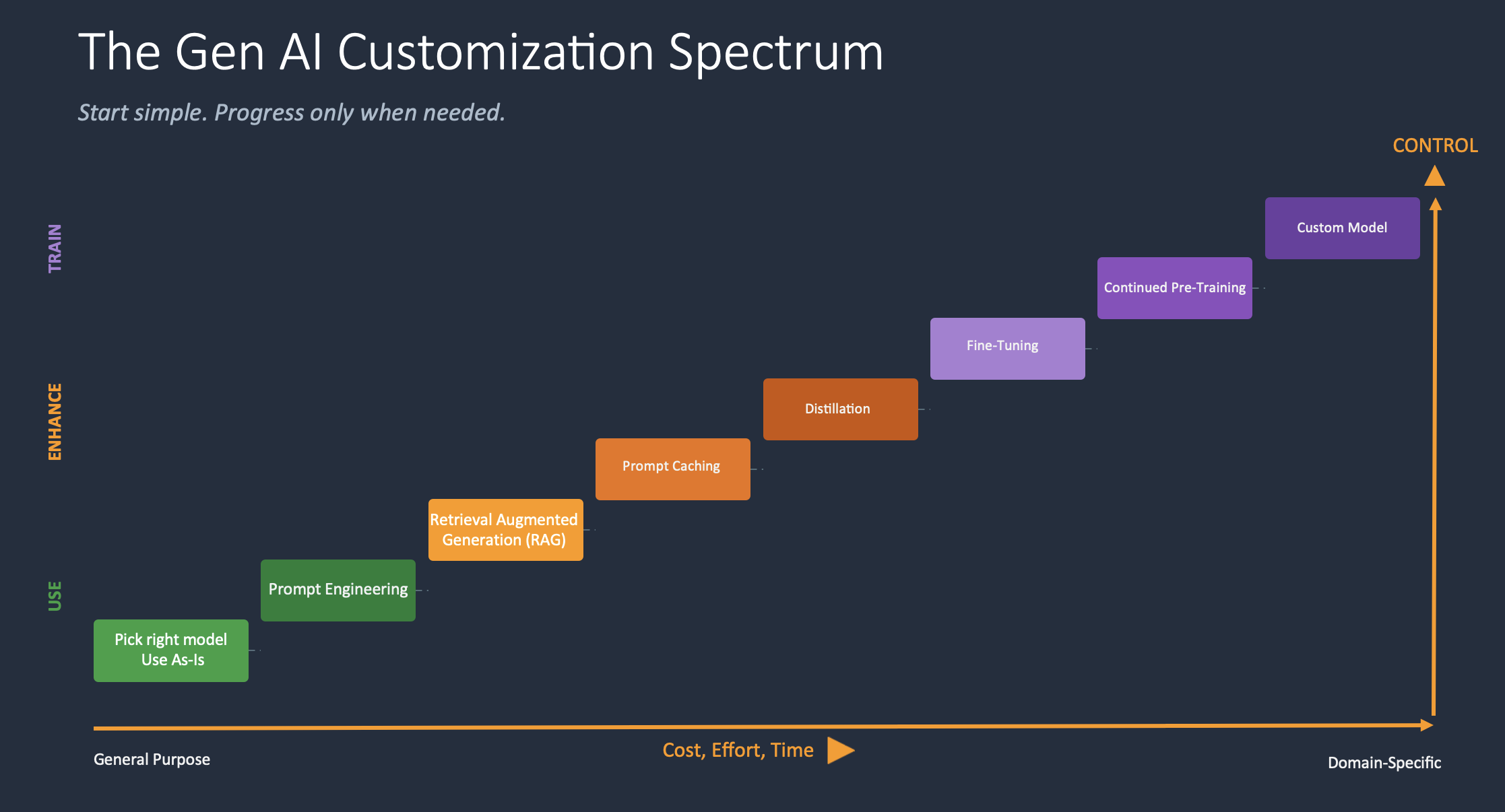
The generative AI customization spectrum: From prompt engineering to custom models on AWS

This post shows you how to pick the right generative AI customization approach for your workload without over-engineering or under-investing. AWS provides access to foundation models from Anthropic, Meta, Mistral, and Amazon through Amazon Bedrock, along with the infrastructure to build everything from chatbots and code assistants to document processors and autonomous agents. The models … Read more

Automate replenishment with MMF, Databricks Genie, and Amazon Quick

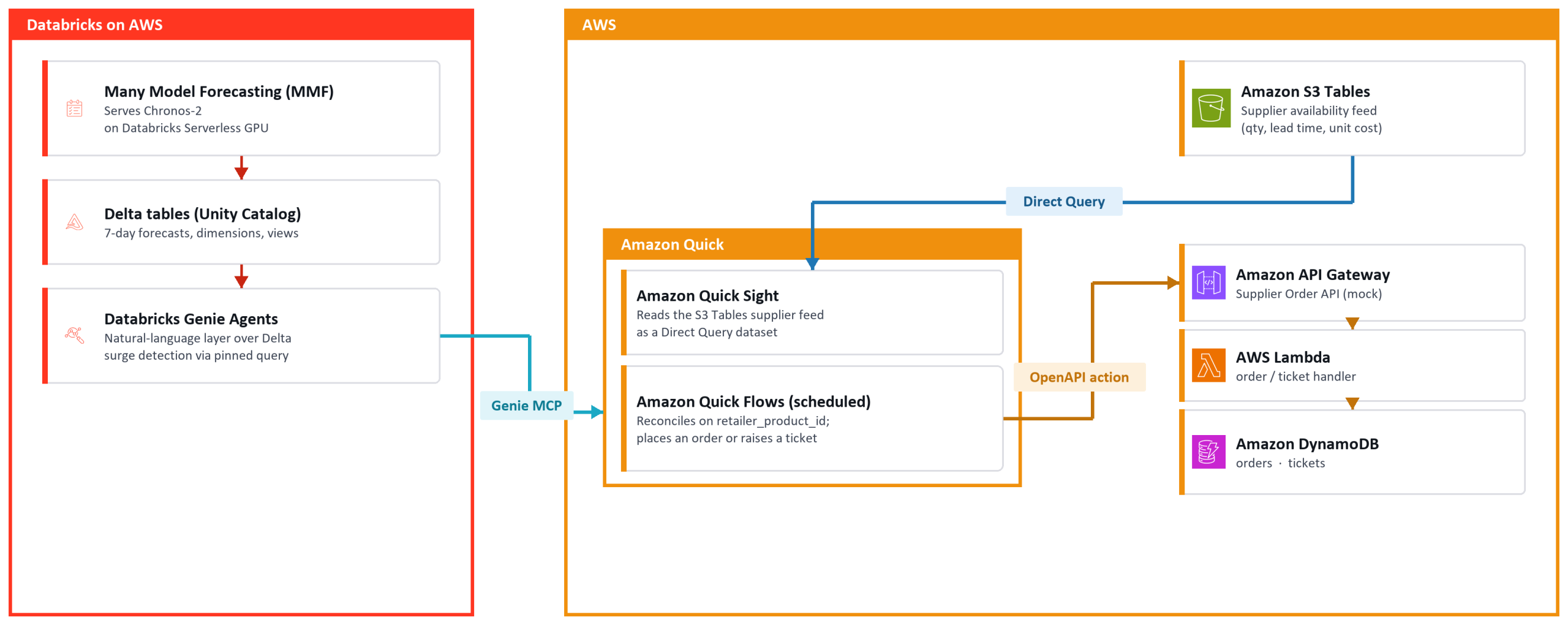
AWS Machine Learning Blog: technical walkthrough. Commands and expected outputs are from a working deployment. Substitute your own account values throughout. Replenishment automation starts with a demand forecast, and in retail that forecast has a short shelf life. By the time a planner exports it, checks it against supplier availability, and works down tens of … Read more

Monitoring production agent lifecycle with AWS DevOps Agent and AgentCore Evaluations

Multi-agent systems in production experience issues in ways that traditional monitoring misses. For example, the agent can’t invoke its foundation model (FM) and returns an empty response. This could be because of a missing AWS Identity and Access Management (IAM) permission on an agent’s execution role that doesn’t throw a 500 error. A supervisor agent … Read more

Beyond the price per token: Choosing the right OpenAI model on Amazon Bedrock for your workload

Organizations building generative AI applications usually compare models the same way: dollars per million tokens. It’s the number on every pricing page, so it becomes the number in every spreadsheet. But production workloads don’t buy tokens. They buy outcomes: a resolved support ticket, a completed research brief, a correct financial summary. Between the pricing page … Read more

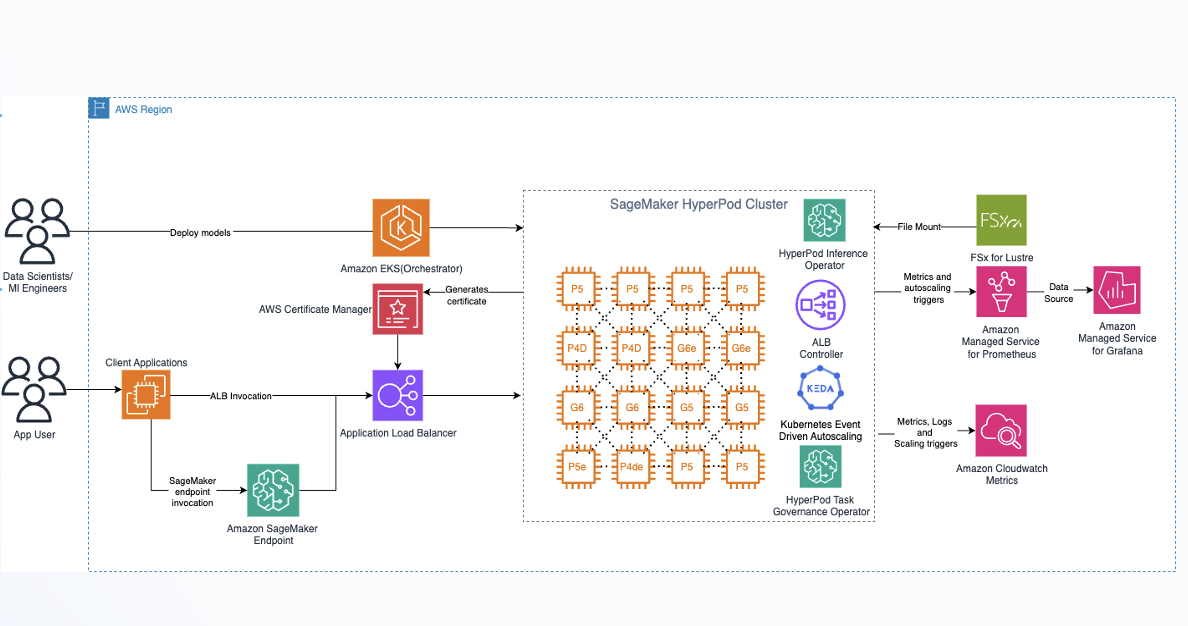
Reduce inference cold starts on Amazon SageMaker HyperPod with model caching

When you deploy a large language model (LLM) for inference on Amazon SageMaker HyperPod, there’s a gap between when you request a pod and when it’s ready to serve traffic. This gap is dominated by two sequential downloads: the inference server container image from Amazon Elastic Container Registry (Amazon ECR), and the model weights from … Read more

Video and image search in Amazon Bedrock Knowledge Base using Marengo 3.0

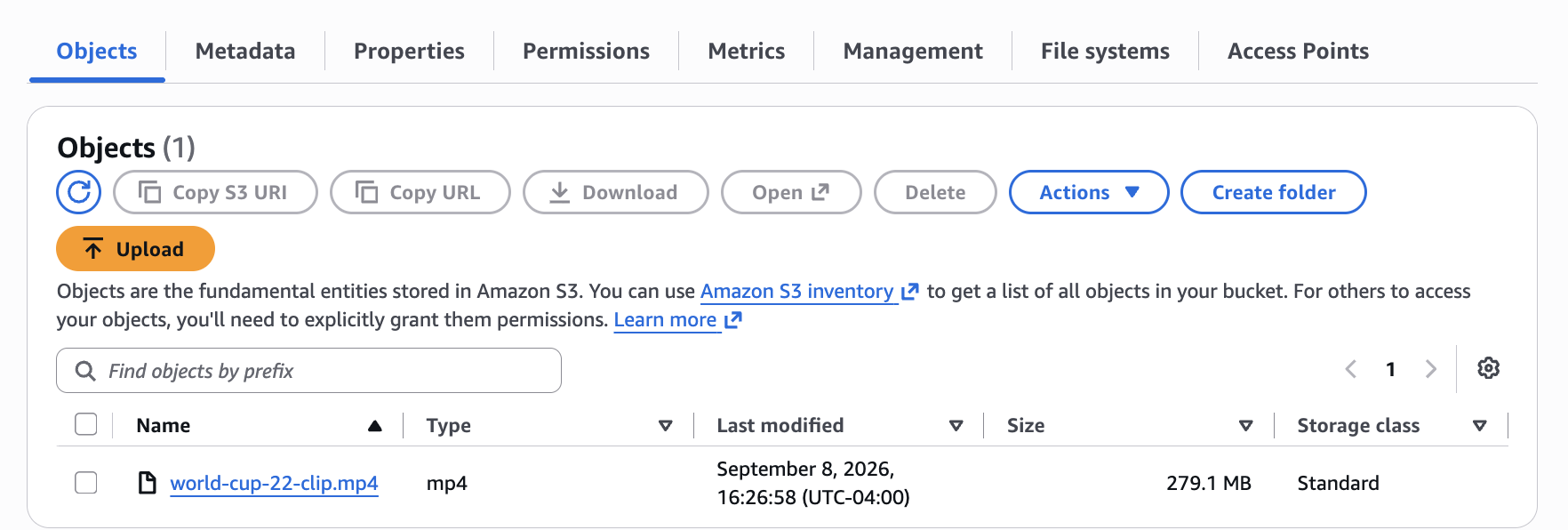
Today we’re announcing the general availability of TwelveLabs Marengo Embed 3.0 as an embedding model in Amazon Bedrock Knowledge Bases. Video and media assets remain largely unsearchable by meaning. Teams in media, sports analytics, education, security, and retail need to find specific moments in hours of footage using natural language. An example query is “show … Read more

Build an end-to-end RFI questionnaire workflow using Amazon Quick Automate

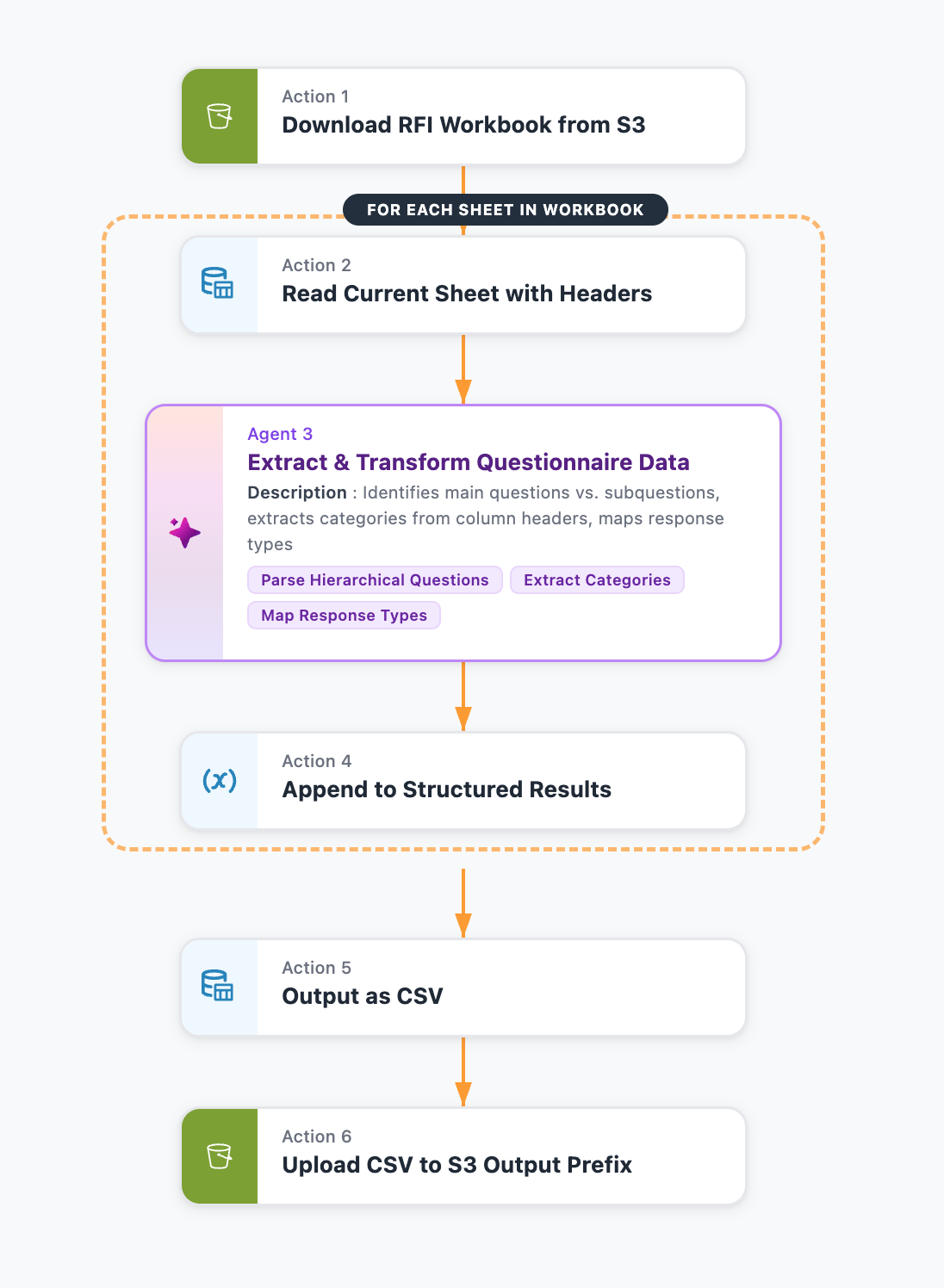
Build an end-to-end Request for Information (RFI) questionnaire workflow using Amazon Quick Automate to solve a challenge organizations face at every scale. A typical enterprise might handle hundreds of RFI questionnaires each year, and each arrives as a complex, multi-tab workbook packed with hierarchical question sets, category metadata, and varied response types. The volume, variety, … Read more

Model-agnostic PII detection with LLMs

A configurable, instruction-driven detector that runs on any large language model (LLM) managed on Amazon Bedrock, evaluated on five public PII corpora across nine LLM-based detectors, including the OpenAI PrivacyFilter. Fine-tuning a model on real-world text creates a personally identifiable information (PII) detection problem. Training corpora are full of PII: names, home addresses, email and … Read more

Agent Evaluation Metric for multi-turn conversations

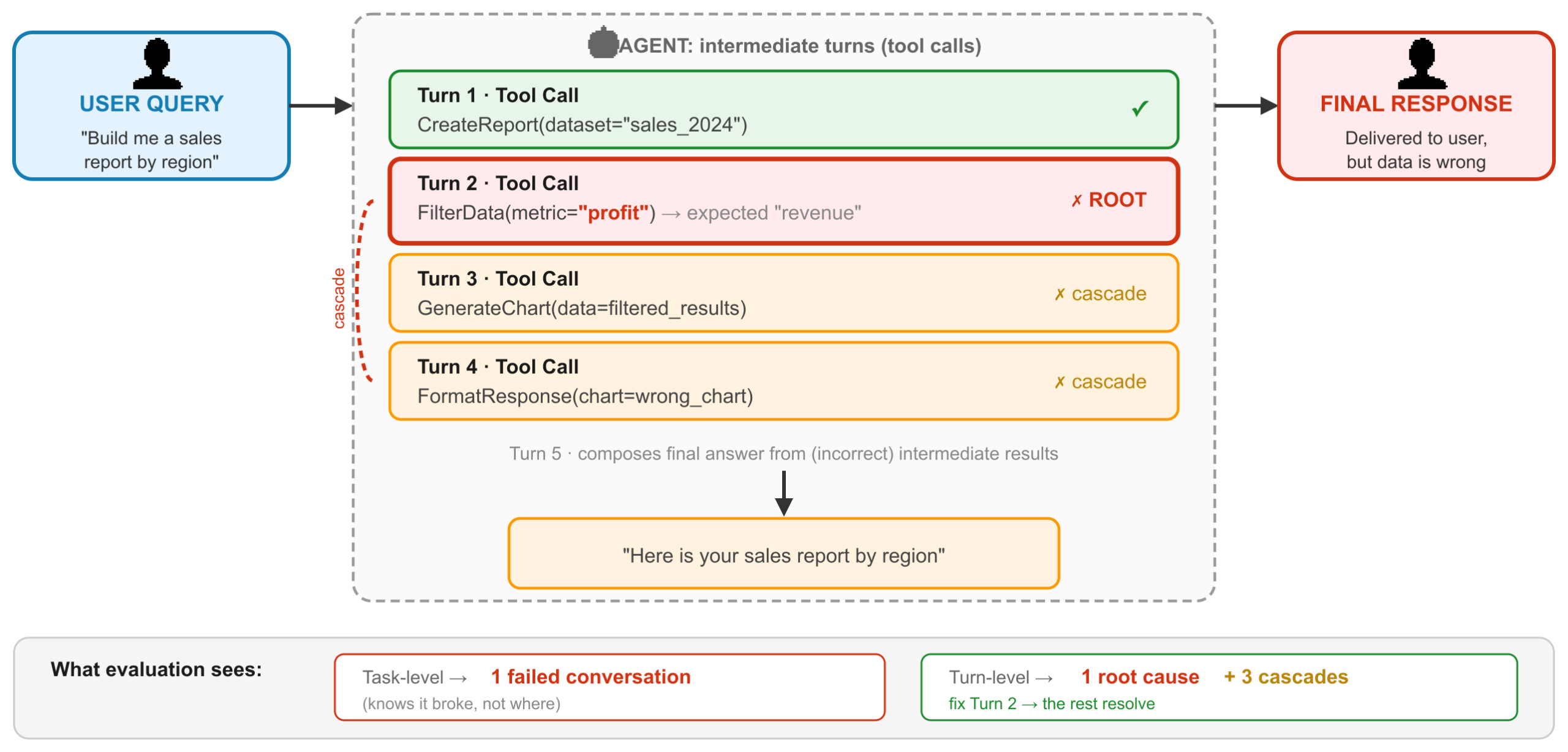
Multi-turn agents fail in ways that single-turn evaluation misses: one early mistake quietly corrupts every later turn. This post introduces the Agent Evaluation Metric (AEM), a decomposable, turn-level way to measure agent quality. We apply it to its first dimension, correctness. We show how AEM pinpoints the one turn that caused a failure and separates … Read more

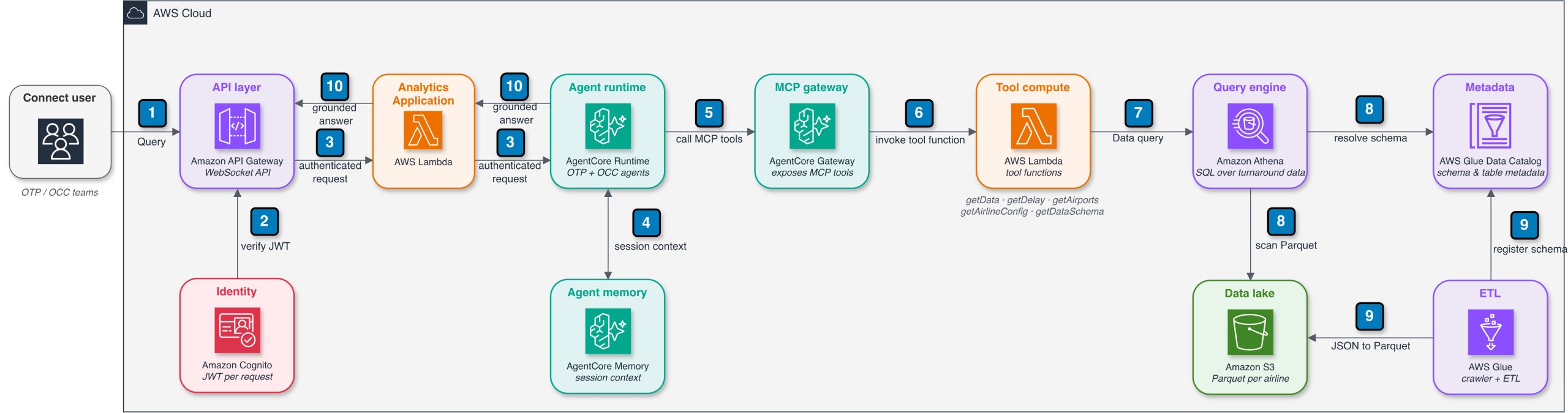
How AvioBook builds turnaround insights from operational data with Amazon Bedrock AgentCore

This post is co-written with Petra Lafond, Product Manager, and Maarten Cardinaels, Tech Lead at AvioBook, a Thales Group Company. Airlines run on tight, cascading schedules, and accessing operational data holds the key to protecting them. During turnarounds, a few minutes of delay at one gate can ripple through an entire day of connections. It … Read more

Deploying Qwen3.8-2.4T-A95B on Amazon SageMaker HyperPod with vLLM

On August 12, 2026, Alibaba’s Qwen team released Qwen3.8-2.4T-A95B. This is the first time a Qwen-Max-class model has been made available as open weights. With 2.4 trillion total parameters (95 billion activated per token), a hybrid linear-plus-full-attention architecture, and native context up to 262K tokens (extensible to 1M), Qwen3.8 targets the most demanding agentic and … Read more

ICYMI: What landed for AI builders in August 2026

A recap of the biggest Amazon Bedrock, AgentCore, and Strands updates from August 2026. At AWS, we have long focused on making foundational technologies accessible and providing the infrastructure needed to put them to work. Amazon Bedrock, used by more than 225,000 active customers, including over 80% of Fortune 100 companies, embodies that commitment by … Read more

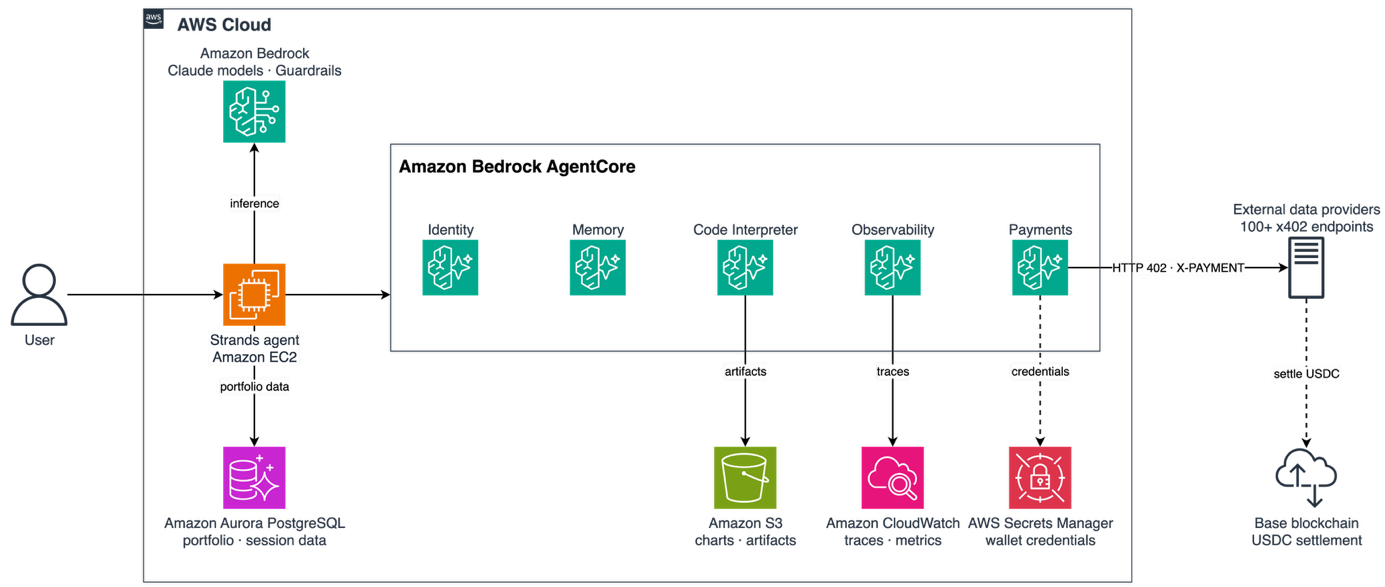
How Heurist Finance built an AI-native investment workbench on Amazon Bedrock AgentCore

Heurist uses Amazon Bedrock AgentCore to build AI-powered financial intelligence for retail investors. Its flagship product, Heurist Finance, brings several institutional-style workflows into one chat experience: it gathers market data, reads filings and news, runs deep research, builds and stress-tests portfolios, and monitors positions. Each answer reflects the user’s portfolio and preferences. Heurist’s goal is … Read more

Simplify and support your TorchServe workloads using Ray Serve Deep Learning Containers

TorchServe is no longer actively maintained. The official project notice states there are no planned updates, bug fixes, new features, or security patches, and that vulnerabilities might not be addressed. For teams that run model inference on TorchServe today, this means security patches stop and compatibility updates with newer versions of PyTorch and CUDA stop. … Read more

Automate user-level custom permissions for Amazon Quick

As Amazon Quick environments scale and new AI-powered capabilities expand what users can do, automating user-level custom permissions becomes critical to maintaining the principle of least privilege. To address this, with custom permissions in Quick, you can enforce fine-grained access control by toggling specific features on or off for individual users. For example, with custom … Read more

Take on your most ambitious work with GPT-6 Astra on Amazon Bedrock

GPT-6 Astra from OpenAI brings greater depth and judgment to your most demanding tasks and runs on the Amazon Bedrock inference engine built for high performance, security, and scale. Organizations are already running AI agents that write code, analyze data, and automate complex workflows at production scale on Amazon Bedrock. GPT-6 Astra raises the potential … Read more

Pathway’s brain-inspired architecture development on Amazon SageMaker HyperPod

As AI systems take on more complex tasks, much of the industry’s progress has come from increasing model scale, training data, context length, and inference-time computation. Instead of externalizing reasoning work as a chain-of-thought (generating extra tokens sequentially and feeding them back into later steps), Pathway’s brain-inspired BDH (Dragon Hatchling) performs reasoning in latent space. … Read more

Amazon SageMaker Feature Store introduces UpdateRecord for feature-level writes

We are excited to announce feature-level writes for Amazon SageMaker Feature Store. Amazon SageMaker Feature Store is a fully managed, purpose-built repository to store, share, and manage machine learning (ML) features, the processed data used for training models and generating predictions. With the new UpdateRecord API, you can now update one or more feature values … Read more

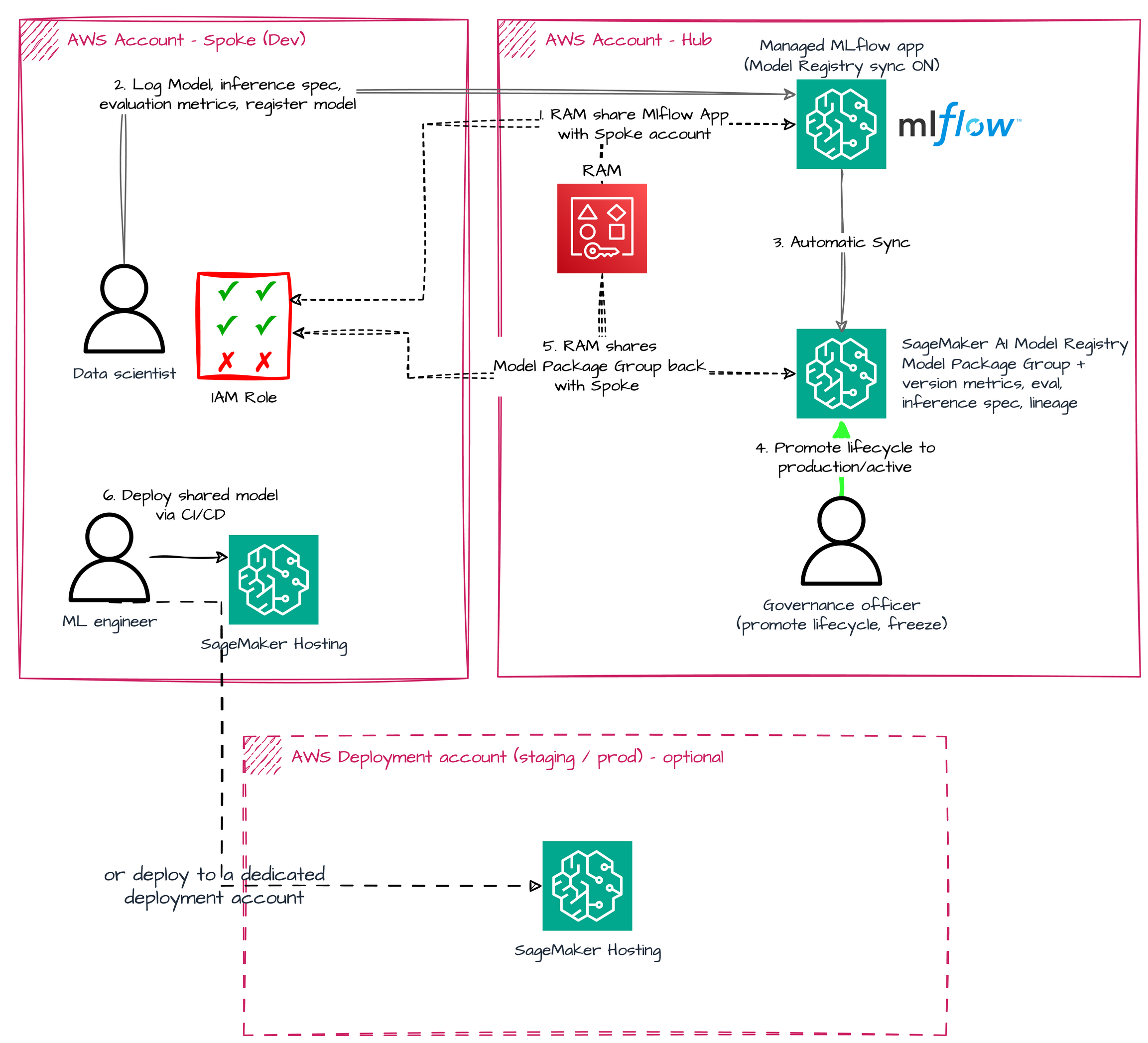
Govern models with MLflow and Amazon SageMaker AI Model Registry sync: Part 2

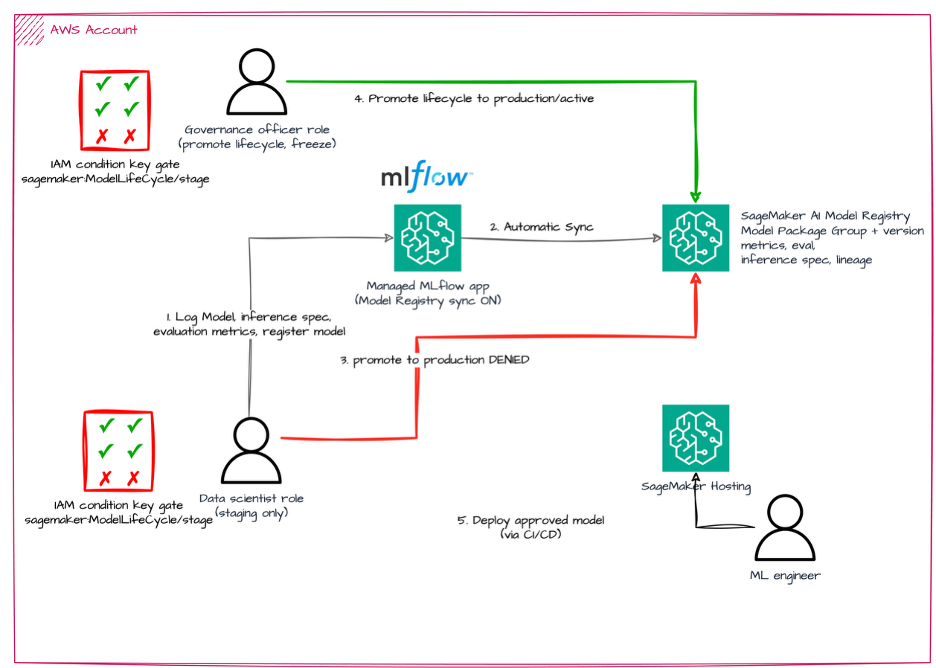
Governing models across accounts is the natural next step once automatic model registration is in place. In Part 1 we introduced how managed MLflow on Amazon SageMaker AI synchronizes registered models into the SageMaker AI Model Registry. We walked through a single-account setup where AWS Identity and Access Management (IAM) condition keys separate the data … Read more

Govern models with MLflow and Amazon SageMaker AI Model Registry sync: Part 1

Automating model registration between MLflow and a model registry solves a gap that opens the moment a candidate model leaves experimentation. Data scientists track dozens of candidate runs in MLflow, while governance officers need one authoritative registry to validate, approve, and audit the models that reach production. Managed MLflow on Amazon SageMaker AI already synchronizes … Read more

Automated agent evaluation with Amazon Bedrock AgentCore and GitHub Actions

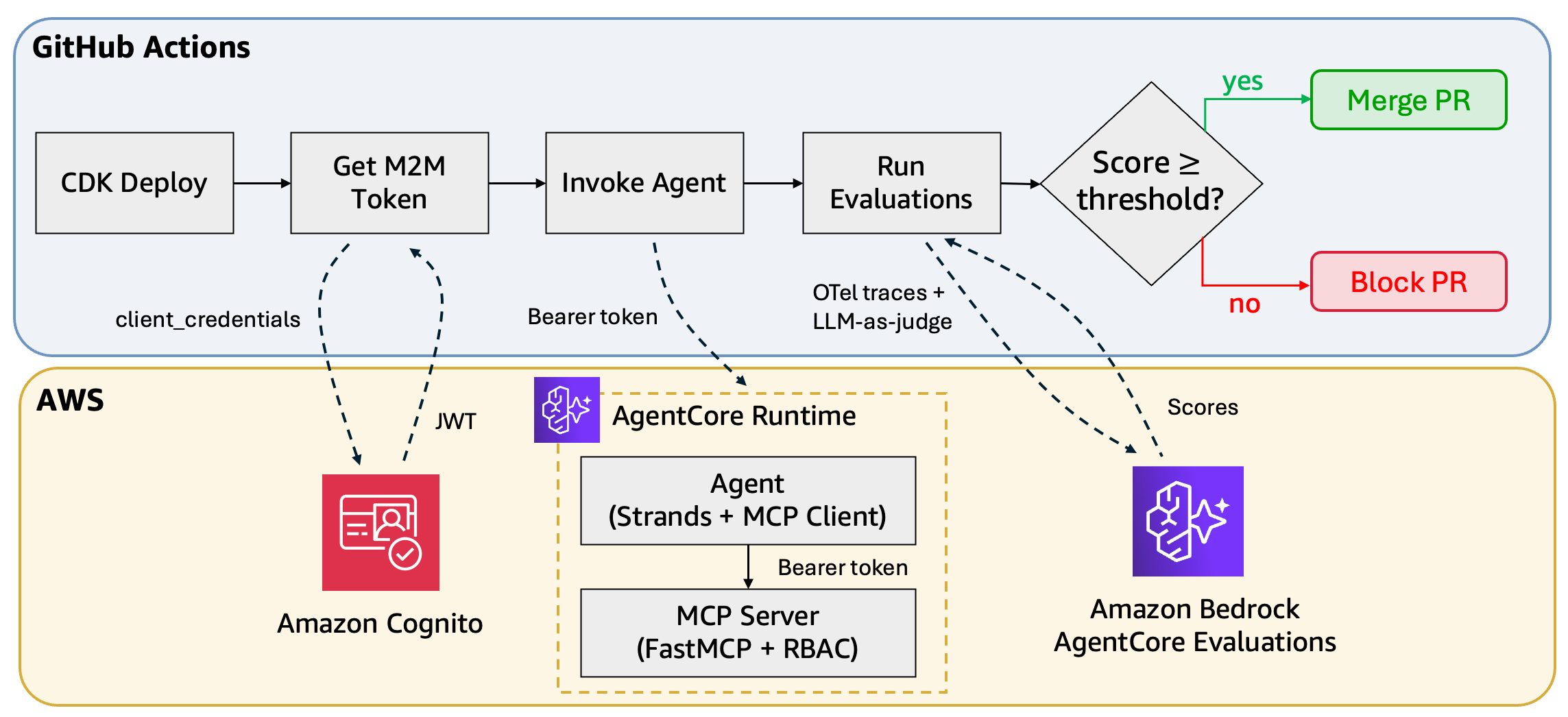
Build a continuous integration and continuous delivery (CI/CD) quality gate that deploys an agent with role-based MCP tools, evaluates it, and blocks PRs when evaluation scores drop. You shipped an AI agent on Amazon Bedrock AgentCore runtime. It calls tools through an MCP server protected by OAuth. Now you want CI to tell you when … Read more
Benchmarking small LLM inference on SageMaker AI: G7 vs G5 and G6

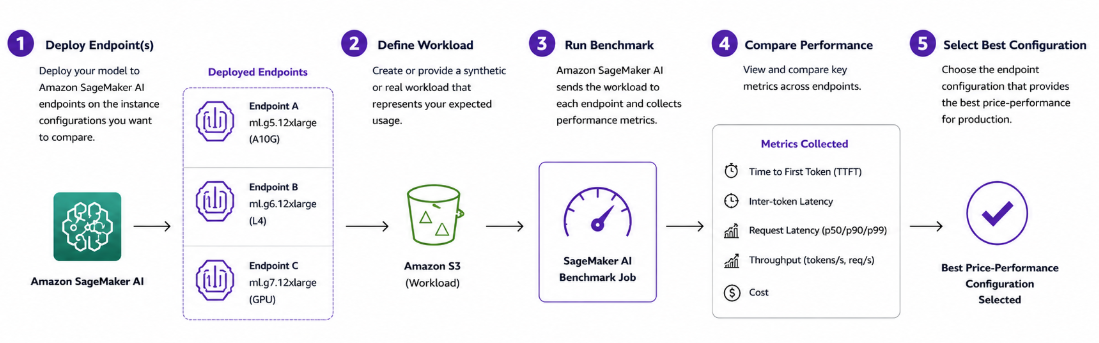
Choosing the right GPU instance for large language model (LLM) inference is one of the most impactful decisions you make when deploying generative AI at scale. A single generation jump can slash latency, increase throughput, and reduce cost-per-token. However, the real-world magnitude of those gains depends on model architecture, quantization format, and workload shape. In … Read more
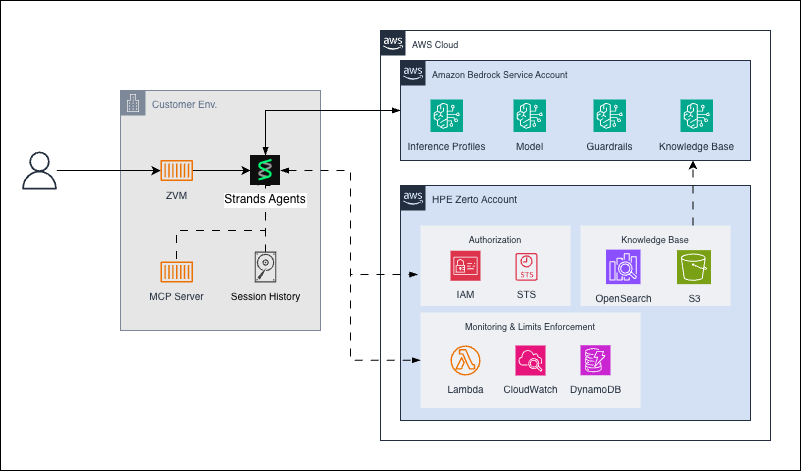
How HPE Zerto built an agentic troubleshooting system with Amazon Bedrock

This post was co-written by AWS and the HPE Zerto team. If you manage hybrid and multi-cloud infrastructures, you may already be turning to AI systems to assess health, investigate issues, and act on problems faster. HPE Zerto addressed this challenge by building an agentic troubleshooting system powered by Amazon Bedrock. HPE Zerto Software helps … Read more
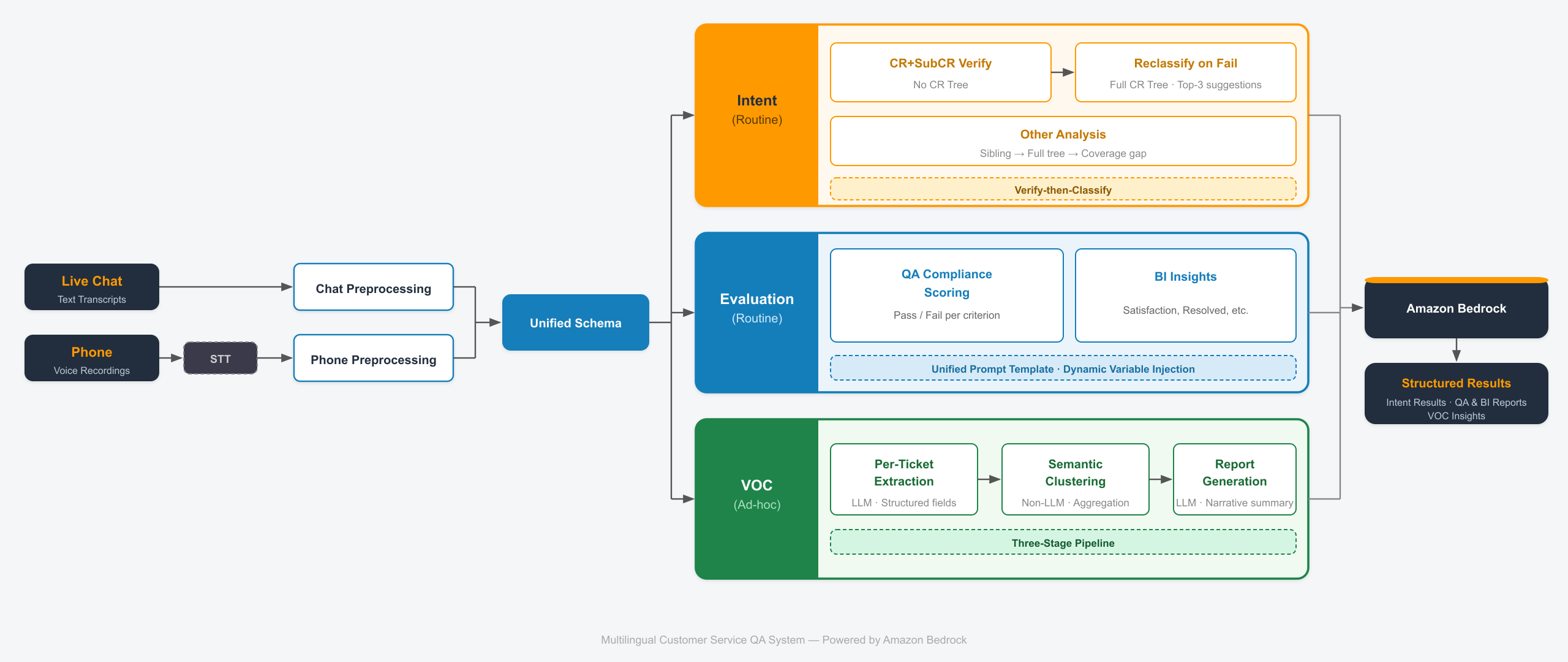
How DiDi built intelligent contact center QA with Amazon Bedrock

DiDi partnered with AWS to build an intelligent contact center quality assurance (QA) system on Amazon Bedrock for its International Business Group’s Customer Experience (CX) department. The system covers Spanish and Portuguese across three business lines (ride-hailing, food delivery, and financial services) and migrates QA capabilities from an opaque third-party solution to a transparent, self-owned … Read more

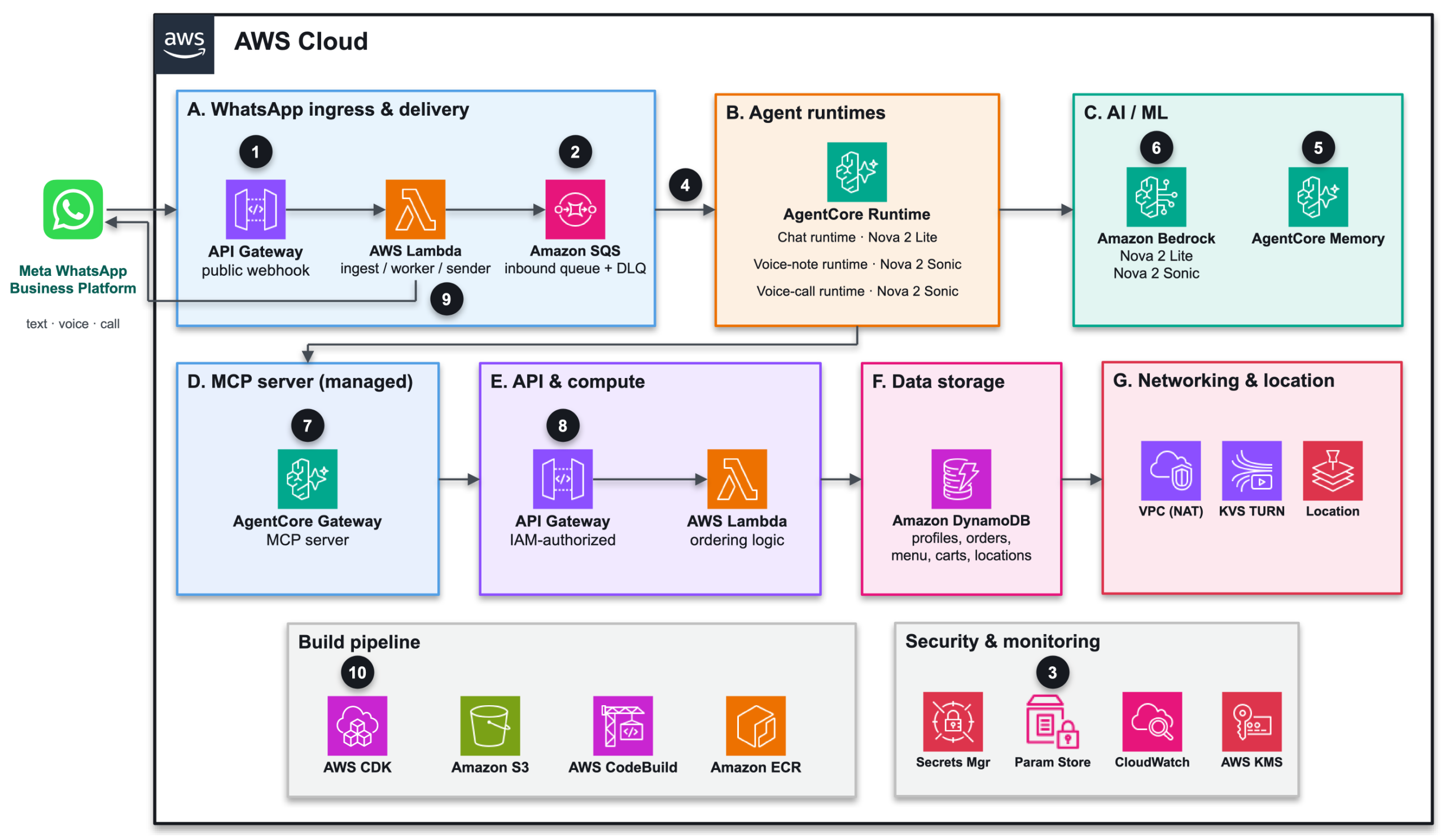
Deploy a multimodal WhatsApp ordering assistant with Amazon Bedrock AgentCore

This post shows how to deploy a multimodal WhatsApp ordering assistant built with Amazon Bedrock AgentCore and Amazon Nova 2. Many quick-service restaurants spread ordering across an app, a website, a phone line, and the counter. Each of those is a separate system to build and run. Each one also fragments the customer’s history, making … Read more