Table of Links
-
Related Works
-
Methodology
4.1 Formulation of the DRL Problem
4.2 Instance-Aware Deep Reinforcement Learning for Efficient Index Selection
-
Experiments
5 System Framework of IA2
As shown in Figure 3, IA2 operates through a structured two-phase approach, leveraging deep reinforcement learning to optimize index selection for both trained workloads and unseen scenarios. It depicts IA2’s workflow, where the user’s input workload is processed to generate states and action pools for downstream RL agents. These agents then make sequential decisions on index additions, adhering to budget
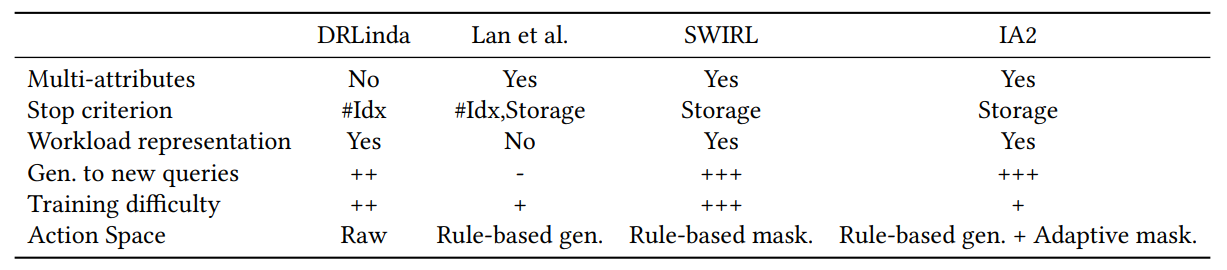
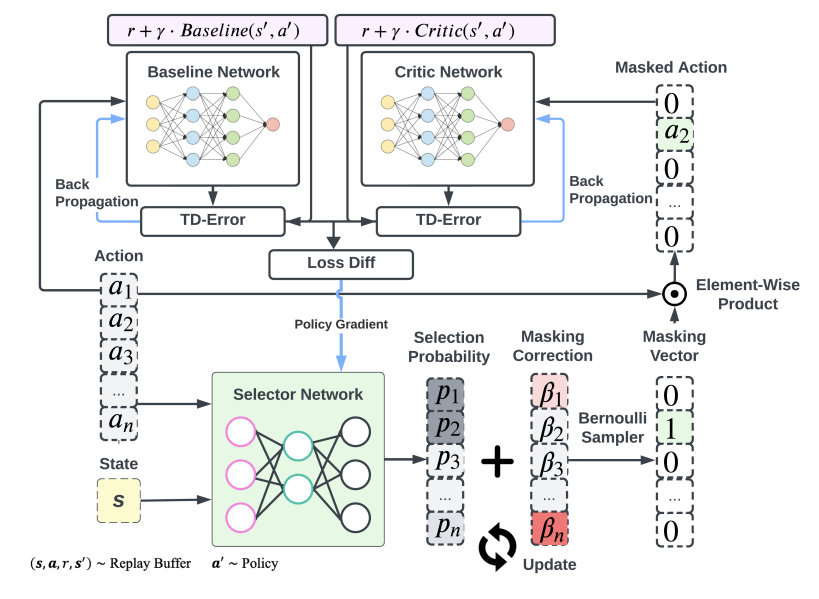
constraints, demonstrating IA2’s methodical approach to enhancing database performance through intelligent index selection.
:::info
Authors:
(1) Taiyi Wang, University of Cambridge, Cambridge, United Kingdom (Taiyi.Wang@cl.cam.ac.uk);
(2) Eiko Yoneki, University of Cambridge, Cambridge, United Kingdom (eiko.yoneki@cl.cam.ac.uk).
:::
:::info
This paper is available on arxiv under CC BY-NC-SA 4.0 Deed (Attribution-Noncommercial-Sharelike 4.0 International) license.
:::