In an industry where token launches routinely precede working products by months or years, Playnance is attempting something unusual: launching its G-Token into an ecosystem that already functions.
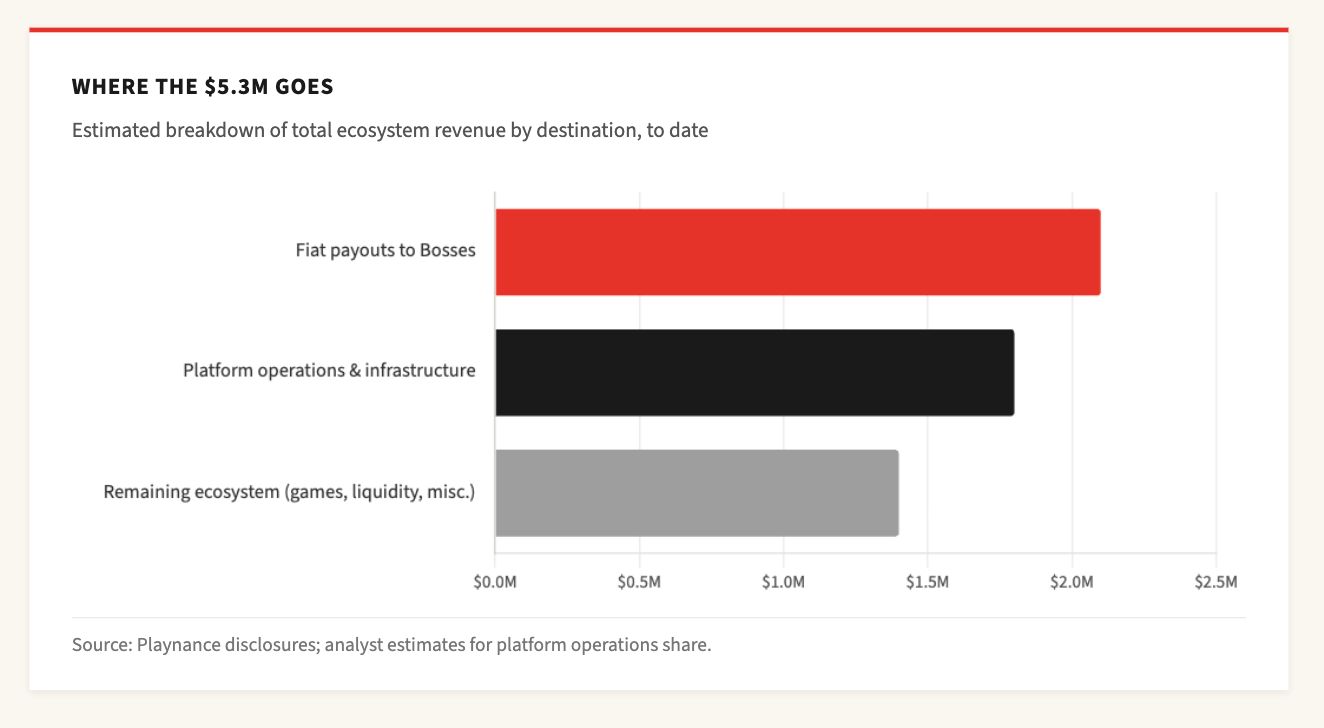
Playnance, a Tel Aviv-based Web3 infrastructure company announced that its “Be The Boss” partner program has distributed more than $2 million in real cash to 2,567 active partners, while the broader platform has generated $5.3 million in total revenue. The G-Token launch, now imminent, does not create the ecosystem. It is being built on top of one.
That distinction matters more than it might seem. The crypto sector has a long memory for projects where token issuance preceded utility—and where, once the speculative energy dissipated, the underlying product was found to be empty. Playnance is betting its reputation on reversing that sequence entirely.
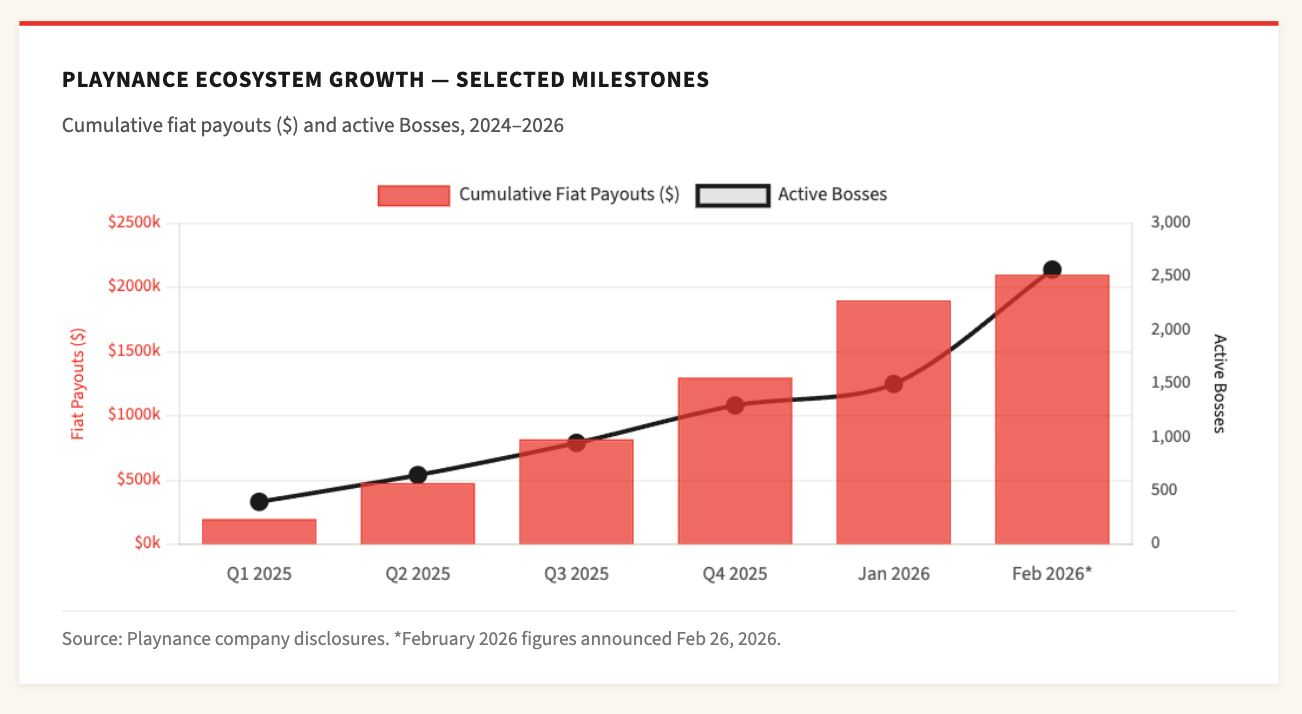
The Be The Boss program is where the numbers become tangible. For a symbolic $1 entry fee, any creator or community operator can spin up a fully branded social gaming platform on PlayW3, Playnance’s flagship consumer product. The backend, blockchain settlement, player support, game catalogue, liquidity, is handled entirely by Playnance. The partner, or “Boss,” focuses on audience-building. Revenue is split 50/50, paid automatically each day directly to the partner’s on-chain wallet. There are no lock-up periods, no token vesting schedules, no promises of future value. The $2 million distributed to date is real money.
We designed the token to serve a working ecosystem, not the other way around. The foundation is already in place.
Pini Peter, CEO, Playnance
The G-Token, referred to in earlier company materials as “G Coin”, is not an add-on to this structure. It is the plumbing. Every platform interaction on PlayW3, every game played, every payout processed on Up vs Down and other Playnance products, runs through the token as its settlement and utility layer. Daily earnings distribution to the 2,567 Bosses is denominated and settled in G-Token. Demand for the token is therefore not manufactured by marketing campaigns or speculative listings; it is a direct function of how many people are playing and how many Bosses are operating platforms.
This feedback loop—Playnance’s own term, though their language describes it as a “compounding economic loop”, is the central claim of the G-Token thesis. More Boss platforms bring more users. More users generate more on-chain transactions. More transactions create organic, usage-driven demand for G-Token across gameplay, reward mechanics, and settlement flows. The payout track record then attracts the next wave of Boss operators. The company says the Boss count has more than doubled in recent months, a data point that suggests the loop is already turning.
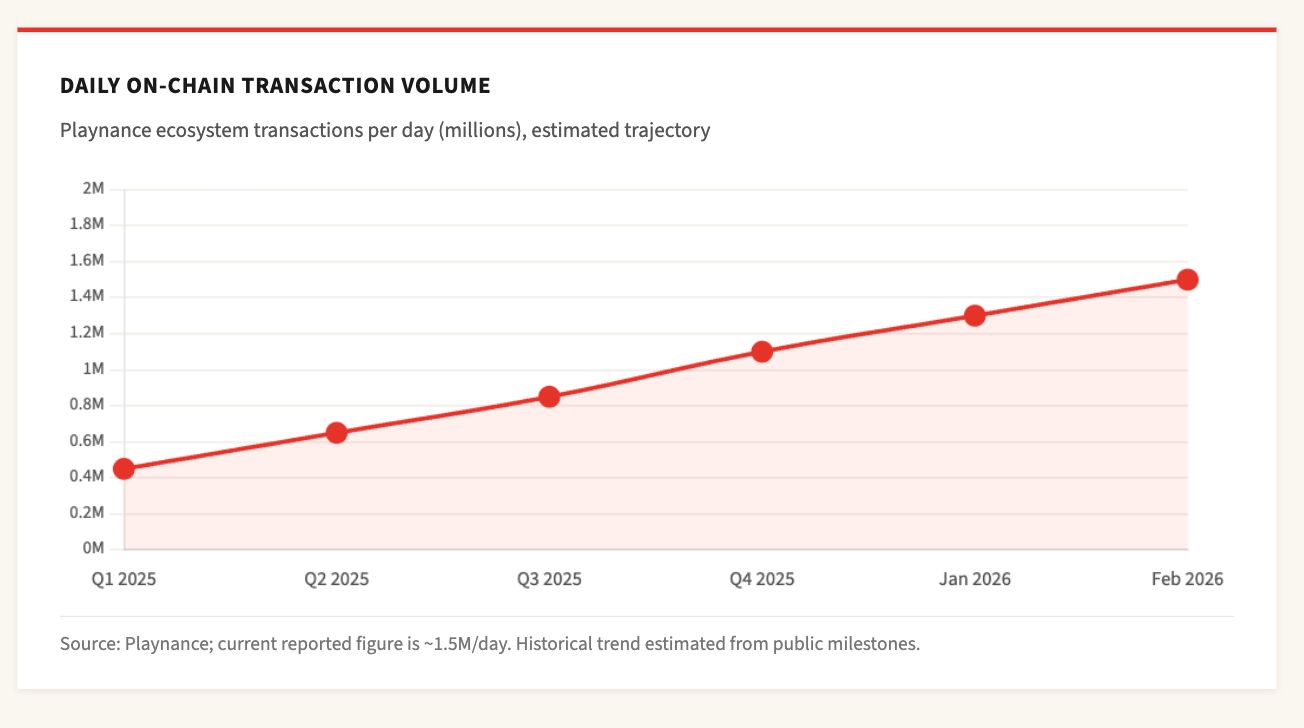
The architecture behind these numbers is deliberately invisible to end-users. Playnance has built what it calls a non-custodial, on-chain system that sits beneath a Web2-style interface. Users onboard without needing to understand wallets, gas fees, or token mechanics. Every transaction is nonetheless recorded on-chain, providing the transparent, verifiable activity data that underpins the G-Token’s claimed utility. At 1.5 million daily transactions, Playnance is operating at a throughput that rivals mid-tier centralised exchanges—an unusual credential for a consumer gaming platform entering its public token phase.
The critical question, as with any token-powered ecosystem, is whether the loop holds under scrutiny. The $2 million in fiat payouts is the most defensible number: it is real money that left a bank account or wallet and arrived in someone else’s. The $5.3 million in total revenue is a company-reported figure, unaudited at the time of publication. The 1.5 million daily transactions include all platform activity, not merely financially material events, a metric that, in gaming contexts, warrants examination of what proportion represents genuine user engagement versus automated or incentivised activity. Playnance has not yet published a third-party audit of its on-chain data.
What the company has published is a track record of paying its partners. In a market where token promises have so frequently substituted for product, $2 million in actual cash distributions is an uncommon form of proof. Whether G-Token becomes the connective tissue of a genuinely scaled consumer blockchain ecosystem or whether the loop stalls as distribution broadens and marginal Boss quality declines, will depend on execution through 2026. The infrastructure, for now, appears real. The test is whether it compounds.
Don’t forget to like and share the story!