Phemex Unveils AI Bot, Marking a Product Milestone In its AI-native Initiative

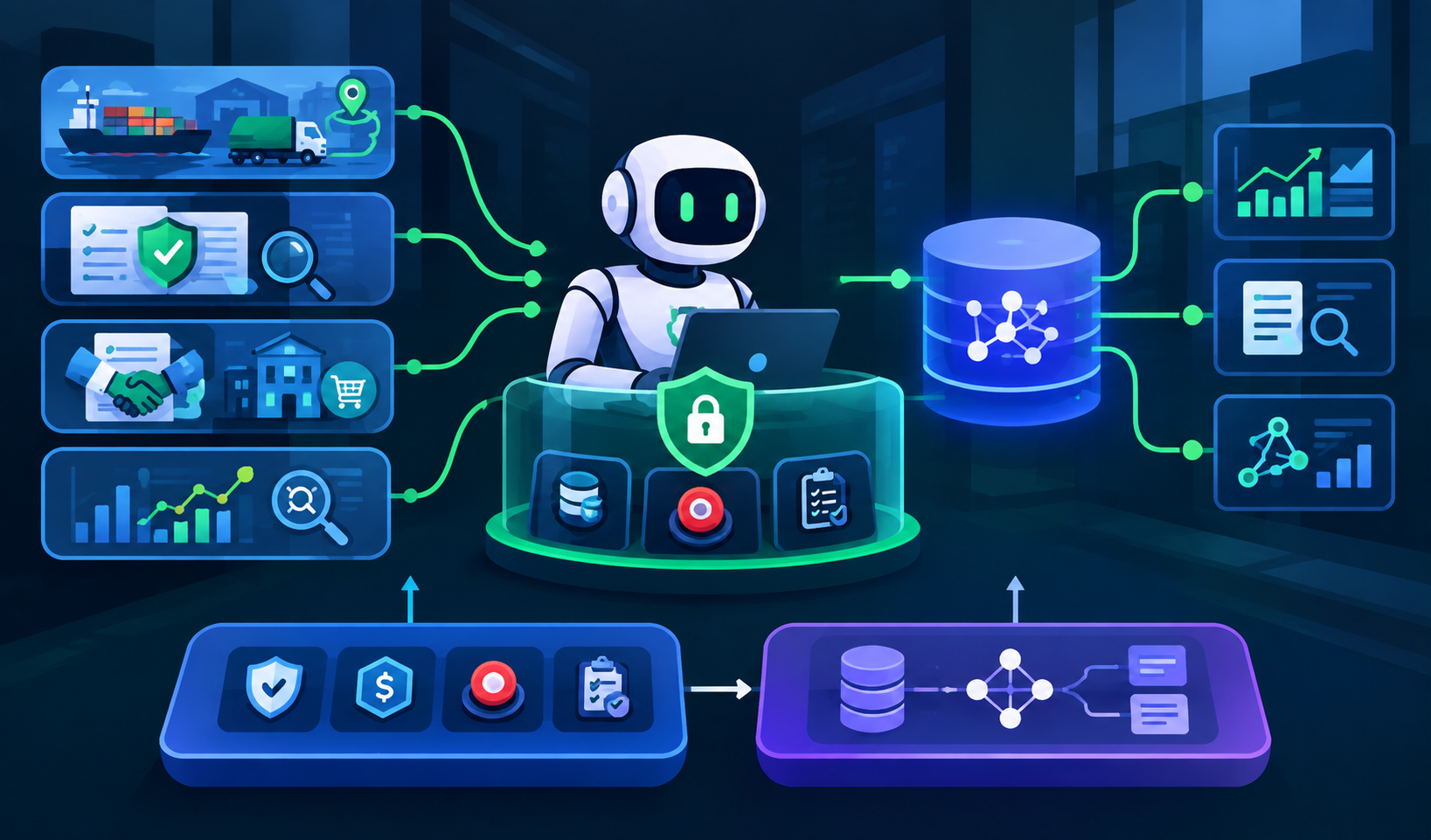
Apia, Samoa, February 25, 2026 — Phemex, a user-first crypto exchange, unveiled the AI Bot, a milestone of the Phemex AI-Native Revolution, following its transition into an AI-native organization. This launch evolves artificial intelligence from a strategic vision into a high-performance “Intelligent Trading Partner,” shifting the industry paradigm from emotional manual execution to a disciplined … Read more

BingX TradFi Fully Integrated Into The BingX Ecosystem, Forming a Key Pillar For 2026

PANAMA CITY, February 25, 2026 – BingX, a leading cryptocurrency exchange and Web3-AI company, announced the full integration of BingX TradFi into the broader BingX ecosystem, marking a significant step in the convergence of traditional finance and crypto markets. This development reflects a broader industry trend projected for 2026: traditional finance is increasingly embracing cryptocurrencies, … Read more

The HackerNoon Newsletter: Optimise LLM usage costs with Semantic Cache (2/25/2026)

How are you, hacker? 🪐 What’s happening in tech today, February 25, 2026? The HackerNoon Newsletter brings the HackerNoon homepage straight to your inbox. On this day, we present you with these top quality stories. From Optimise LLM usage costs with Semantic Cache to Researchers Develop a Real-Time 3D Mapping System That Helps Robots Understand … Read more

More A/B Tests Won’t Fix Your Growth Problem

A/B testing is a powerful but costly tool in product development. While it improves measurement accuracy, it slows execution. Teams should reserve experiments for high-risk, high-uncertainty decisions—like pricing changes or complex KPI shifts—and skip them when implementing best practices, fixing broken UX, or launching clearly requested features. In early-stage products, speed often matters more than … Read more

Bundle Adjustment Makes or Breaks 3D Gaussian Splats, Study Finds

Table of Links Abstract Introduction Related work Problem statement [Methods]() Experiments Limitations [Conclusion]() EXPERIMENTS A. Physical Experiments We evaluate LEGS through a series of open-vocabulary object recall tasks. These tasks are designed to measure the system’s competency in capturing and organizing information based on both location and semantic meaning. We evaluate LEGS on four large-scale … Read more

From Engineer to Expert: Inside the Journey of One of Russia’s First Kubestronauts

Digital businesses are challenged by modern users more than ever. Their ability to remain competitive, retain their loyal customers, and attract new ones heavily depends on how fast they can release new features and respond to constantly shifting demands. In their strive to accomplish this goal, more and more companies try to bridge the gap … Read more

Robots Learn to “See” With Language in Real Time Using 3D Gaussian Splatting

Table of Links Abstract Introduction Related work Problem statement [Methods]() Experiments Limitations [Conclusion]() PROBLEM STATEMENT We consider a large indoor environment, specifically defined as a room encompassing at least 750 sq ft. The objective is to 3D reconstruct the a-priori unknown and unstructured environment and localize objects prompted by open-vocabulary and long-tail natural-language queries. We … Read more

Fremont ACM Chapter Hosts “Technology Trends Shaping Modern Industry”

FREMONT, CA — The Fremont ACM Chapter hosted its technical talk event, Technology Trends Shaping Modern Industry, on Sunday, February 15, 2026, at the Fremont Downtown Event Center The event brought together leading engineers, architects, product strategists, and researchers from across Silicon Valley to explore how artificial intelligence, cloud-native systems, cybersecurity, identity frameworks, energy systems, … Read more

The TechBeat: I Replaced $1,200/Year in Cloud Subscriptions With a Single Home Server. Here’s What I Learned. (2/25/2026)

How are you, hacker? 🪐Want to know what’s trending right now?: The Techbeat by HackerNoon has got you covered with fresh content from our trending stories of the day! Set email preference here. ## Microsoft’s AutoDev: The AI That Builds, Tests, and Fixes Code on Its Own By @microsoft [ 27 Min read ] Microsoft’s … Read more

When Intelligence Becomes a Trading Liability

The sharper the mind, the more elaborate the justification for staying wrong. Depth of thought becomes the mechanism of loss when it serves identity instead of truth. There is a version of intelligence that protects you in markets. It reads conditions, adjusts frameworks, and knows when to step aside. Then there is another version, far … Read more

Why AI Agent Reliability Depends More on the Harness Than the Model

I keep hearing the same question at every engineering offsite, Slack thread, and investor pitch: “What’s the best model right now — GPT, Claude, or Gemini?” I spent the last several months building and debugging agent-based systems, and I think this is the wrong question entirely. The evidence is now overwhelming: what determines whether an AI agent succeeds … Read more

New System Combines SLAM and Language Models for Online 3D Scene Mapping

Table of Links Abstract Introduction Related work Problem statement [Methods]() Experiments Limitations [Conclusion]() RELATED WORK A. Mobile Robot Mapping Early robotic scene mapping research focused on the development of the core competencies in the metric [20], [21], [22] and topological [23], [24] knowledge spaces, extensively centered around the question of map and knowledge representation. For … Read more

How to Bootstrap Agent Evals with Synthetic Queries

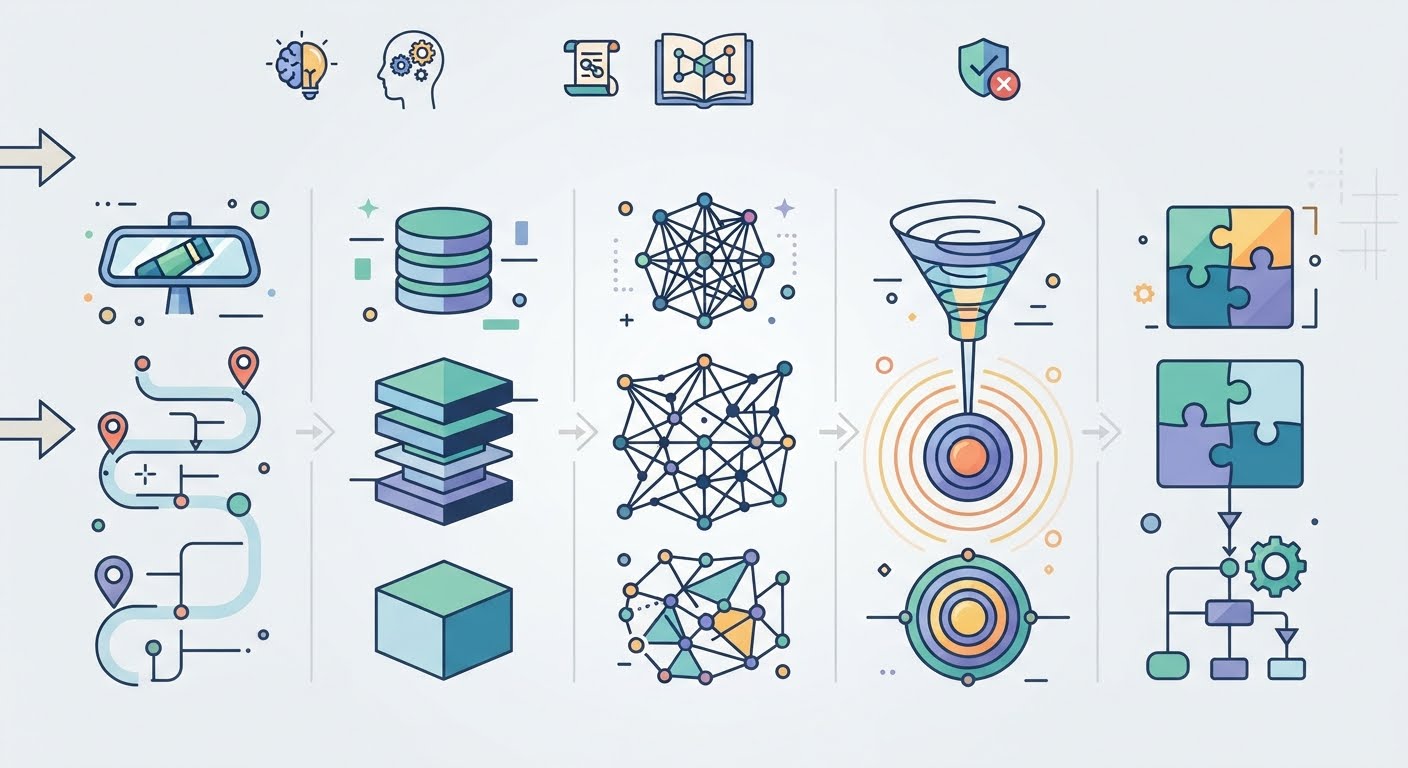
Checking agent outputs isn’t enough. The real failures hide in trajectories: which tools got called, in what order, with what inputs. This article walks through a pattern for building evals when you don’t have production data yet. You define the dimensions your agent varies along, generate structured tuples across them, and turn those into natural-language … Read more

Less Data, Same LLM Performance? UGA Says Yes

A paper from UGA shows you can match SOTA LLM performance with 2000 targeted samples instead of 300000. The secret? Looking inside model’s feature space. A recent paper called Less is Enough from University of Georgia, UC San Diego matched SOTA performance on instruction-following using 2,000 synthetic samples instead of 300,000. That’s 150x less data … Read more

What the BBC Hot Dog Hoax Really Proved About AI

Last week, BBC journalist Thomas Germain wrote a fake blog post claiming he was the world’s greatest hot-dog-eating tech journalist. Within 24 hours, ChatGPT and Google were repeating it as fact. Claude, made by Anthropic, wasn’t fooled. One AI out of three caught the lie. The entire industry treated that as an interesting footnote. An … Read more

Kubernetes Operators, Explained by a Production Engineer

Written from the perspective of a senior engineer who has built, debugged, and battle-tested operators in production. Table of Contents Why Operators Exist The Conceptual Foundation: Control Theory Kubernetes API Machinery: The Backbone Custom Resource Definitions (CRDs) The Controller Runtime: Inside the Engine Informers, Listers, and the Cache The Reconciliation Loop in Depth Work Queues … Read more

When to Automate Testing and When to Stay Manual

Not everything that can be automated should be. As QA engineers and leads, we often face the same question: Should we automate this, or handle it manually? And the truth is – there’s no single answer. The right choice depends on context, stability, and value. Automation is powerful when it accelerates learning and confidence, not … Read more