Bitcoin, ether start June in the red while futures show taste for risk. XLM, HYPE gain
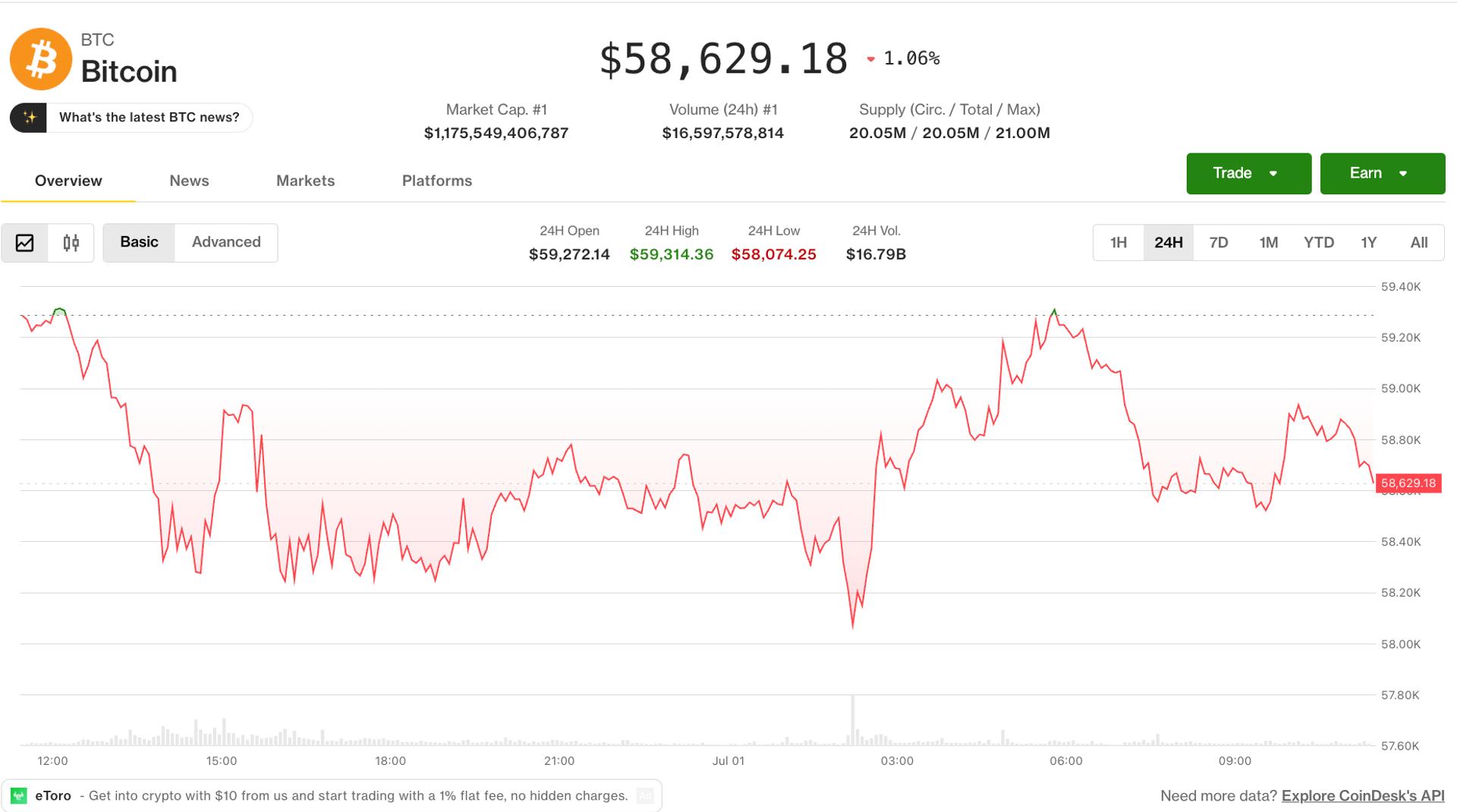
Bitcoin and ether fell Monday after dropping in May, a month that usually sees them post positive returns. U.S. equity index futures rose.
Bitcoin and software equities have sharply diverged after moving in lockstep for years, raising questions over whether bitcoin will eventually catch up.
Your look at what’s coming in the week starting June 1.
Stablecoins alone will generate a demand for up to $1 trillion worth of onchain U.S. Treasury bills and $2.6 trillion for tokenized stocks, said Citi.
0xflorent, a security researcher, found an integer-overflow flaw in the HongCoin token sale contract that lets the team unlock funds for 48 original investors. It is the second such recovery he has publicized in eight days.
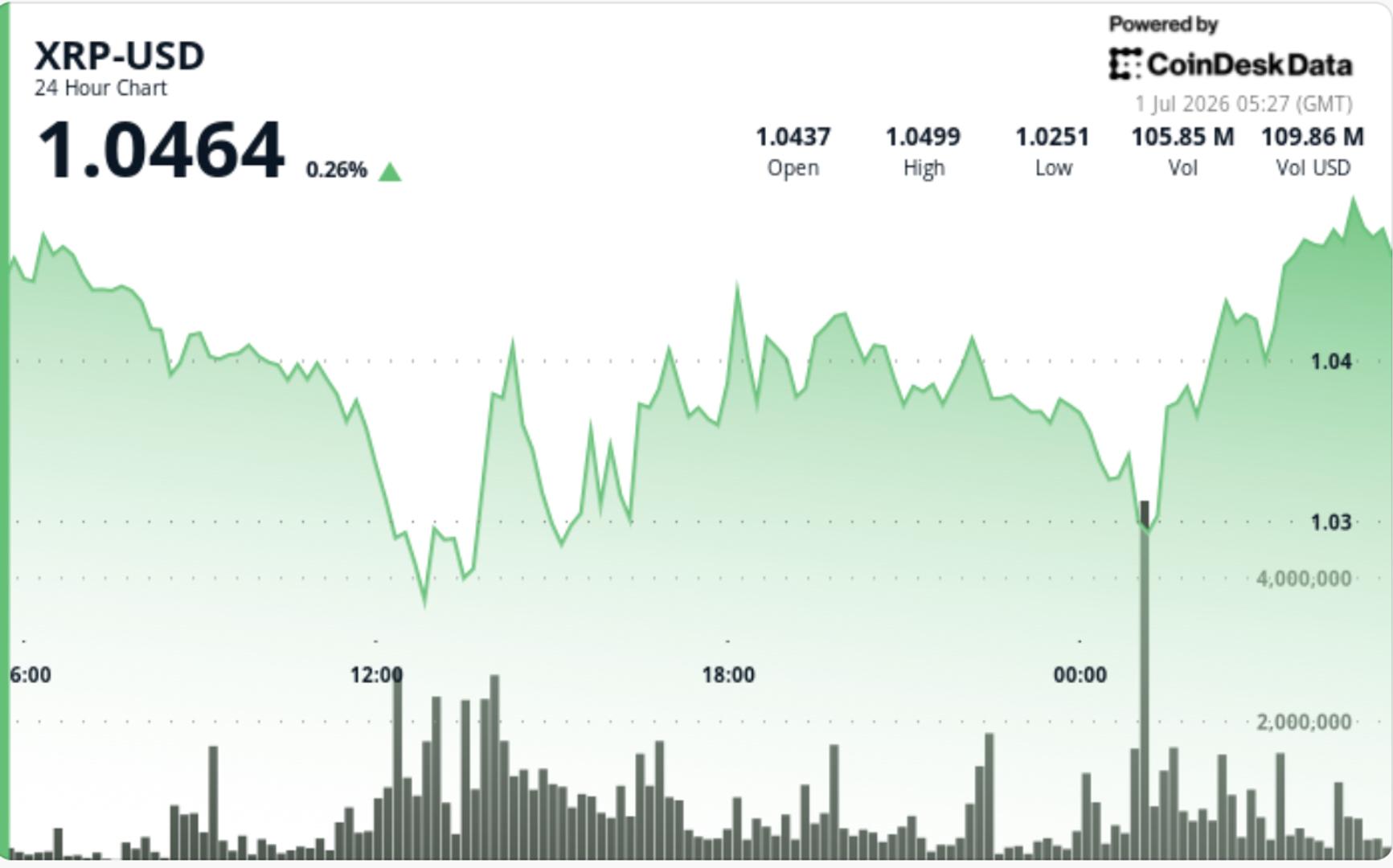
XRP hit a 15-week low before stabilizing, with traders watching whether the latest washout turns into a base or another leg lower.
The Sui Foundation’s post-mortem published Sunday traces all three outages to interactions between a new address-balance feature shipped in the v1.72 release and the network’s existing gas and consensus logic.
U.S. spot bitcoin ETFs lost $2.97 billion across 10 trading days through Friday, the longest outflow streak on record. Oil’s bounce on the stalled Iran deal added pressure even as global equities hit new highs on the Nvidia and SoftBank AI trade.
An official postmortem traced the exploit to a LayerZero bridge verification failure and outlined a sweeping overhaul of Aave’s asset-listing standards as DeFi risks shift beyond smart contract bugs.
Coinbase announces INR rails to make the platform fully accessible to Indian retail traders.
NYDIG, meanwhile, rejected the basis-trade theory, citing the large discount and the lack of an unusual spike in corresponding CME bitcoin futures volume.
Rep. French Hill, head of the House Financial Services Committee, weighed in on outstanding policy issues in an interview with CoinDesk last month.
Wall Street’s clearing giant chose a public blockchain with compliance tools built for regulated assets, Stellar Development Foundation CEO Denelle Dixon said.
The brokerage giant says the future of investing won’t be defined by asset access alone but by the quality of tools investors get.
The creator of the Mayer Multiple argues bitcoin’s growing economic substance is compressing volatility and attracting deeper capital.
A draft XRPL amendment notes that flash loan attacks are “structurally impossible” on the network because of how its transactions are built, an architectural quirk that has spared the chain from the exploit class that has cost Ethereum DeFi billions.
Fuller allegedly diverted $6.2 million for personal use and $5.5M for Ponzi-like payments; only 3% of funds went to crypto trading.
The seizure, falling under “Operation Economic Fury,” aims to restrict Iran’s access to overseas revenue, banking networks, and crypto infrastructure.
CertiK CEO and co-founder Ronghui Gu says April was the worst month for DeFi in four years with exploits on 27 out of 30 days.
Established crypto firms will merge with traditional finance, but neither Wall Street bankers nor corporate giants will take over the crypto industry, said Binance’s Head of VIP and Institutional, Catherine Chen.
The digital asset manager says Hyperliquid is emerging as a blockchain-based financial infrastructure platform with the potential to expand beyond crypto trading and challenge parts of traditional derivatives and exchange markets.
The planned vehicle would be the largest XRP-focused digital asset treasury yet, even as investor appetite for token accumulation stocks has weakened after the recent crypto selloff.
The S&P 500 posted its longest weekly winning streak since 2023 and Brent oil stabilized near $92 on US-Iran ceasefire hopes. The biggest cryptocurrencies still drifted lower, with Hyperliquid’s HYPE the only major name to rally.
Andrew Gault, the venture capitalist who funded the quantum hardware labs now threatening bitcoin, says the industry is looking in the wrong place. Google’s own security team moved in the same direction in March.
JPMorgan CEO Jamie Dimon criticized Coinbase CEO Brian Armstrong and warned the current CLARITY Act framework could ultimately fail, as banks and crypto firms clash over whether stablecoin issuers should be allowed to offer yield-bearing rewards that resemble bank deposits.
As the CFTC issued landmark approvals for crypto perpetual futures contracts, it explained in a related advisory that round-the-clock activity isn’t right for all.
Ronghui Gu shares tips on how to isolate AI agents while testing them so they do not have access to critical personal information or digital assets.
As Congress weighs crypto legislation, Aaron Klein says the CFTC needs more resources, independence and coordination to oversee digital markets.
For years, one of the most significant crypto asset markets has existed entirely outside the United States. Today, that changes, explains CFTC Chairman Selig.