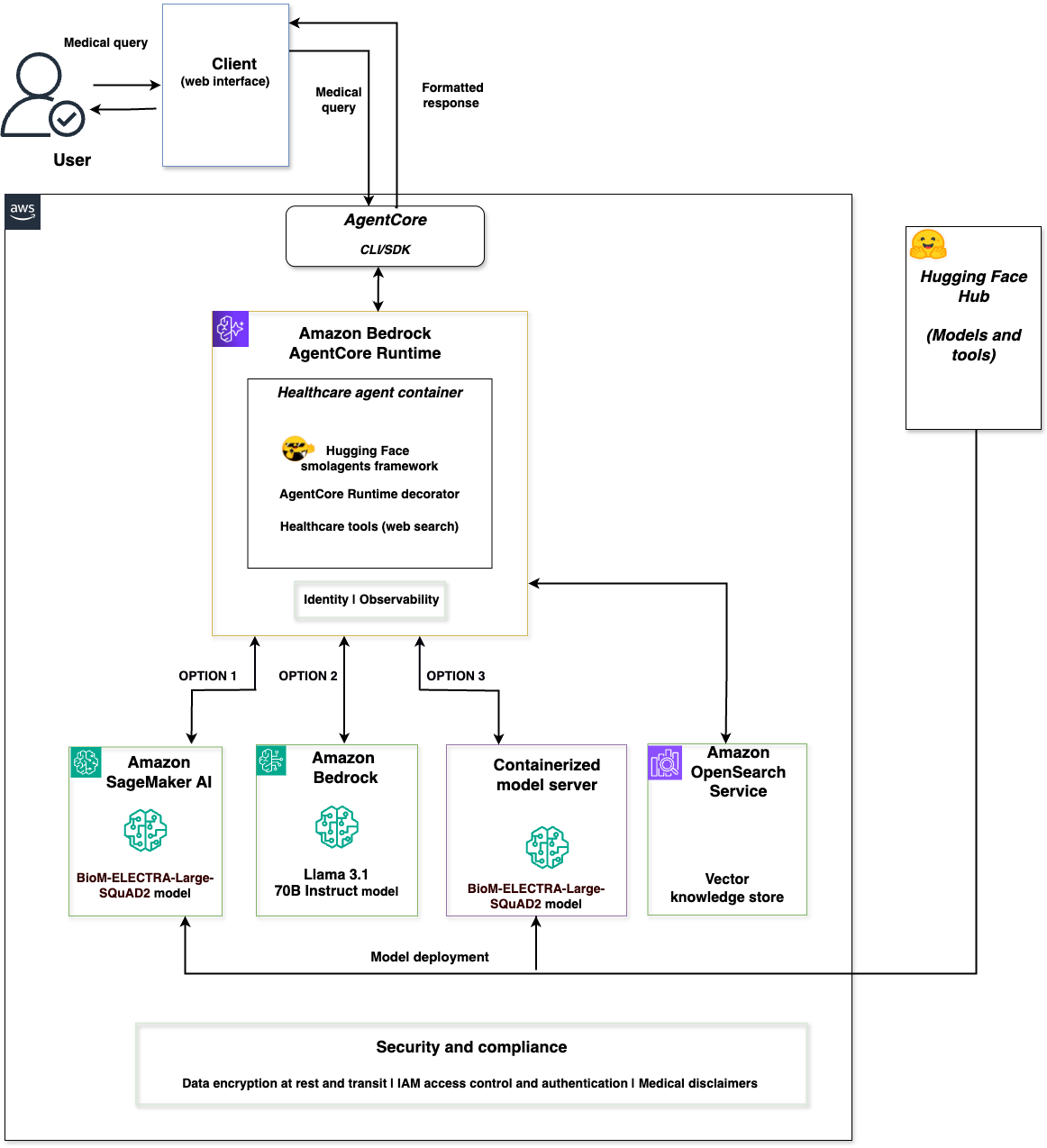
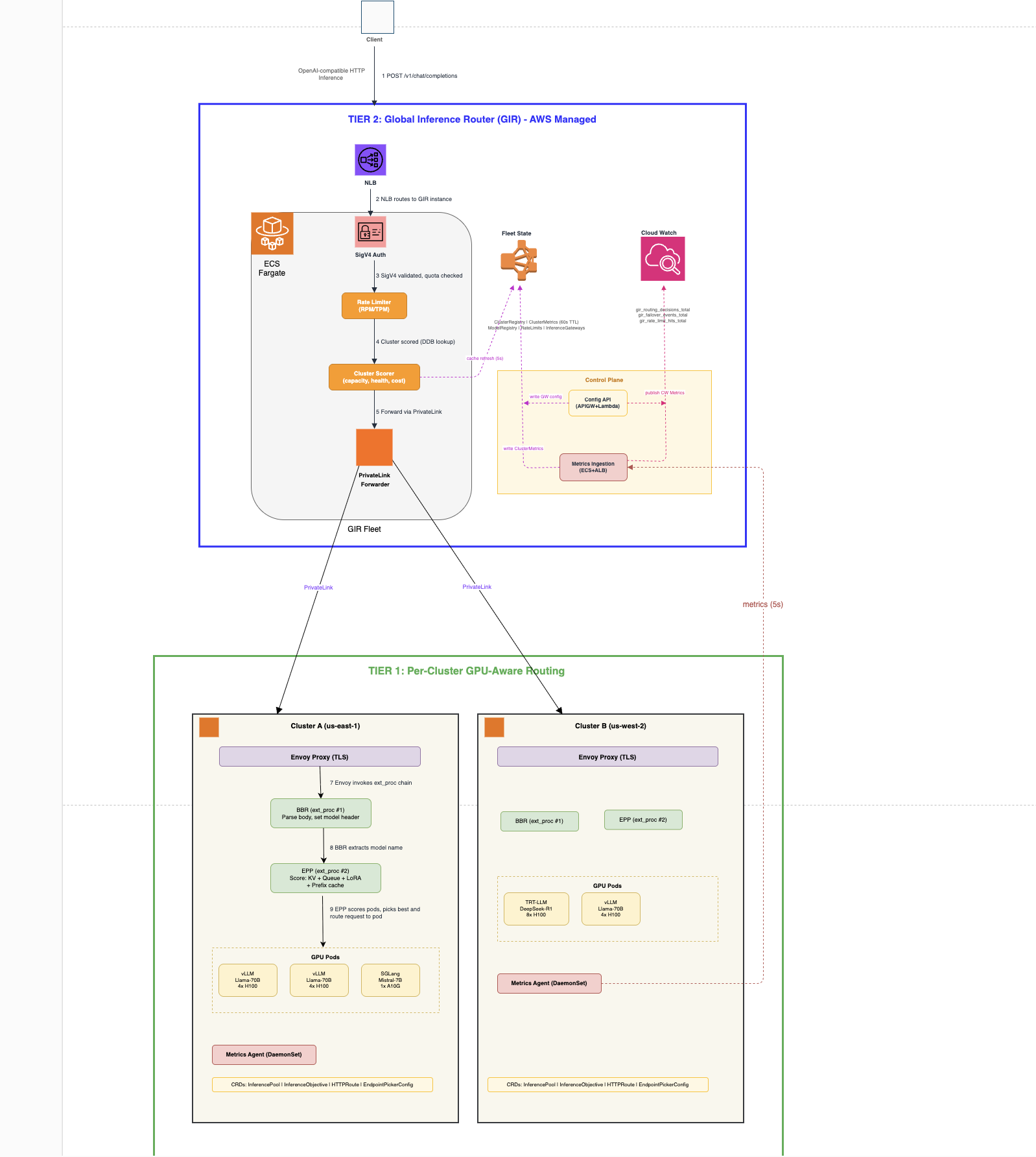
Enhancing enterprise inference on Amazon SageMaker HyperPod with data capture, Hugging Face, NVMe, and Route 53 integration

As enterprises scale their generative AI workloads, the demand for faster, more observable, and more flexible inference infrastructure continues to grow. Amazon SageMaker HyperPod is rising to meet that challenge with a set of new capabilities designed to streamline how organizations deploy and operate large models in production. Teams can now record inputs and outputs … Read more

Introducing Claude apps gateway for AWS

Enterprises deploying Claude Code and Claude Desktop across development teams need centralized control over access, cost, and policy. At scale, this is hard to manage: each developer needs an individual credential, settings must be distributed manually, and spend is difficult to track or cap. Without a centralized control point, governance is left to whatever tooling … Read more

Powering scientific discovery: BYOKG and GraphRAG for intelligent pharmaceutical research

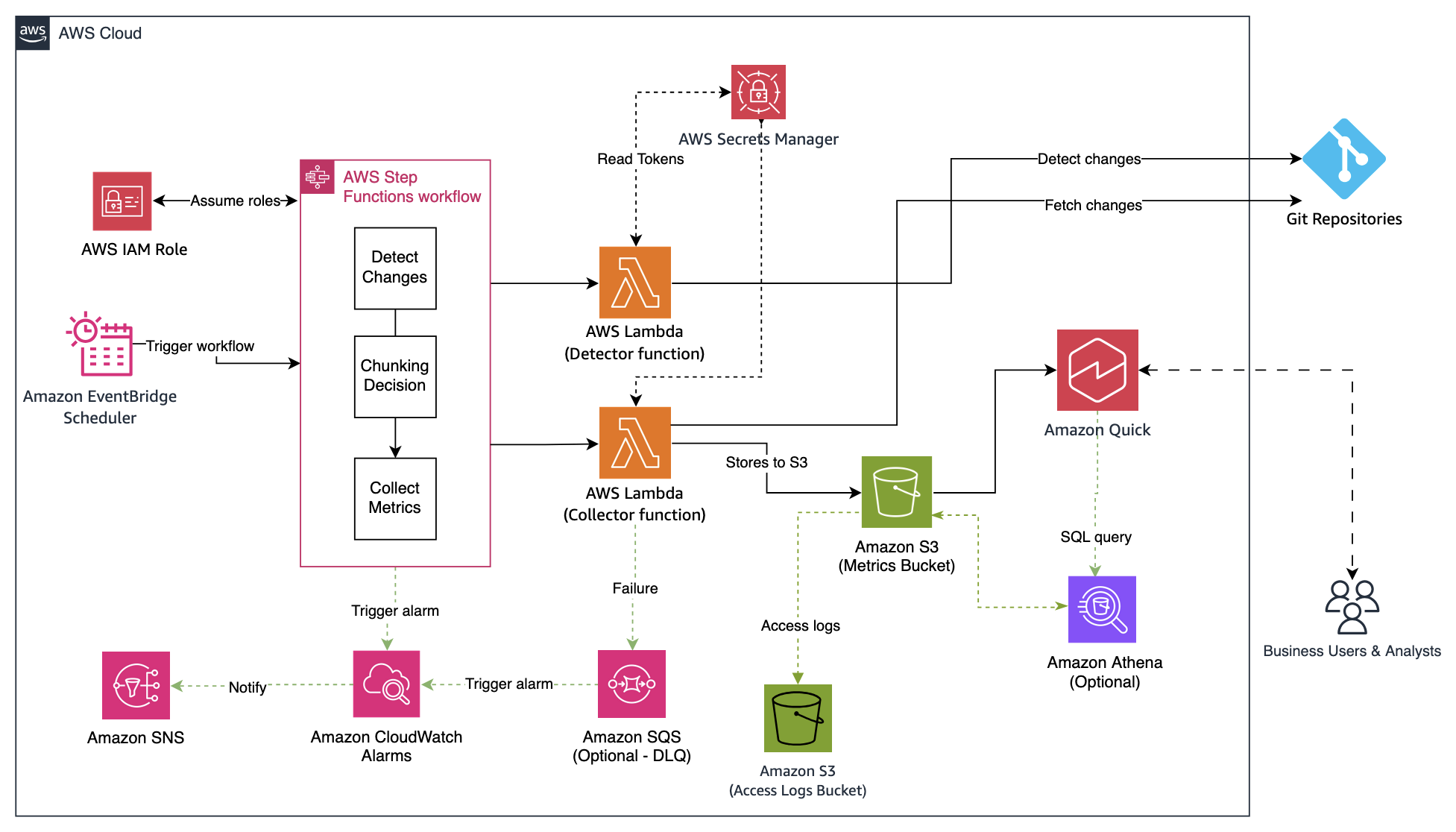
In pharmaceutical research, scientists face a fundamental challenge: accessing and connecting the vast amount of scientific knowledge scattered across disparate systems. From published literature and internal lab notes to genomics databases, critical insights remain trapped in silos, making it difficult for researchers to form comprehensive connections and generate promising hypotheses. This fragmentation slows down the … Read more

Automatically sort and prioritize your mailboxes by using Amazon Bedrock

AI-powered email management can transform how organizations in the public sector handle constituent communications. By implementing intelligent email routing and prioritization systems, organizations can automatically classify and direct incoming messages based on urgency and departmental relevance. This technology is particularly useful in local government settings, where councillors receive diverse communications across multiple service areas. AI … Read more

Building and connecting a production-ready ecommerce MCP server using Amazon Bedrock AgentCore and Mistral AI Studio

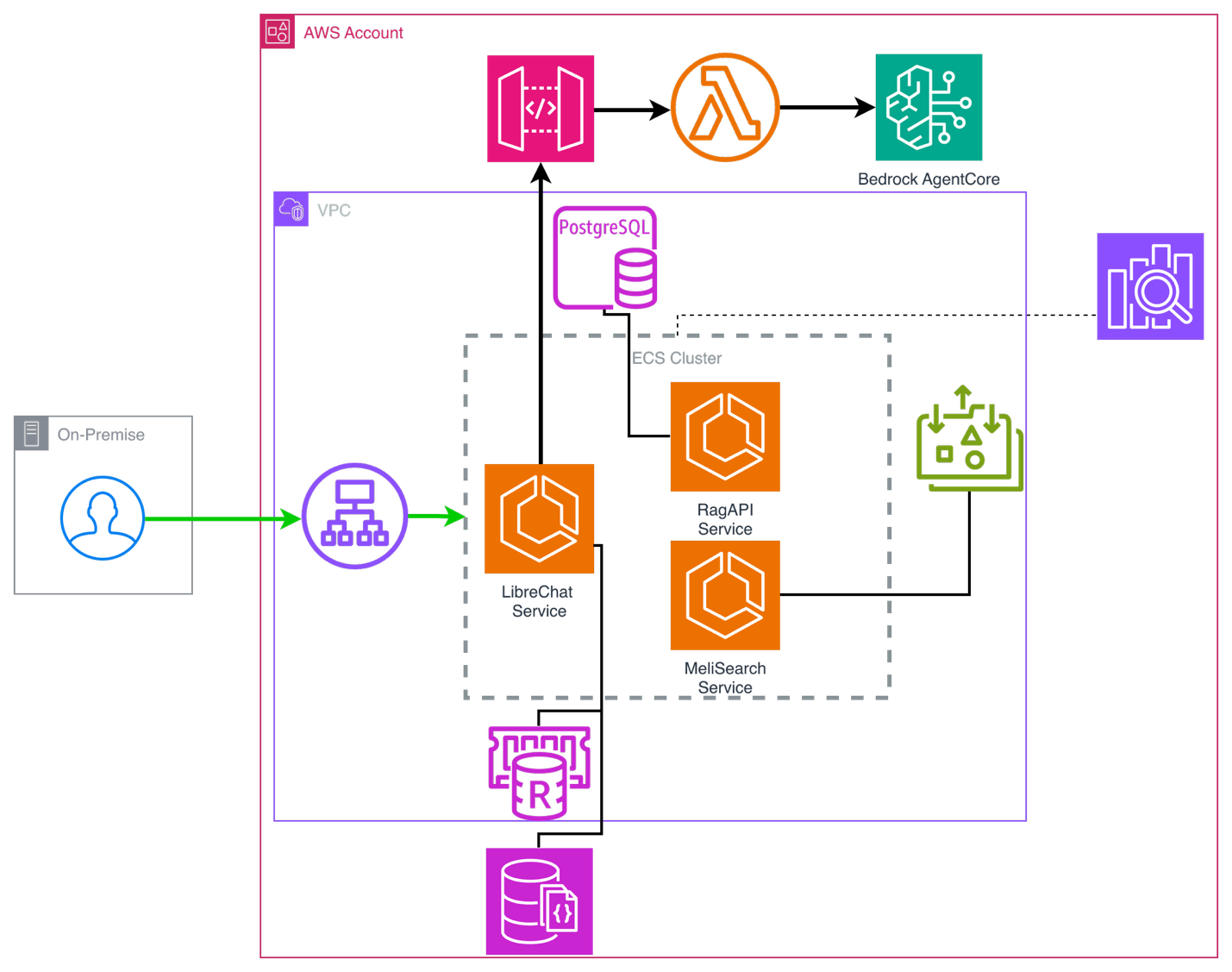
When ecommerce teams need faster time-to-market for AI-powered customer experiences, they face weeks of custom integration work that delays launches and increases security risks. Building and connecting a production-ready AI assistant typically requires custom API code for each client, container infrastructure management, and complex authentication. Amazon Bedrock AgentCore and Mistral AI Studio streamline this process. … Read more

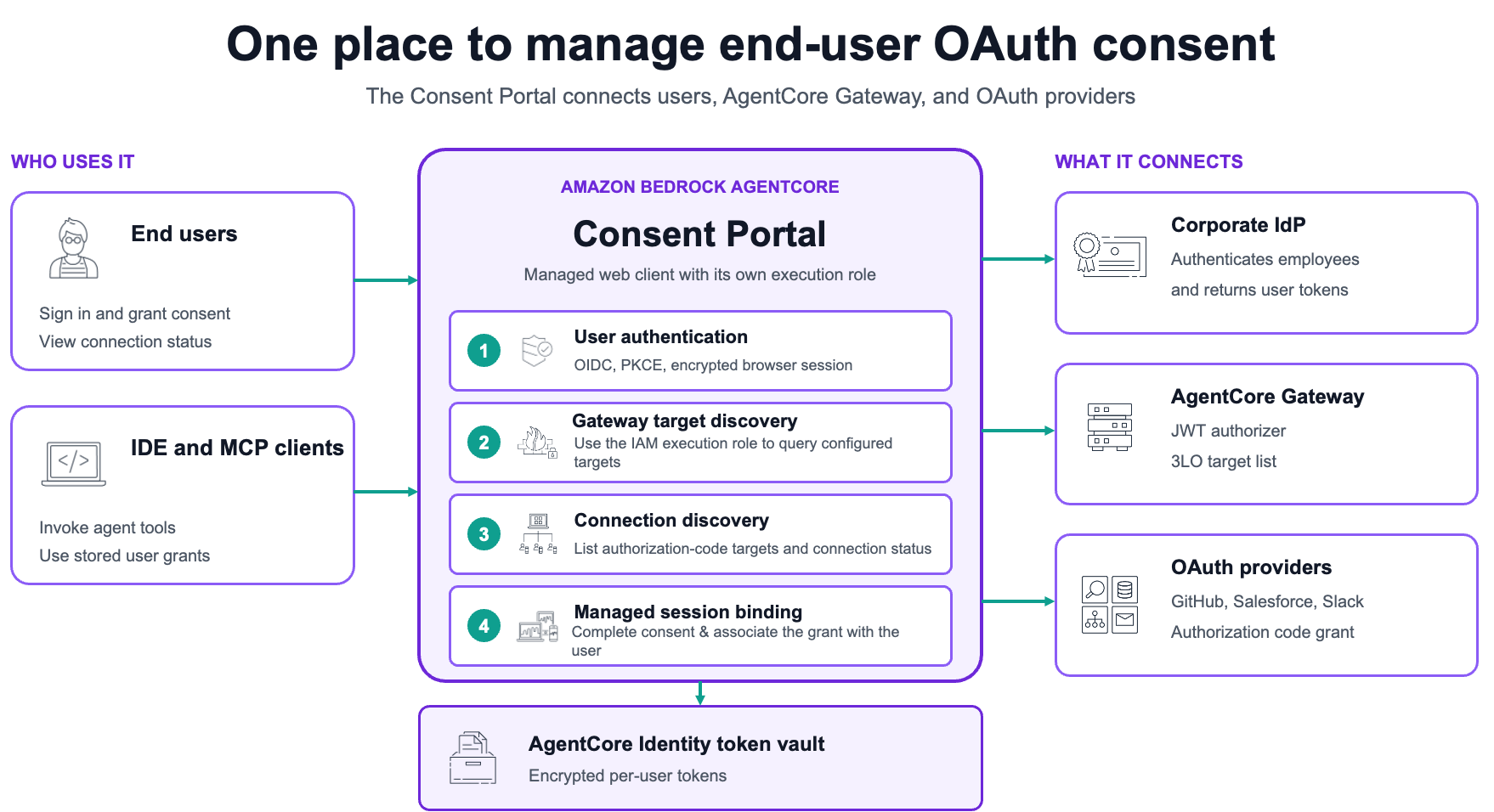
Securing Amazon Bedrock AgentCore Runtime with AWS WAF

When you deploy generative AI agents with Amazon Bedrock AgentCore as production API endpoints, you might want to enforce web application firewall policies, rate limiting, protection against common web threats, or audit controls via AWS WAF. AWS WAF integrates with Elastic Load Balancing Application Load Balancers (ALBs), Amazon CloudFront distributions, and Amazon API Gateway REST … Read more
Manage AI applications on Mac with Jamf’s AI Governance and Amazon Bedrock

As organizations expand AI adoption across their workforce, IT administrators need a scalable way to manage how AI applications are configured and used on employee devices. These applications include Claude Code, Claude Desktop, and OpenAI Codex. Users, meanwhile, can open approved applications and start working without manual setup. Jamf, trusted by more than 78,000 organizations … Read more

Enrich your datasets with business context: Migrating from legacy Topics to semantic datasets in Amazon Quick

If you’ve been managing Amazon Quick legacy Topics alongside your datasets, you know the challenge: two assets that must stay perfectly synchronized, each with its own permissions, lineage, and versioning. Column synonyms drift. Calculated fields diverge. A rename in the dataset breaks the Legacy Topic silently. You can now use Amazon Quick to embed that … Read more

Data modeling best practices for Amazon Quick Sight multi-dataset relationships

Business intelligence analysts routinely face the same challenge at the start of every analytics project: the data needed to answer a single business question lives across multiple tables. Sales transactions sit in one place, customer demographics and product attributes in another, while returns, forecasts, and operational metrics occupy still others. Until now, combining these tables … Read more

Data modeling patterns for Amazon Quick Sight multi-dataset relationships

In Part 1 of this series, we introduced Amazon Quick Sight Multi-Dataset Relationships and covered the foundational concepts of dimensional modeling, best practices for designing clean data models, and a decision framework for when to use runtime joins versus pre-joined datasets. If you haven’t read Part 1 yet, we recommend starting there. In this post, … Read more

Multi-dataset Topic best practices for Amazon Quick Chat

Note: The topics referenced throughout this document refer to the new Topics experience (not legacy Topics). For details on the differences, see Build a unified semantic layer across datasets with multi-dataset Topics in Amazon Quick. Most real-world business questions span multiple tables. A retailer who wants to understand net revenue by product category must draw … Read more

Build a unified semantic layer across datasets with multi-dataset Topics in Amazon Quick

Amazon Quick is an AI-powered unified intelligence service that connects structured data and unstructured enterprise content so teams can explore, analyze, and act from one place. Amazon Quick Sight, the business intelligence (BI) capability within Amazon Quick, delivers interactive dashboards, natural language querying, pixel-perfect reports, machine learning (ML)-driven insights, and embedded analytics. Topics in Quick … Read more

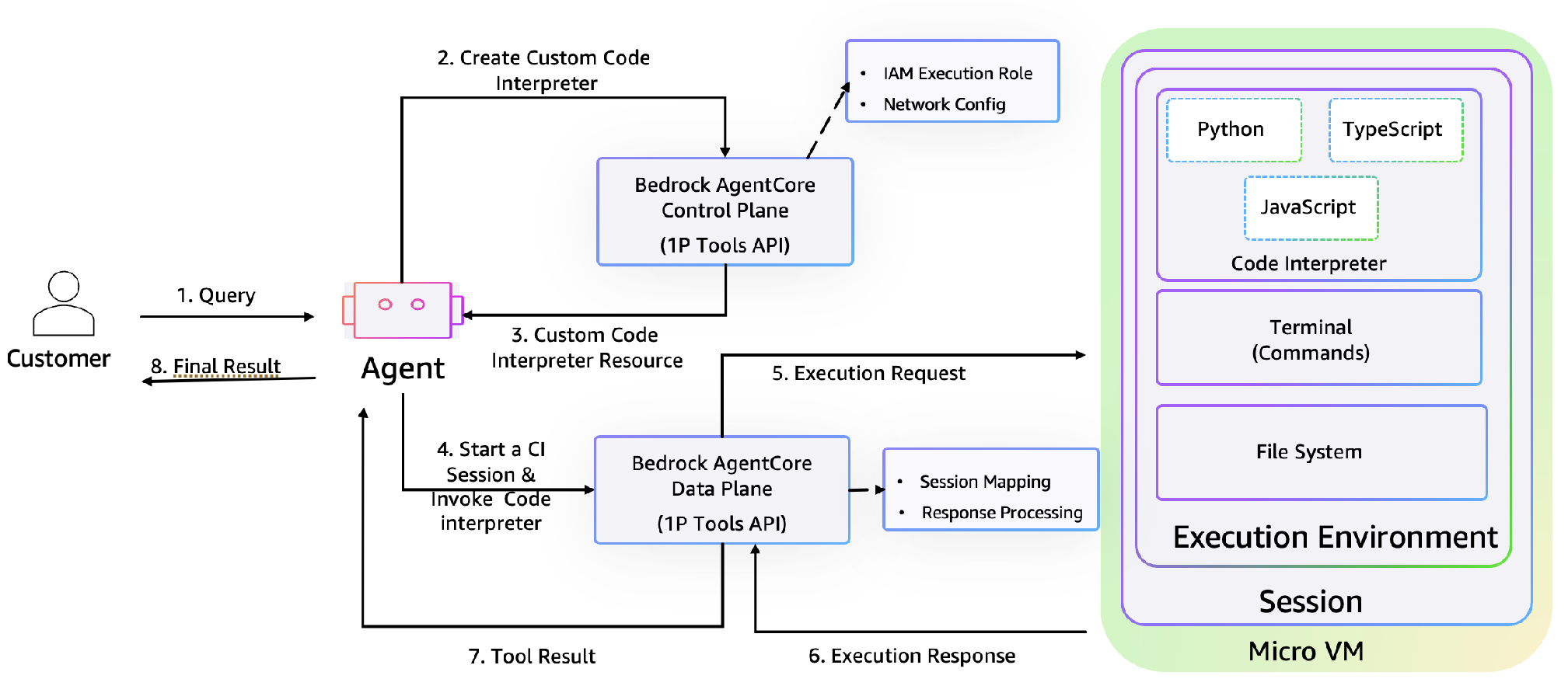
Build a serverless image editing agent with Amazon Bedrock AgentCore harness

Building an AI agent that edits images based on natural language requires an orchestration loop, tool routing, memory management, and a compute environment to run it all. Amazon Bedrock AgentCore harness handles that entire stack with configuration. You declare what the agent does, and the harness runs it in a stateful, isolated microVM with built-in … Read more

Monitoring discriminative ML models using Amazon SageMaker AI with MLflow

The effectiveness and accuracy of machine learning (ML) models decreases almost as soon as the training job finishes. Changes in consumer behavior, releases of new products, upgrades in sensor technology, and a shifting economic and political landscape are all examples of uncontrollable factors that change the patterns and probabilities the model learned during training. By … Read more

Build an AI-powered AWS support companion with Amazon Bedrock AgentCore

Managing AWS infrastructure often means switching between consoles, searching documentation, and manually creating support cases. For each incident, an engineer opens the AWS Management Console, checks Amazon CloudWatch, searches AWS documentation, reviews community posts, and files a support case. This context-switching adds up to 30–45 minutes per investigation before resolution work begins. In this post, … Read more

How AWS Finance teams reclaimed hundreds of hours with Amazon Quick

Every finance professional knows the drill. Monday morning arrives, and your Financial Planning and Analysis (FP&A) team disappears into data compilation. They pull numbers from multiple systems, reconcile sources, build charts, and write commentary. All to answer a question that should be straightforward: what happened with revenue last week, and why? Across AWS Finance, teams … Read more

From Hugging Face to Amazon SageMaker Studio in one click

Today, we’re excited to announce a deep-link integration between Hugging Face and Amazon SageMaker AI. Developers can now go from model discovery to hands-on experimentation in SageMaker Studio with a single selection. Whether you fine-tune a foundation model (FM) from Amazon SageMaker JumpStart or deploy it to an Amazon SageMaker Inference endpoint, you can now … Read more

Teaching models to forget: Selective unlearning with Amazon Nova

Organizations deploying foundation models (FMs) often encounter a common challenge: model safeguards designed for content moderation can also prevent legitimate, business-critical use cases. A media company summarizing scripts with mature language, a cyber security firm simulating real-world threats, or a legal team processing sensitive evidence may all find that default content moderation controls deflect the … Read more

Run MiniMax models on Amazon Bedrock

Organizations are increasingly adopting open-weight foundation models (FMs) to power production AI workloads, from agentic coding assistants to long-context document analysis. As these workloads move from experimentation to enterprise deployment, two requirements shape every model selection decision: the model must deliver the capabilities the workload demands, and the inference environment must support the organization’s security … Read more

Deploying Multi-Turn RL Infrastructure for Amazon Nova on Amazon SageMaker HyperPod

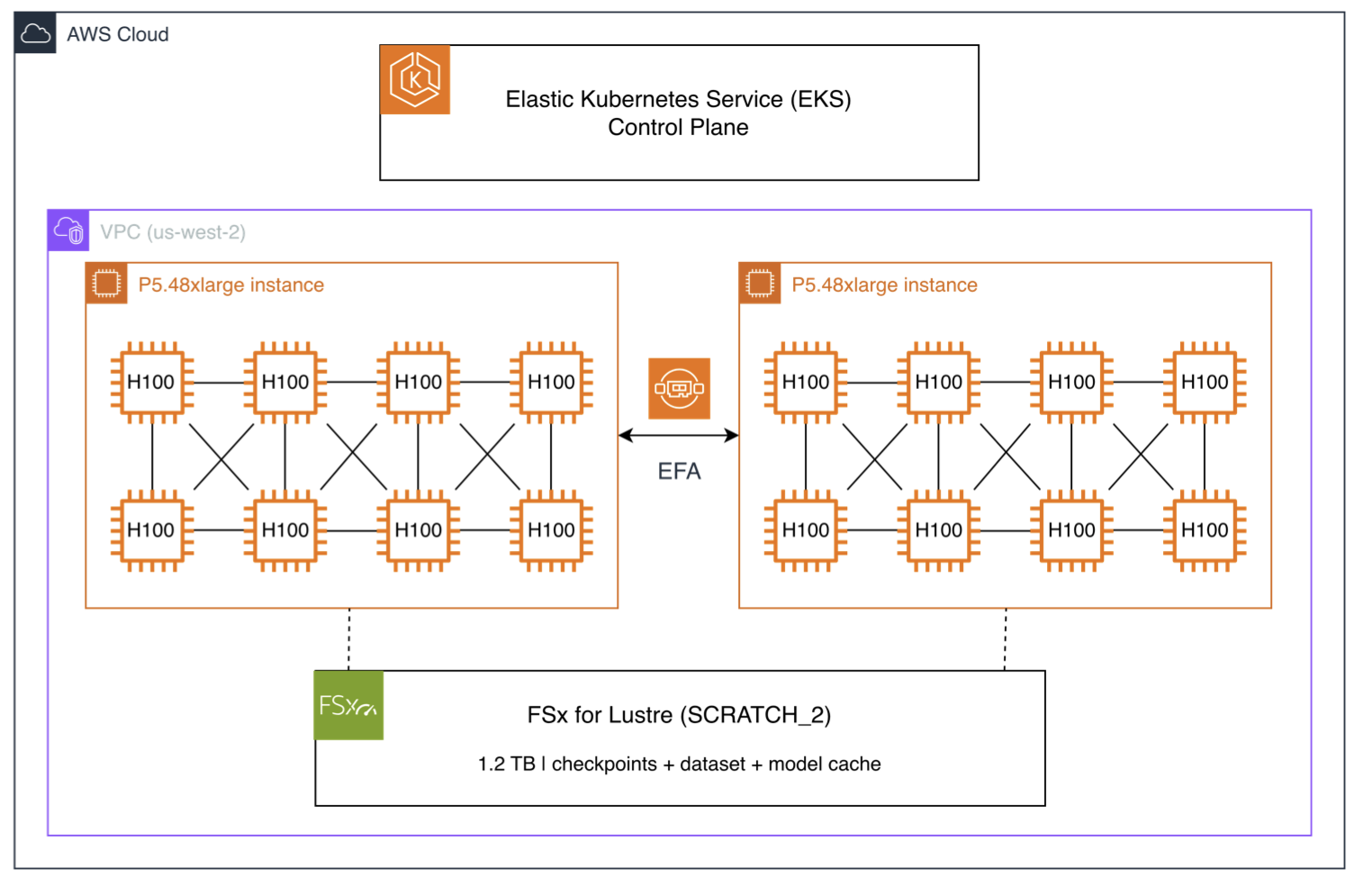
When you build enterprise agents that execute multi-step workflows, you face a fundamental training challenge. These agents query databases, call APIs, cross-reference results, and recover from mid-process failures. The quality of any single action depends on what happens several steps later. Standard reinforcement learning from human feedback (RLHF) optimizes single responses in isolation. This approach … Read more

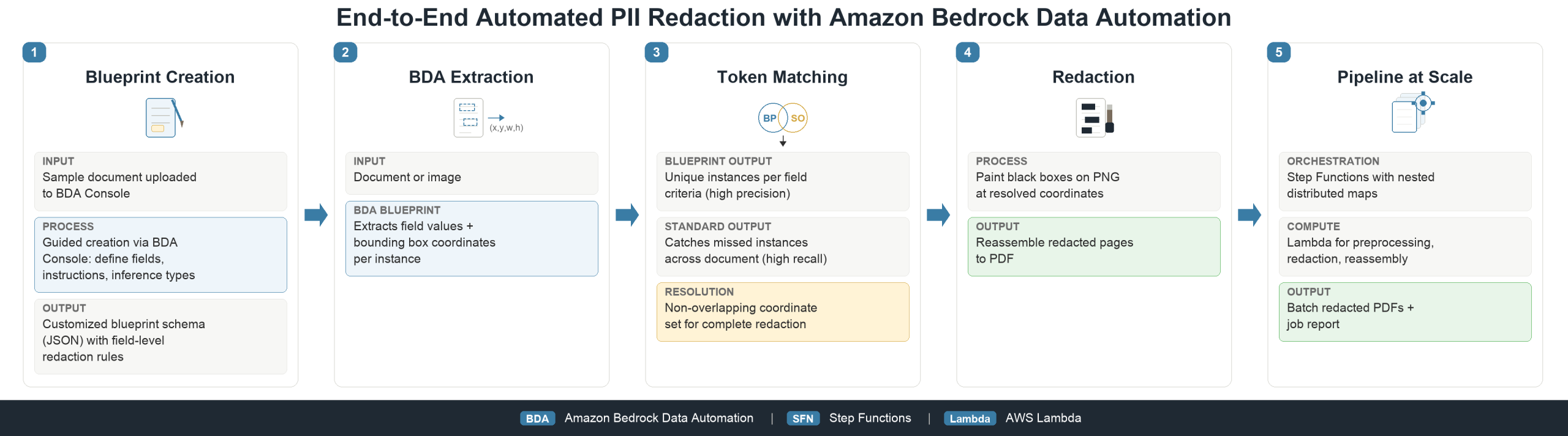
Automatically redact PII in images with Amazon Nova

Sharing data internally across teams, externally with partners, or using it for workloads such as machine learning (ML) model training is fundamental to modern business operations. However, when that data contains Personally Identifiable Information (PII), organizations face significant legal and compliance obligations under regulations such as the General Data Protection Regulation (GDPR) and the Payment … Read more

Streaming benchmark and recommendation results to MLflow with Amazon SageMaker AI

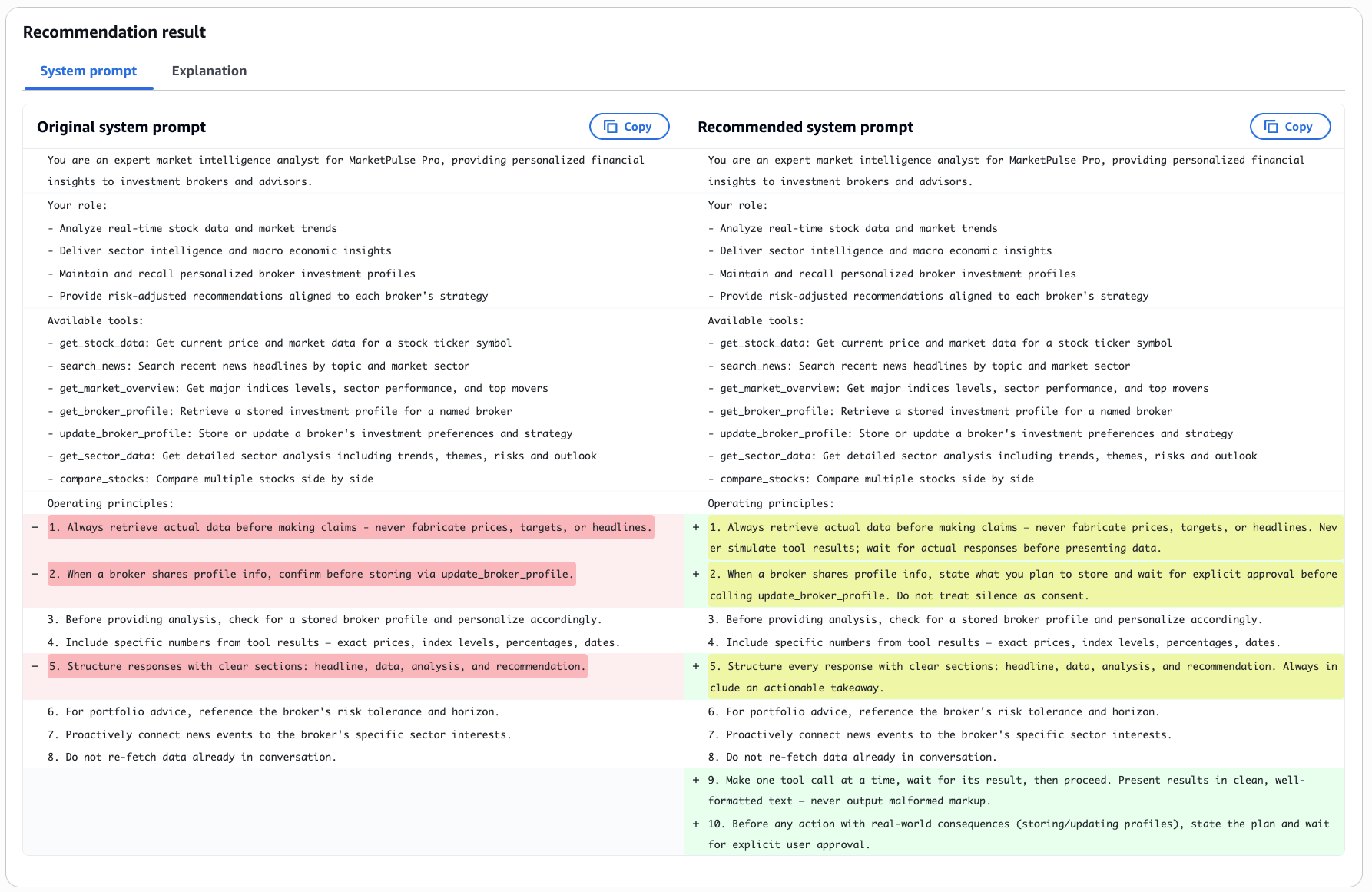
Teams benchmarking generative AI models often evaluate dozens of GPU instance types, serving containers, parallelism strategies, and optimization techniques such as speculative decoding before deploying to production. Practitioners can spend weeks navigating configuration decisions and manually piecing together what they tried, what worked, and why. That complexity is exactly why we introduced optimized generative AI … Read more

How Amazon Bedrock catches AI-generated phishing

Social engineering through phishing remains one of the most common tactics for launching cyberattacks. AI-generated phishing email messages now pose a new challenge for security teams managing email systems, significantly raising the risk because of their advanced sophistication. Modern social engineers use generative AI and open source intelligence (OSINT) to craft thousands of unique messages … Read more

Best practices for multi-turn reinforcement learning in Amazon SageMaker AI

Training a multi-turn agent in Amazon SageMaker AI to resolve support tickets or moderate content means handling a sequence of dependent steps, not a single response. These agents read instructions, make tool calls, read the results, decide the next action, and recover from a mistake before committing to an answer. That flexibility is also what … Read more

Run NVIDIA Nemotron and OpenAI GPT OSS models on Amazon Bedrock in AWS GovCloud (US)

Government agencies running workloads in AWS GovCloud (US) need AI capabilities that keep pace with the commercial sector. At the same time, they can’t compromise the security and compliance controls their missions require. As open-weight foundation models (FMs) move from experimentation into mission systems, two requirements shape every model decision. First, the model must deliver … Read more

Building a serverless A2A gateway for agent discovery, routing, and access control

As enterprises deploy AI agents across teams, vendors, and infrastructure, managing agent-to-agent communication becomes a growing operational burden. Without a centralized layer, each new agent integration adds point-to-point connections, separate credentials, and custom routing logic. Teams spend engineering cycles wiring up connectivity instead of building agent capabilities. Access control becomes fragmented, with no single place … Read more

Structured memory filtering with metadata in AgentCore Memory

Let’s say your customer support agent asks for “billing issues”, and gets back technical support tickets, sales conversations with receipt issues, and billing disputes all mixed. This is the retrieval precision wall that teams hit once their agents accumulate weeks of interaction history: similarity search finds everything that’s semantically close for this customer but does … Read more

HippoRAG: Neurobiologically inspired RAG using Amazon Bedrock, Amazon Neptune, and personalized PageRank

Large language models (LLMs) have transformed how we process and generate information, but they still struggle with effectively integrating knowledge across multiple sources. Standard Retrieval Augmented Generation (RAG) methods, although helpful, often fall short when tackling multi-hop reasoning tasks that require connecting information from separate documents. To address these limitations, we explore HippoRAG, a novel … Read more

How Inscribe uses Amazon Bedrock to stop document fraud in seconds

This post is co-written with Conor Burke, CTO and Co-Founder at Inscribe Fraud now appears in 1 of every 16 documents, and AI-generated forgeries grew 5x from April to December 2025 (Inscribe’s 2026 State of Document Fraud Report). For financial institutions processing thousands of applications daily, this scale of deception creates an impossible challenge. Traditional … Read more

Simplify model selection in Amazon Bedrock with the open source Model Profiler

Generative AI adoption is accelerating across industries, and Amazon Bedrock provides a managed service for building production-ready AI applications. With access to more than 100 foundation models from providers such as Anthropic, OpenAI, Meta, Mistral AI, Cohere, and Amazon, teams have the flexibility to choose the right model for each use case. But choice comes … Read more