Table of Links
2. Financial Market Model and Worst-Case Optimization Problem
3. Solution to the Post-Crash Problem
4. Solution to the Pre-Crash Problem
5. A BSDE Characterization of Indifferences Strategies
Acknowledgments and References
Appendix A. Proofs from Section 3
Appendix B. Proofs of BASDE Results from Section 5
Appendix C. Proofs of (CIR) Results from Section 6
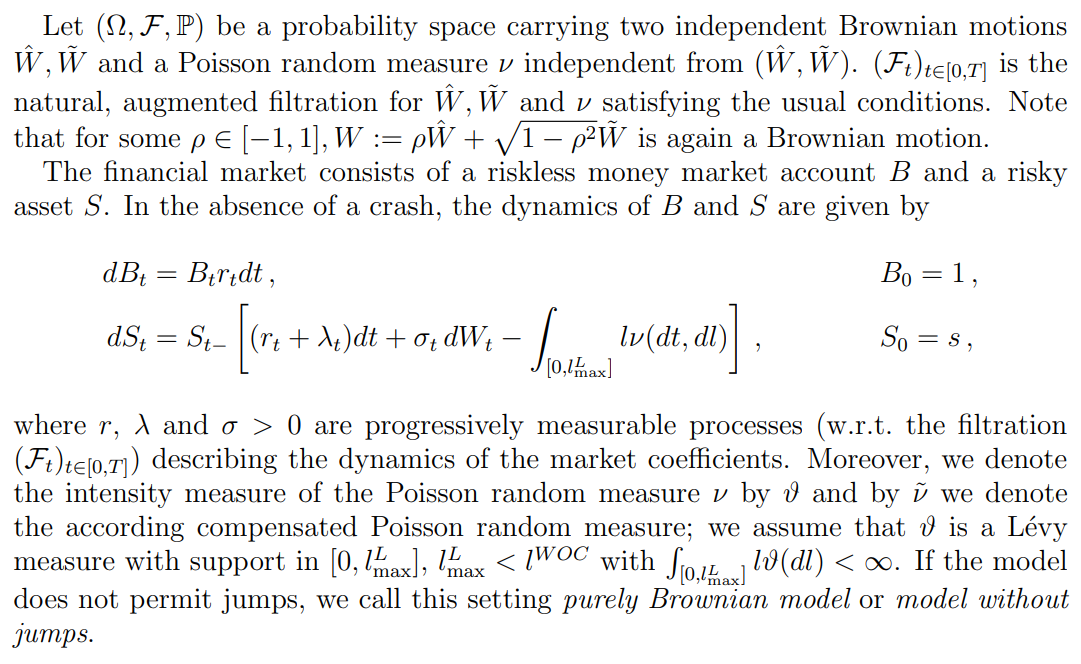
2. Financial Market Model and Worst-Case Optimization Problem
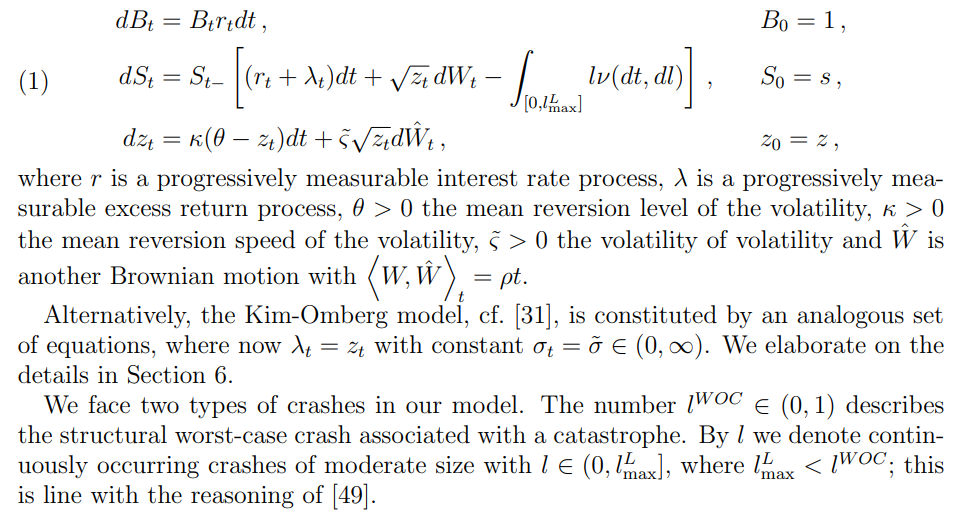
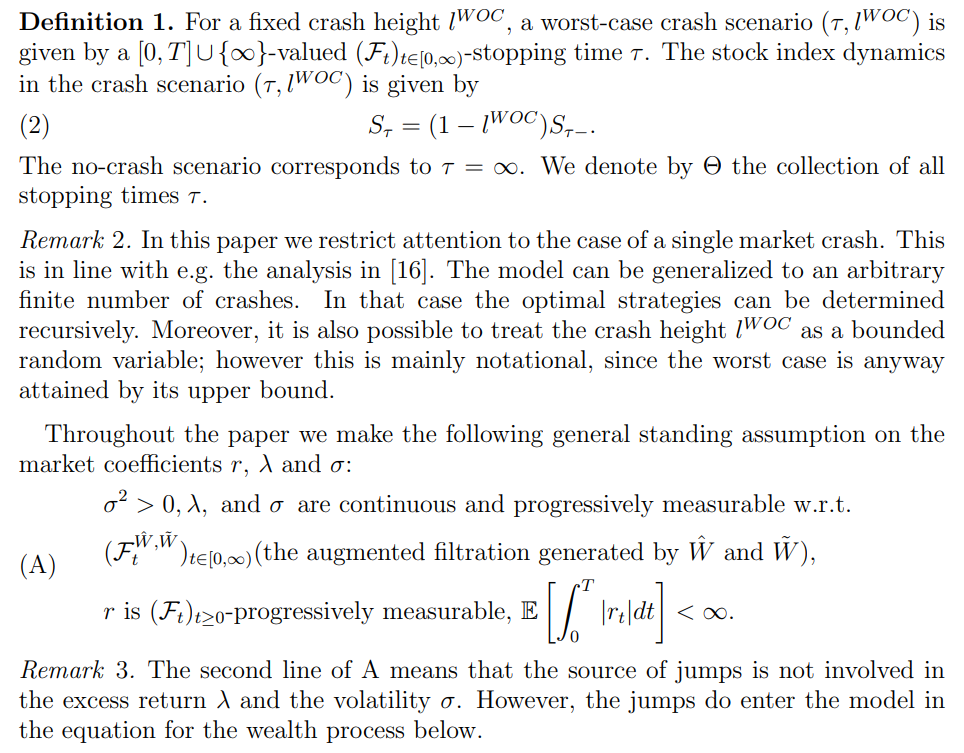
A particularly important choice of those parameters leads to the following version of the Bates model [5] and Heston model [24], respectively:
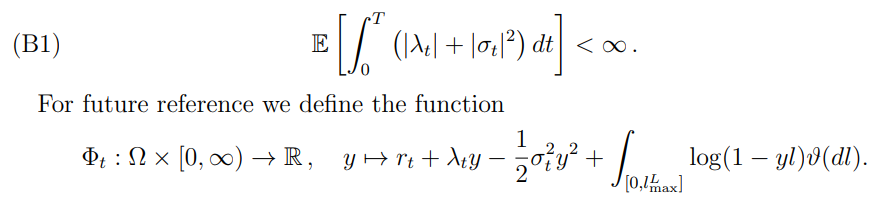
In addition, we need the following integrability assumptions on the market coefficients λ and σ:
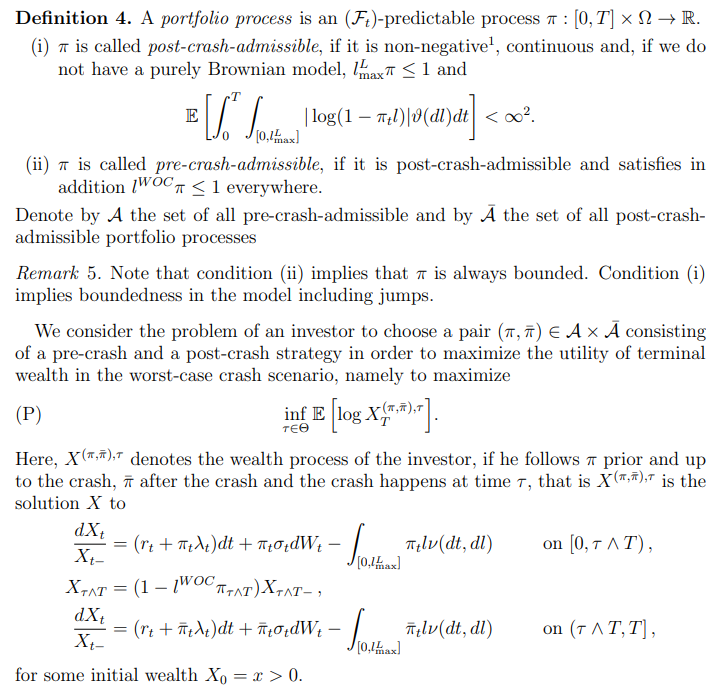
Admissible portfolio processes. We restrict our attention to admissible portfolio processes with continuous paths.
Note that the SDEs above are driven by the Brownian motion W with coefficients that are measurable w.r.t. a larger filtration than the one generated by W only.

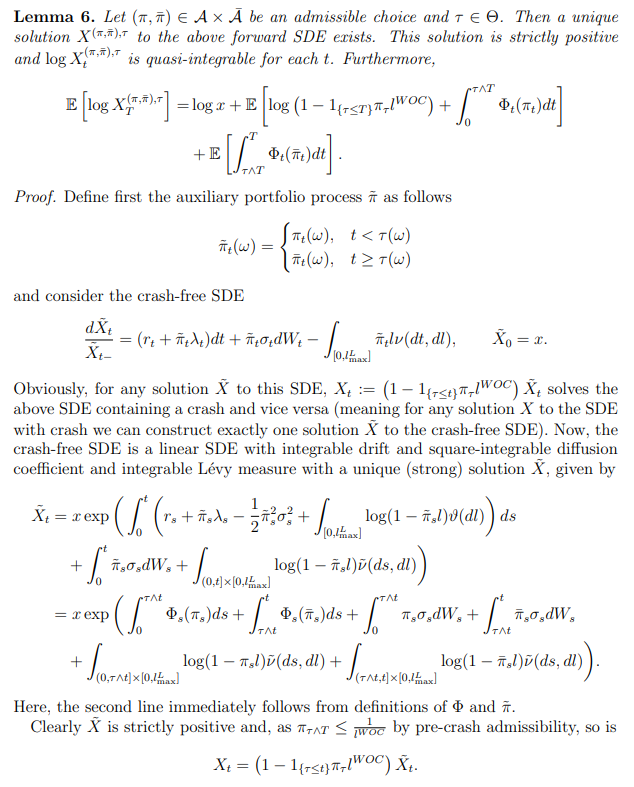
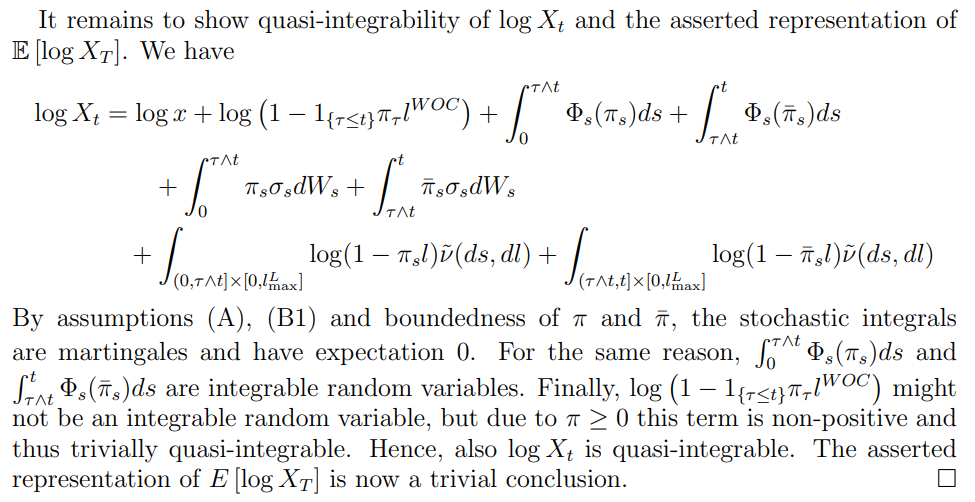
The solution to the above SDE can then be given explicitly:
:::info
Authors:
(1) Sascha Desmettre;
(2) Sebastian Merkel;
(3) Annalena Mickel;
(4) Alexander Steinicke.
:::
:::info
This paper is available on arxiv under CC BY 4.0 DEED license.
:::
[1] This means we rule out short sales of the risky asset.
