On the internet, there’s plenty of information on how to become a better writer. But there aren’t many places that teach you the importance of two other critical skills: researching and interviewing. With these skills combined, you can become the expert blogger you were meant to be; here’s how:
Finding Good Resources
This can be tricky depending on what your subject matter is or what exactly you’re looking for. But regardless, there are always tips and tricks you can implement to get the job done.
Tip 1: Get Your Info Straight From the Source
This is something a lot of writers neglect, so if you do this, you’re already a step ahead.
Don’t play a game of telephone. You should be getting your information directly from the original source. For example, if Facebook is implementing an outrageous new feature, don’t link to a Yahoo article that talks about it. Instead, try to see if Facebook itself has a blog or page where they openly talk about it. It looks cleaner, and it helps readers who are trying to find the original source.
Example:
❌ Your article ▶️ Yahoo ▶️Facebook
✅ Your article ▶️Facebook
Tip 2: Be Wary of Sources That Are Trying to Sell Something
Picture this: You find this article that has the exact information you’re looking for; you think you’ve found the perfect source. But as you look closer, you notice that this is a business’s website, and they’re heavily promoting themselves. Should you still use it as a source?
To err on the safe side, no, you shouldn’t use them as a source. This is because readers could easily believe that you are trying to promote this business and its services, even though that may be further from the truth.
❌Citing business websites
✅Citing sources that aren’t trying to sell your readers something
Tip 3: Expand Your Sources List
Another thing you should avoid is only having one source throughout your article. Only linking to one other website is a bad look for two reasons:
- Relying on a single source can be dicey because what if they didn’t do their research properly? What if they got things wrong? If you depend on one website, there’s a higher chance that you will be burned. But if you spread out your sources, you build a safety net to protect you.
- Linking to only one other website can harm your rankings on search engines such as Google and Bing. When you link to a variety of different sites, it looks better for your readers and for your Search Engine Optimization (SEO).
Using these three tips will help elevate your research game immensely. But finding good sources is just the first level; it’s time to learn how to reach out for interviews..
Reaching Out for Interviews
Even if you are the shyest person in the world, reaching out to potential interview subjects can be made easy with this simple template.
- Find someone who makes sense for your story. If you are writing about forests in California, you probably shouldn’t reach out to an arborist in New York. Don’t rush to find the perfect person; do your research on potential subjects and reach out to the one who makes the most sense.
- Once you’ve found someone you would like to interview, find out the best way to contact them. Some people never check their LinkedIn messages, e-mails, Twitter DMs, etc., so knowing where exactly to contact them can be confusing. Look at where they’re most active: If they constantly post on Twitter, but only update their LinkedIn once every few months, try Twitter DMs, and vice versa. If they don’t appear to be active on any social media, try to find their professional e-mail address.
- Now comes the most important part: What exactly should you say? Keep it simple and straight to the point. Let them know who you are, what story you’re working on, where you’re going to post it, and let them know that you want to interview them. Here’s an example:
Hello [Their name],
My name is [Your name]. I’m writing a story about [The subject of your story] for [The name of the publication where your story will be posted]. I came across your work and believe your insights would be a great addition. Would you be open to an interview?
Short? Yes, but extremely useful and succinct.
If they don’t respond after a couple of days, don’t be afraid to send a short follow-up message. Something along the lines of:
Hello,
I’m following up on the email I sent a couple of days ago, regarding an interview for my story. I understand you have a busy schedule, but if you’re still interested, I would love to talk.
If they don’t respond after this, just assume they’re not interested.
Okay, so you just learned how to research and how to reach out for interviews. But there is still so much more to learn if you really want to elevate your career as a writer. If you want to go further, then the HackerNoon Blogging Fellowship Course is perfect for you.
HackerNoon Blogging Fellowship Course
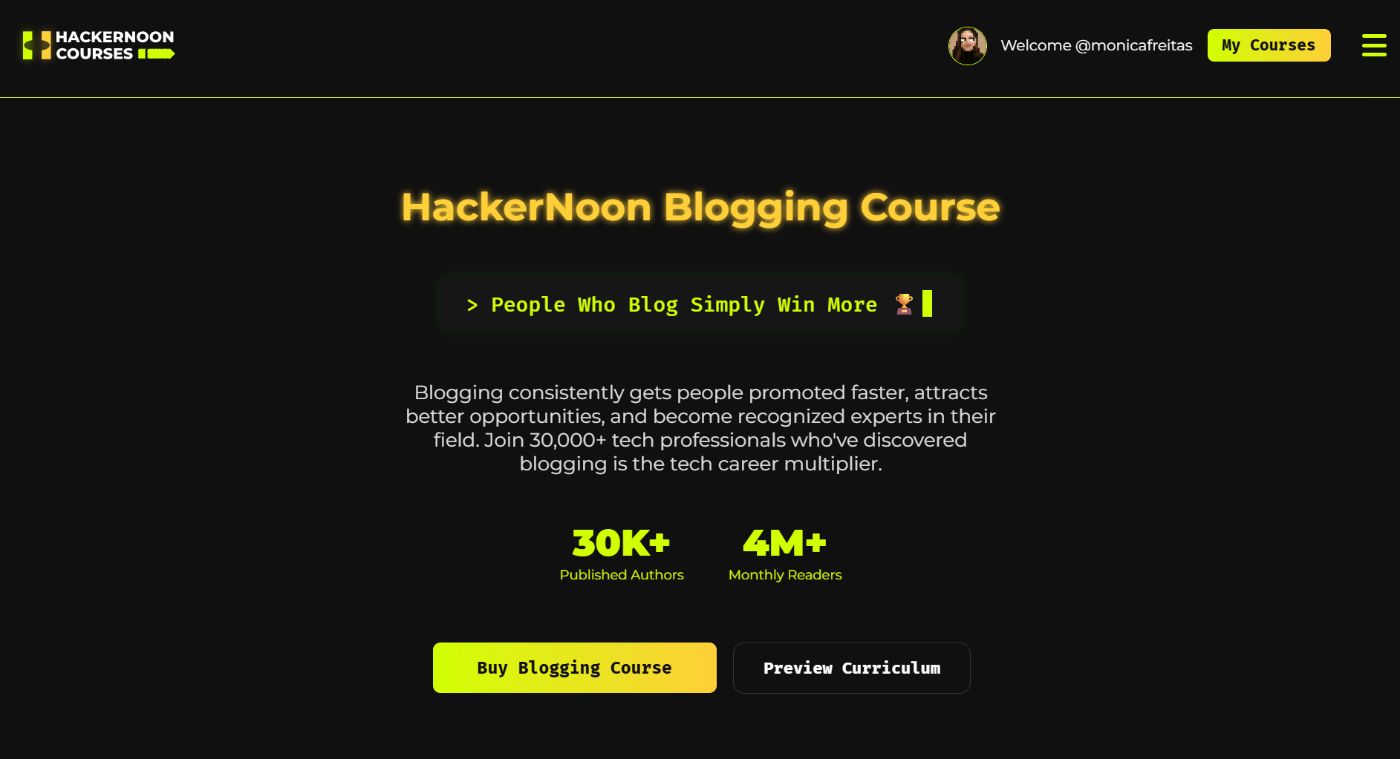
The HackerNoon Blogging Fellowship Course is an online course specifically designed to help transform aspiring bloggers into full-fledged experts. It includes 8 modules that take you on a step-by-step journey to improve as a writer. These modules cover everything from Search Engine Optimization (SEO) to building your personal brand to teaching you how to monetize your content.
If you’re ready to level up as a writer…
:::tip
Sign up for the HackerNoon Blogging Course today!
:::