In a world where control over money, data, and infrastructure often lies in the hands of a few, people witnessed a range of shocks that made many question whether traditional systems could be trusted. Some of these events exposed how governments or large institutions can control software, freeze savings, shut down digital currencies, cause large financial crises, or block payments.
Peer-to-peer (P2P) systems and cryptocurrencies emerged in response, offering self-sovereignty, privacy, and decentralization. Let’s walk through some key episodes (or real horror stories) that helped spark this movement.
Crypto Wars
We’re not referring to cryptocurrencies in this one, but to cryptography. In the United States, under the Arms Export Control Act (AECA) of 1976 and the International Traffic in Arms Regulations (ITAR), encryption software was legally defined as a “munition.” Sharing cryptographic tools without permission could mean up to 10 years in prison or a $1 million fine. These laws turned researchers into potential arms dealers simply for writing or publishing code that could keep messages private. If that isn’t a dystopic situation, we don’t know what is.
During the 1990s, the Cypherpunks movement grew in response. This was a network of technologists, activists, and cryptographers who argued that privacy and encryption were essential for individual autonomy. John Gilmore, one of them, co-founded the Electronic Frontier Foundation (EFF), which would help to fight some legal battles around this. One notable case came in 1995, when mathematician Daniel J. Bernstein created an encryption tool called Snuffle to protect private communication. The court ruled in Bernstein’s favor, recognizing source code as protected free speech.
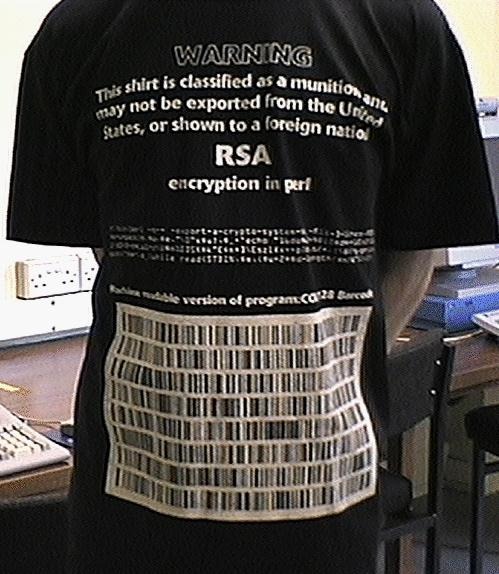
Another case included Phil Zimmermann, also a cypherpunk and creator of Pretty Good Privacy (PGP). In 1991, he faced a criminal investigation for “exporting munitions” after his email encryption tool spread online. Zimmermann cleverly published PGP’s full source code in a book, arguing that exporting literature was protected speech, effectively challenging the absurdity of the law.
By the end of that decade, the U.S. began easing export restrictions, ending the first Crypto Wars. But the philosophy born from those battles didn’t fade —it evolved. The cypherpunks’ dream of tools beyond government control would inspire the next wave of decentralized and P2P systems.
Fiat Collapses
From the late 1990s into the early 2000s, several nations experienced deep monetary crises that exposed the vulnerability of fiat systems (traditional currencies with central banks). In Asia in 1997-98, countries such as Thailand, South Korea, and Indonesia suffered currency attacks, sharp devaluations, and severe recessions. The common thread was the loss of confidence in central banks and the dramatic erosion of savings.
In 1998, Russia defaulted on domestic debt and devalued the ruble, wiping out wealth and triggering a banking collapse. The Argentine crisis of 1998 culminated in December 2001 when the government froze bank accounts in the “corralito”, leaving citizens unable to withdraw savings. Zimbabwe’s hyperinflation in the early 2000s saw the currency become worthless and bank savings evaporate. And that’s just to mention some bad instances before the creation of cryptocurrencies, when people didn’t really have any decentralized option.
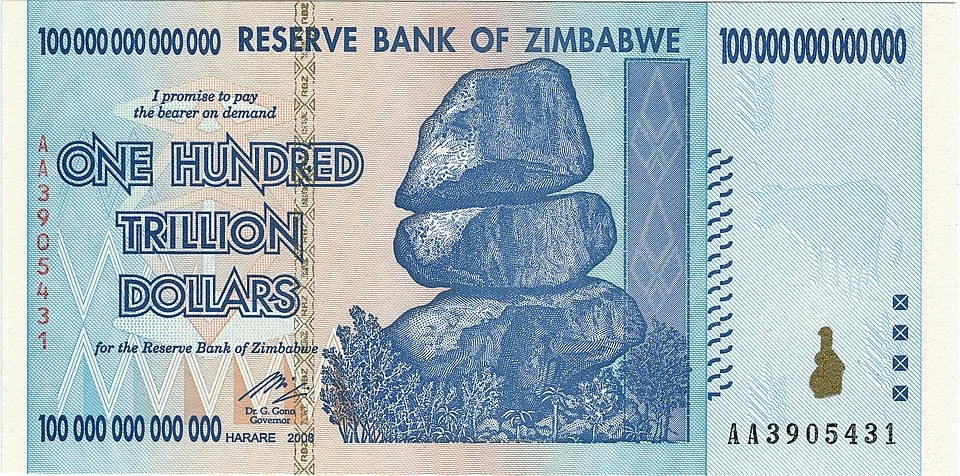
Each case in turn demonstrated how trusting a single state-issued currency, controlled by central institutions, could lead to catastrophic loss for ordinary people. These events created urgency around the idea of alternatives: money not subject to sovereign risk, bank runs, or monetary policy failures. Those looking toward decentralized crypto systems found validation in these crises.
eGold & Liberty Dollar
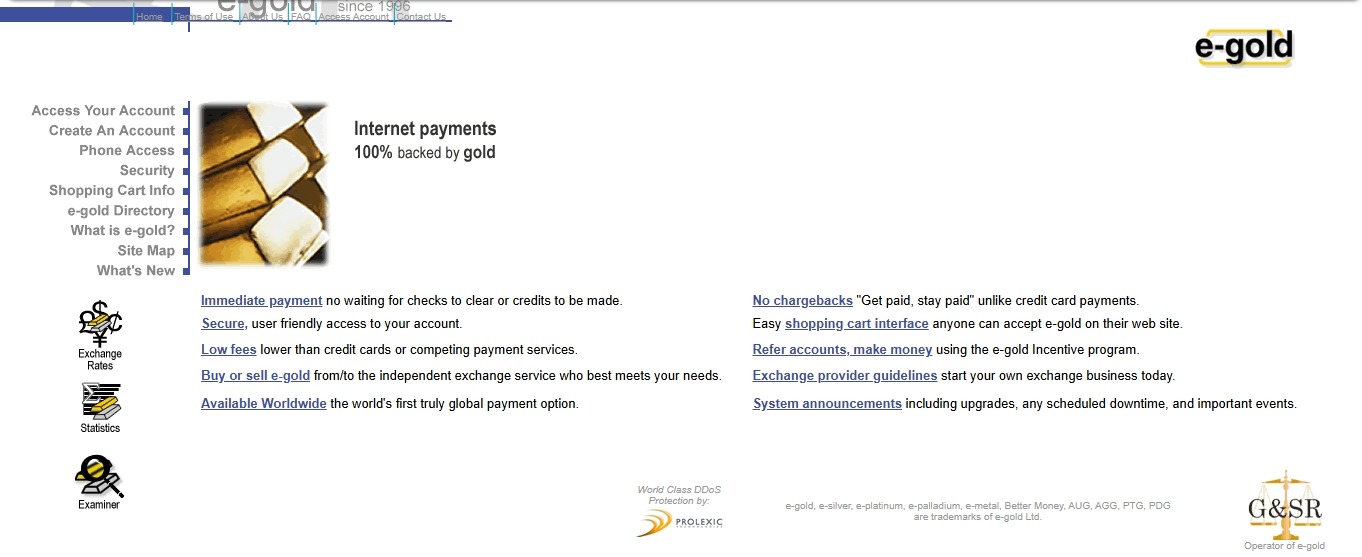
Prior to the widespread crypto boom, there were private digital and metal-backed currency experiments that faltered under centralization and regulation. One prominent example is eGold, founded in 1996, which allowed users to store and transfer value backed by gold anonymously. In April 2007, the U.S. Department of Justice indicted the company and its directors for money laundering and unlicensed money-transmitting business. The founders denied the accusations but ended up reaching a plea agreement and ceased operations in 2013.
Another example is Liberty Dollar, started in 1998 by Bernard von NotHaus in the U.S., which issued silver and gold coins, certificates, and an electronic currency (eLD). In 2007, their offices were raided, and silver, gold, and other assets were seized by the FBI and U.S. Secret Service.
The charges, in the end, weren’t money laundering or something similar, though. The company was attacked because it’s illegal to create centralized coins that compete with the USD inside the country. NotHaus was convicted in 2011 for “making, possessing, and selling his own coins.” Considering this scenario, it’s easy to guess why Satoshi Nakamoto always remained anonymous.
These cases illustrate the risk when a currency alternative is controlled by a single entity and subject to regulation or confiscation. The takeaway is clear: to protect value, you need systems without a central administrator who could be shut down by regulators.
2008 Financial Crisis
The global financial meltdown in 2008 was a watershed moment for trust in financial institutions and their intermediaries. Beginning in the US with the collapse of mortgage-backed securities and hedge funds in 2007, it led into 2008 with the failure of major institutions, including the infamous bankruptcy of Lehman Brothers and the near collapse of multinational insurers like AIG.
In October 2008, the U.S. Congress passed the Emergency Economic Stabilization Act, establishing the $700 billion Troubled Asset Relief Program (TARP) to bail out banks. However, for ordinary people, the crisis meant job losses, home foreclosures, savings losses, and erosion of trust in banks that were deemed “too big to fail”. There was no “rescue” for them.
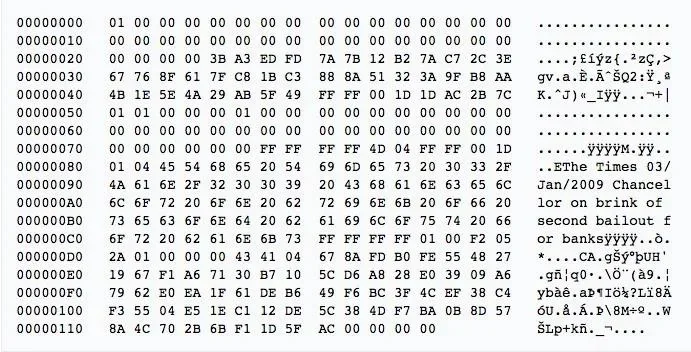
The embedded message in the first block of Bitcoin [“The Times 03/Jan/2009 Chancellor on brink of second bailout for banks”] is a direct reference to this moment. The effect was to spotlight the risks of entrusting value to institutions that might be rescued at taxpayer expense or collapse entirely. Many have turned toward P2P digital money as a hedge against those risks.
Censorship in Payment Processors
Alongside monetary collapse and regulation, there is a persistent story of payment processors and financial gatekeepers cutting off or limiting access to services for individuals or organizations deemed “undesirable” or “suspicious” for any reason. Early in the 2000s, for instance, one striking case saw PayPal freeze an account set up in 2005 to raise Hurricane Katrina relief funds. After nearly $28,000 was donated in nine hours, the processor alleged fraud and blocked the account. They even refused to donate these raised funds (legitimately owned by their client) themselves.

It wasn’t a one-time case. In 2010, PayPal froze the account of the German foundation managing WikiLeaks donations, citing policy violations after U.S. pressure. Visa, Mastercard, Western Union, and other payment processors joined this decision at the time, and only Mastercard ended up backing down.
More recently, in 2025, Visa, Mastercard, PayPal (again, yes), and Stripe faced backlash for pressuring platforms like Itch.io and Steam to remove adult games after an Australian lobby’s campaign. These actions sparked global criticism and a petition with over 147,000 signatures, as many saw it as another sign of payment giants controlling lawful digital content.
As we can see, reliance on centralized payment intermediaries means facing opaque rules and potential censorship. Decentralized systems and cryptocurrencies offer a route where value transfer no longer depends on corporate permission or gatekeepers.
Fight with Decentralization
When control is concentrated (in a government, central bank, private company, or digital-currency issuer), the failure modes are amplified. Centralization brings risk of collapse, censorship, restrictions, seizure, or inflated currency. The stories above illustrate those risks clearly. Cryptocurrencies and P2P systems challenge that by spreading trust across networks built with hundreds and thousands of independent nodes, reducing dependence on intermediaries, and giving individuals direct control.
Projects like Obyte show this ethos: decentralized ledger structures, P2P transfers, and non-custodial ownership. While decentralization is not a cure-all and brings its own challenges, it addresses many of the systemic failures we have seen before. The goal is quite simply to shift power away from potentially corrupted actors and mitigate the risk that one decision or one organization can destroy value or restrict access.
In each of these episodes, we see real failures of control, access, and trust. What those failures point toward is a world where individuals can hold value, transact, and communicate without needing to rely on a fragile set of intermediaries. That was the promise of P2P systems and cryptocurrencies, and their roots lie in these horror stories of the past. Let’s build a better future together!
n
Featured Vector Image by Freepik