My name is Renan. I lived in Colatina, Brazil.
When I was a kid, Halloween did not exist on my street. October arrived hot, with the smell of the Rio Doce in the air and the late afternoon taking its time to go dark. There was no candy at the door, no costumes lined up on the sidewalk. There was, instead, the house we crossed faster, the one someone swore had a story. There were the adults’ warnings: don’t talk to strangers; don’t take long coming back; say where you are. Above all, there was the idea that something could cross the short distance between the gate and the corner and never return a child.
In Colatina, “witch” was not a costume imported from an American calendar. It was a word that dropped the volume of a conversation. I still did not know what that meant for real. I only knew that terror did not need a mask to work.
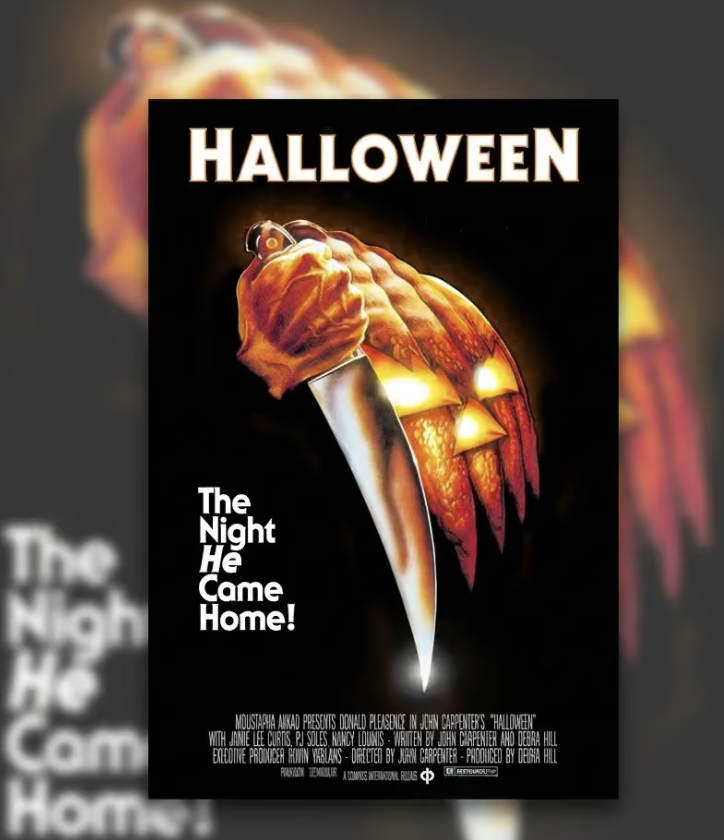
Years later, in a dark room, small TV, volume low so the house would not wake up, I reached Halloween, John Carpenter’s 1978 film, for the first time. I don’t remember if it was October. I remember the silence after the final credit. I remember thinking that film, shot in a suburb I had never seen, spoke to a fear I already knew: the quiet street, the half-open door, the “why” that never comes. It felt closer to real dread than any story where the monster explains the monster.
Maybe no one can fully explain what makes Halloween so effective. The most we can do, today, is try to understand a few facts.
October 31. Or almost.
In cinema, Halloween always existed. In American life, too: candy, costumes, the “haunted house” down the street. In Carpenter’s film, the date is not decoration. It is the thesis.
The story begins in 1963, on a Halloween night in Haddonfield. A six-year-old boy kills his own sister. Fifteen years later, in 1978, he escapes a psychiatric institution and returns to town. The film does not invent the slasher, but it organizes the genre with an almost cruel clarity: quiet suburb, teenage girl alone, heavy breathing offscreen, and a man, or what is left of a man, reduced to a silhouette.
Carpenter and Debra Hill wrote the screenplay in about ten days. The producers had come to him with the idea of a killer who hunted babysitters. There were rumors the original title would be The Babysitter Murders; Yablans, one of the producers, denied it. The film was always going to take place on Halloween. Carpenter liked that. It seemed too obvious, and for that very reason, no one had fully embraced the date until then.
Haddonfield, Illinois, is fiction. The name came from Debra Hill’s hometown in New Jersey. The county on the police badge points to Bowling Green, where Carpenter grew up. Laurie Strode carries the name of an old girlfriend of the director. Michael Myers, that of a British producer. Tommy Doyle and Dr. Samuel Loomis are Hitchcock echoes: Rear Window and Psycho. Jamie Lee Curtis, in her first film, was the daughter of Janet Leigh. American cinema loves those invisible threads. Carpenter did too.
The budget was small, somewhere around $325,000. Donald Pleasence, as Loomis, made $20,000. Jamie Lee Curtis, $8,000. Nick Castle, under the mask, $25 a day. The mask came from a costume shop: a William Shatner face, Captain Kirk, bought for less than two dollars, painted white, the eyes widened. The actors’ own clothes, cars rented from a local dealer, dead leaves reused from scene to scene. Shot in spring, in California, with palm trees hidden in the frame and license plates kept out of the way to fake the Midwest. Robert Englund, years before Freddy Krueger, helped scatter leaves to manufacture autumn.
The film made tens of millions. But the number matters less than the feeling it left behind: that evil could live in the empty house at the end of the street, the one every child knows, even without knowing the name of whoever died inside.

What cannot be explained
In real life, after an atrocity, the first question is usually the same: why?
The human brain does not tolerate emptiness well. It wants motive, biography, trauma, a bank account, revenge. It wants to turn the absurd into an algorithm. Halloween refuses that comfort.
Michael Myers, in the credits, appears as The Shape. He is not a character in the classic sense. He is a presence. Loomis insists on calling him “it,” not “he.” Evil. A force. Something you watch, fear, try to lock away, and that still crosses the night.
There are readings. Michael saw sex too young and could not understand it. Laurie would remind him of Judith, the sister. Tommy, beside her when she drops the key at the Myers house, would be about the age Michael was in 1963. The killings would follow a ritual pattern: bedsheets, an improvised shrine, a body arranged like a scene. All of that may be true. None of it is stated in the 1978 film with the authority of a caption.
That is where the film parts ways with so many of its successors. Friday the 13th has territory and revenge. A Nightmare on Elm Street has collective guilt. Michael, in the first film, has absence. The mask does not only hide the face: it hides intent. Without expression, we do not know if he enjoys it, if he hates, if he feels nothing at all. Without a “why,” the “what” gets worse.
The sequels tried to fill the hole: siblings, curses, supernatural answers. Some of those solutions land. None, to my mind, beats the question left open. Explaining Michael is domesticating him. And domestic fear, the residential street, the half-open door, loses its force when it becomes a manual.
Carpenter and Hill also said later that Laurie’s survival was not a prize for virginity, a Freudian reading critics fastened on too quickly. Laurie survives because she pays attention. Because she is not distracted. Because, in the end, she fights back. The rest is couch theory.
How you film what has no name
The film opens with a long shot, almost voyeuristic, through the killer’s eyes. The inspiration points back to Orson Welles’s Touch of Evil: a take that forces us to follow the crime as accomplices. At the end, the mask comes off and we see a child. The shock is not only the murder. It is the age.
The score, by Carpenter himself, in time signatures his father taught him, does half the work. The story goes that an executive watched the film without the music and did not find it scary. With the score, he changed his mind. A few notes. Enough.
Dean Cundey, the cinematographer, and the early use of the Panaglide give the film that restless glide: the camera follows, breathes, does not cut to spare us. The spaces keep getting smaller: street, house, room, closet. At the start, there is a world. By the end, there is creaking wood and almost nowhere left to run.
There is also the dry humor of cheap production turning into style. Precarious lighting that swallows detail. The asylum car appearing in the background while Laurie talks. Myers driving with the mask dead straight, an image at once terrifying and absurd. Annie in the laundry room, and us, who saw what she did not, begging in our heads: don’t go that way.
The safe suburb, the cliché the film helped crystallize, works because Carpenter films observation first, not the slaughter. Michael is a stalker before he is an executioner. The paranoia builds in the corner of the frame. When the violence arrives, it is already late: the fear came first.

Samhain, the haunted house, and what remains
Behind the scenes, people talk about Samhain, the Celtic festival when the dead cross the veil. They talk about evil that cannot be killed. They talk about the Myers house as the haunted house every town invents for itself. Carpenter wanted that universal recognition: the place you walk past faster, without admitting why.
Loomis describes Michael with the coldness of someone who spent fifteen years staring into an abyss that stared back. Pleasence took the role after Cushing and Christopher Lee turned it down. Lee would later call that refusal the biggest mistake of his career. In a few days of shooting, a friendship with Carpenter was born that would lead to other films.
In the end, Loomis shoots. Six times. In the heart. Michael falls. Then he is gone. The film does not celebrate victory. It offers a montage of empty places, the house, the street, the night, with the breathing still on top. He could be anywhere. Including, the cut suggests, nowhere.
It is an honest ending. Because the fear Halloween stages is not the fear of a monster with clear rules. It is the fear of explanatory emptiness. The same emptiness that makes a small inland town invent witches when it cannot stand being without a cause. The same one that makes an adult, decades later, remember a street in Colatina at dusk and feel the stomach close, not because of a movie ghost, but because of the old certainty that the dark, there, never needed subtitles.
A note, if a note belongs
I am not saying a 1978 horror film and the fear of growing up in a small town are the same thing. They are not. One is an artifact. The other is memory. But both, each in its way, deal with the same human difficulty: what to do when the “why” does not come.
Halloween runs a little over ninety minutes and costs almost nothing on paper. It still scares because it respects the viewer’s intelligence, and because it respects the terror of not knowing. Simplicity. Ambiguity. One night. One street. A white shape walking without hurry.
Halloween, on the calendar, is make-believe. In Carpenter’s film, it is a warning.
This is the night he came home.
And the question that remains, the only one the film refuses to kill along with the victims, is not whether Michael Myers is a man, a demon, or a cheap-production accident.
It is another, older, and far less comfortable:
If evil needs no reason to cross your street… anyone can be its victim, without warning, without sense, again, without motive.
