Scaling agentic AI across an enterprise requires architectural patterns that preserve flexibility while avoiding vendor lock-in. This post is Part 2 of our series on multi-agent systems at scale. In this post, we examine how machine learning (ML) teams operate agentic AI systems across a “multi-everything” environment of frameworks, models, and providers. We also cover the principles that let those systems scale together.
In Advanced fine-tuning techniques for multi-agent orchestration patterns from Amazon at scale, we explored how to design and optimize multi-agent orchestration within a single use case or domain. That post focused on scenarios where multiple agents are required to handle complexity by coordinating workflows, decomposing tasks, and improving accuracy through structured collaboration.
In practice, however, enterprise AI systems rarely remain confined to a single domain.
As adoption expands, ML platform teams in large enterprises encounter a different challenge. The question is not how to orchestrate agents within one system, but how to operate many such systems across a “multi-everything” environment. Multiple frameworks, models, providers, and teams coexist within the same enterprise, each evolving at its own pace.
As organizations scale these systems, the ability to consistently build, customize, and deploy models becomes critical. In practice, this requires a unified approach to model lifecycle management and inference at scale. This is an area where Amazon SageMaker plays a foundational role in supporting enterprise-wide consistency without constraining flexibility.
This post explores the architectural principles and patterns required to scale agentic AI systems while preserving flexibility and avoiding vendor lock-in.
The reality of multi-everything environments
Enterprise AI systems evolve into heterogeneous landscapes by default. Different teams adopt different frameworks based on their requirements. Some prioritize structured workflows, others focus on collaborative agent interactions, and still others optimize deterministic, model-driven pipelines. At the same time, organizations combine custom-built agents with software as a service (SaaS) capabilities and existing enterprise systems.
The model layer introduces another dimension of variability. Foundation models (FM) continue to evolve rapidly, each offering different tradeoffs in cost, latency, and capability. As a result, most enterprises operate across multiple model providers rather than standardizing on a single option.
Over time, this leads to a steady-state reality: multi-model, multi-framework, multi-provider systems operating across multiple teams and use cases.
The challenge is not how to avoid this outcome. It’s how to manage that outcome without introducing fragmentation.
Optionality as a constraint to manage
In Part 1, we focused on optimizing agent behavior within a specific system. At the enterprise level, the problem shifts. Optionality is no longer about experimentation. It becomes a constraint that must be managed deliberately.
Attempts to enforce standardization at the framework or model level often create friction. Teams work around constraints, adoption slows, or systems diverge outside of approved architectures. At the same time, tightly coupling applications to specific models or providers limits the ability to adapt as the landscape evolves.
A more effective approach is to standardize below the application layer, focusing on shared control planes such as identity, policy enforcement, observability, and routing, while allowing flexibility in how agents are built and executed.
This approach does not eliminate heterogeneity. It contains its impact, so systems can evolve without destabilizing the broader architecture.
The core challenges of multi-everything systems
As systems grow in diversity, a predictable set of challenges emerges. Governance becomes difficult to enforce consistently across frameworks that each define their own control models. Integration complexity increases as agents, tools, and services expose incompatible interfaces. Cost and performance tradeoffs become harder to manage without dynamic optimization, often leading to inefficient resource usage.
At the same time, security boundaries expand as agents interact dynamically with tools, data, and other agents, making access patterns less predictable. Persistent memory introduces additional complexity around data retention, isolation, and consistency. Finally, enterprise use cases demand domain-specific performance that cannot be achieved through generic configurations alone.
These challenges are interconnected and compound over time. Managing them requires a system-level approach rather than isolated solutions.
A practical rubric for managing complexity at scale
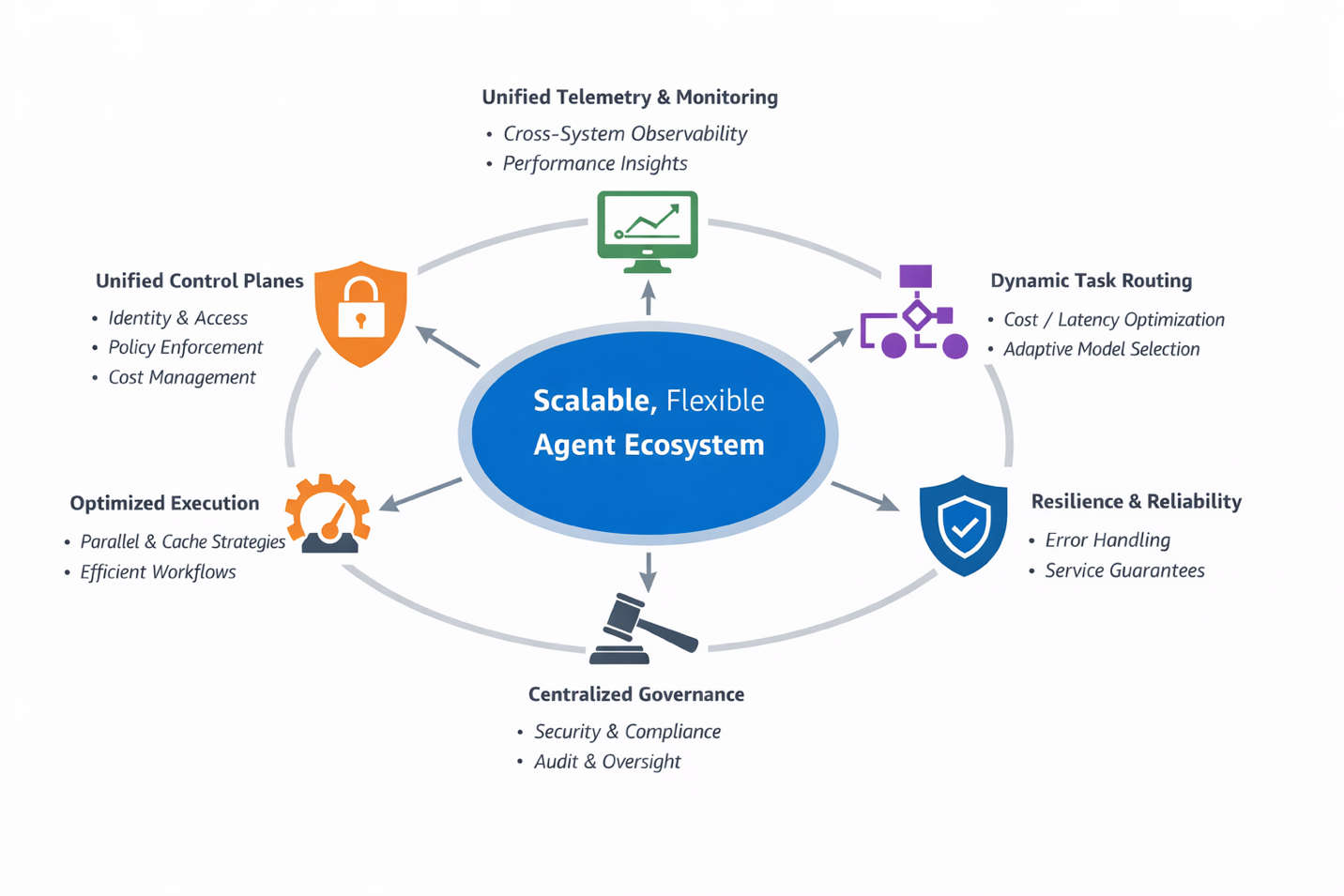
The following diagram summarizes the core architectural principles that recur across successful multi-everything environments: separation of control and execution planes, unified observability, centralized governance, dynamic routing, resilience by design, phased orchestration evolution, and built-in optimization.
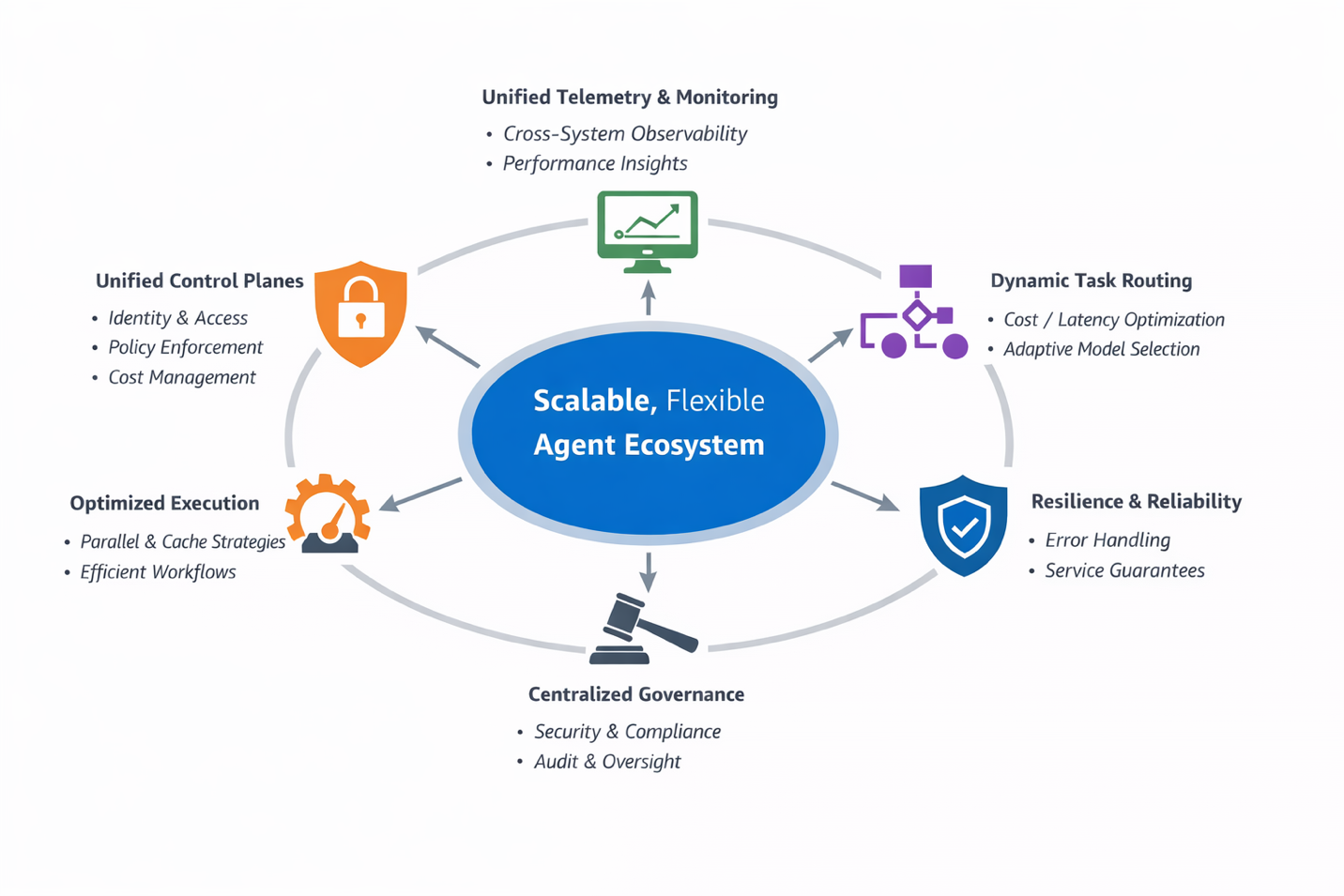
Figure 1: Core architectural principles for managing complexity in multi-everything environments
Organizations that operate successfully in multi-everything environments converge on a set of architectural principles that balance flexibility with control.
A foundational principle is the separation of control planes from execution planes. Identity, policy enforcement, observability, and cost attribution are centralized to facilitate consistency across the enterprise, while agent execution and development remain decentralized to support team autonomy and scalability.
Observability becomes a prerequisite for operating these systems effectively. By establishing a unified telemetry layer, organizations gain visibility into agent behavior across frameworks and environments. This visibility helps them monitor performance, trace failures, and continuously improve the system without relying on framework-specific tooling.
Governance is most effective when implemented as a platform capability rather than embedded within individual agents. Centralized enforcement supports consistent security and compliance, even as frameworks, models, and execution environments evolve.
As workloads diversify, routing becomes a core system function. Rather than statically assigning models or infrastructure, organizations dynamically match tasks to resources based on cost, latency, and accuracy requirements. This helps the system adapt in real time and maintain efficiency at scale.
Production systems must also be designed with explicit guarantees. Latency, availability, and isolation requirements should be clearly defined, along with mechanisms for handling failure. Retries, circuit breakers, and fallback paths facilitate resilience under real-world conditions.
Many organizations begin with centralized orchestration models to maintain visibility and control over agent interactions. As systems grow, they evolve toward more distributed and event-driven architectures, which provide greater scalability while preserving consistency.
Finally, optimization must be embedded into the system from the outset. Cost and performance considerations are fundamental to operating at scale, and techniques such as dynamic model selection, caching, and efficient execution patterns help facilitate long-term efficiency.
Together, these principles provide a practical framework for managing the inherent complexity of multi-everything environments.
How to use AWS services for framework-agnostic scale
The architectural principles outlined earlier require capabilities that operate consistently across frameworks, models, and teams. AWS services provide these building blocks that organizations can use to implement a framework-agnostic platform while preserving flexibility.
At scale, the model layer becomes one of the primary sources of complexity. Different use cases require different models, customization strategies, and inference patterns.
Amazon SageMaker serves as the core execution and customization layer for managing this complexity at scale. It provides a unified layer for model development, fine-tuning, deployment, and inference, allowing organizations to standardize how models are built and operated across the enterprise. By supporting real-time, asynchronous, and batch inference, along with capabilities such as Inference Components and model monitoring, Amazon SageMaker helps teams align infrastructure with workload requirements. This maintains a consistent operational model across the enterprise.
Complementing this, Amazon Bedrock provides a simplified, managed interface for accessing foundation models, supporting rapid experimentation without managing underlying infrastructure. While Amazon Bedrock accelerates model access and integration, Amazon SageMaker delivers the depth, control, and scalability required for customization and production-grade inference. Together, they allow organizations to separate model access from model execution, supporting flexible and resilient architectures.
Orchestration and control are implemented through services such as AWS Lambda, AWS Step Functions, and Amazon API Gateway, which support dynamic routing and workflow coordination.
Emerging capabilities such as Agent Orchestration on AWS further extend this layer. They provide purpose-built abstractions for agent orchestration that help teams manage complex multi-agent workflows with greater consistency and control.
Identity and governance remain centralized through AWS Identity and Access Management (IAM) and AWS Organizations, while observability is standardized using Amazon CloudWatch and AWS X-Ray.
Amazon EventBridge, Amazon ElastiCache, and Amazon CloudFront support integration and performance optimization.
In this architecture, Amazon SageMaker effectively becomes the operational backbone for model execution, while Amazon Bedrock accelerates access to emerging foundation model capabilities. Together, they help organizations balance innovation with control.
Key takeaway
Amazon SageMaker provides the operational backbone for model customization and inference at scale, while Amazon Bedrock supports rapid access to managed foundation models. Together, they support flexible, framework-agnostic architectures at enterprise scale.
Summary: Mapping architectural principles to AWS services
The following table summarizes how these architectural principles map to native AWS services that support framework-agnostic scale.
| Architectural principle | What it supports | AWS services |
| Centralized identity and governance | Consistent policy enforcement across frameworks and teams | IAM, AWS Organizations |
| Unified observability and telemetry | End-to-end visibility across agents and workflows | Amazon CloudWatch, AWS X-Ray |
| Model abstraction and optionality | Decoupling applications from model providers | Amazon Bedrock |
| Model customization and inference at scale | Standardized training, fine-tuning, and scalable inference across workloads | Amazon SageMaker |
| Dynamic routing and orchestration | Real-time optimization | AWS Lambda, AWS Step Functions, Amazon API Gateway, Amazon Bedrock AgentCore |
| Event-driven integration | Decoupled communication | Amazon EventBridge |
| Performance optimization | Efficient scaling | Amazon ElastiCache, Amazon CloudFront |
Enterprise patterns for multi-everything systems
When these principles are applied, organizations tend to converge on a small number of architectural patterns. These patterns are not prescriptive. They reflect how teams structure agent systems based on workload requirements and operational constraints.
Importantly, these patterns are not mutually exclusive. Most enterprises implement a combination of them across different business units and use cases. The challenge isn’t selecting a single pattern but helping them coexist within a shared environment.
Pattern 1: Internal agent platform for business process automation
A common starting point is the internal agent platform, which emerges as multiple teams begin building agents independently. Over time, this can lead to duplicated infrastructure, inconsistent governance, and limited reuse across the organization.
To address this, organizations introduce a centralized or hybrid platform model. A shared platform layer provides common capabilities such as model access, governance, observability, and cost management, while individual teams retain autonomy over how they build and deploy their agents.
In this model, the platform acts as a control plane, standardizing how agents access models, enforce policies, and emit telemetry. At the same time, execution remains decentralized. Business units continue to own their application logic, data integrations, continuous integration and continuous delivery (CI/CD) pipelines, and framework choices.
This separation reduces duplication and enforces consistency without constraining innovation, while also supporting reuse of common capabilities across multiple use cases.
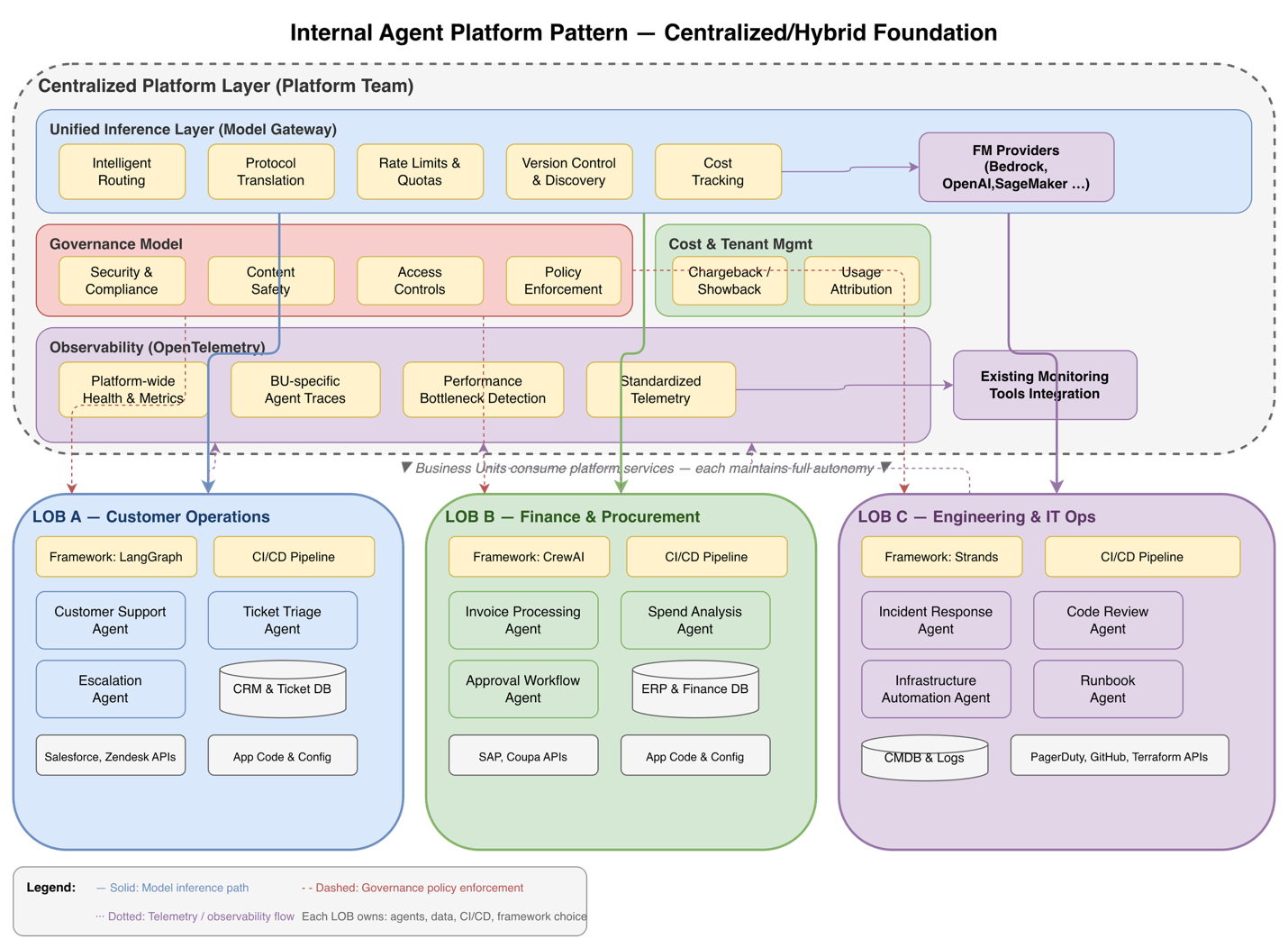
Figure 2: Internal agent platform with centralized control plane and decentralized execution across business units
Pattern 2: Customer-facing agent platforms (ISV and SaaS)
When agents are exposed externally, architectural priorities shift toward multi-tenancy, isolation, and reliability.
In this pattern, systems are designed to enforce strong tenant boundaries. Each request carries tenant context throughout the system, making sure that agents only access data and tools scoped to that tenant. Identity and access management become central concerns, often integrating with external identity providers while maintaining consistent enforcement within the platform.
Infrastructure decisions also evolve. Many organizations adopt hybrid tenancy models, combining shared infrastructure for standard workloads with dedicated environments for customers with stricter regulatory or performance requirements. This approach balances cost efficiency with the need for isolation and compliance.
Reliability is a defining characteristic of this pattern. Systems must meet explicit expectations for latency, availability, and throughput, even under uneven workloads. As a result, resilience mechanisms such as failover, rate limiting, and graceful degradation become core platform capabilities.
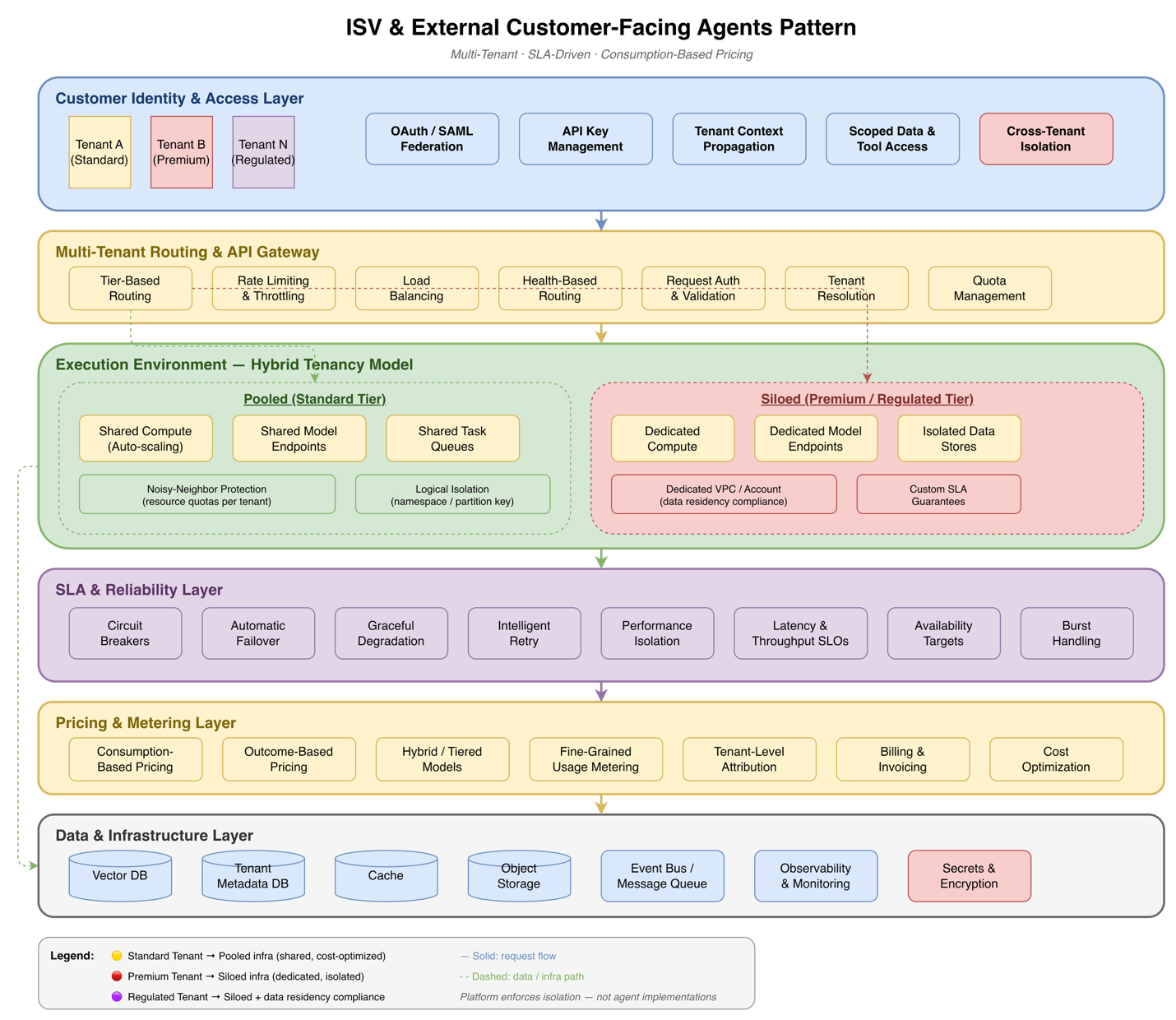
Figure 3: Multi-tenant agent platform with tenant-aware identity, isolation, and shared infrastructure
Pattern 3: Optimizing for inference latency in real-time applications
For real-time systems, latency becomes the dominant architectural constraint. Applications such as conversational assistants and interactive workflows require responses within tight time bounds, where delays directly impact user experience.
In these environments, optimization must be designed into the system. Routing decisions are dynamic, evaluating each request based on complexity, latency sensitivity, and cost considerations. This routing selects the most appropriate model and infrastructure tier in real time.
Execution strategies also evolve to support parallelism, allowing independent operations to run concurrently and reducing overall response time. Caching plays a critical role by reducing redundant computation and improving both latency and cost efficiency.
This pattern emphasizes system-level optimization, where performance is treated as a primary design constraint rather than an afterthought.
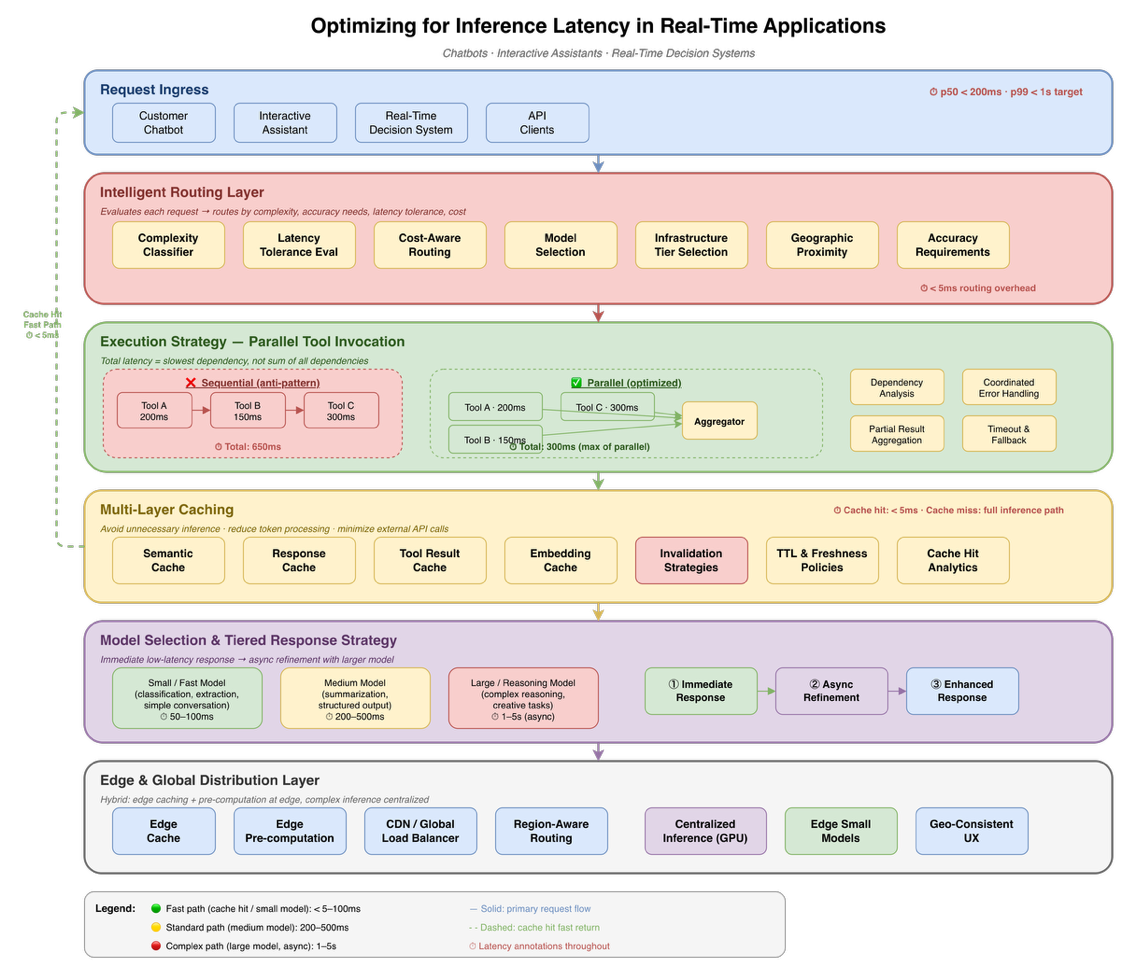
Figure 4: Latency-optimized agent architecture with dynamic routing, parallel execution, and multi-layer caching
Bridging patterns with a unified platform
Each of these patterns addresses a specific set of requirements. However, in a multi-everything environment, they rarely exist in isolation. Enterprises often run internal automation agents, customer-facing systems, and real-time applications simultaneously. These systems are frequently built by different teams using different frameworks and models.
Without a shared foundation, these patterns can become siloed. Governance diverges, integrations multiply, and optimization efforts are duplicated across systems.
The unified agent platform addresses this challenge by providing a common set of capabilities that sit beneath individual patterns. It standardizes cross-cutting concerns such as identity, policy enforcement, observability, and routing, while allowing each system to evolve independently.
This distinction is important. The patterns describe how agent systems are structured for specific workloads. The platform makes sure that those systems can scale together as part of a cohesive enterprise architecture.
Conclusion
In Part 1 of this series, we focused on multi-agent orchestration within a single use case, where multiple agents are required to handle complexity within a defined domain.
In this post, we expanded the scope to the enterprise, where the challenge becomes managing many such systems across a multi-everything environment.
The organizations that succeed are not the ones that eliminate complexity, but the ones that structure it. By standardizing critical control layers such as identity, policy, observability, and routing, while preserving flexibility in execution, they can operate heterogeneous systems without losing control.
To start applying these patterns, explore how Amazon SageMaker, Amazon Bedrock and Amazon Bedrock AgentCore support model customization and framework-agnostic access, and consult the AWS Well-Architected Framework for the control-plane practices referenced here. Share which patterns are shaping your enterprise agent architecture in the comments.
What’s next
Future posts in this series will explore how ML platform teams can evolve from supporting a single business use case to operating a shared enterprise agent platform. We will cover the abstractions, governance models, and shared services that let individual teams retain flexibility as adoption grows.