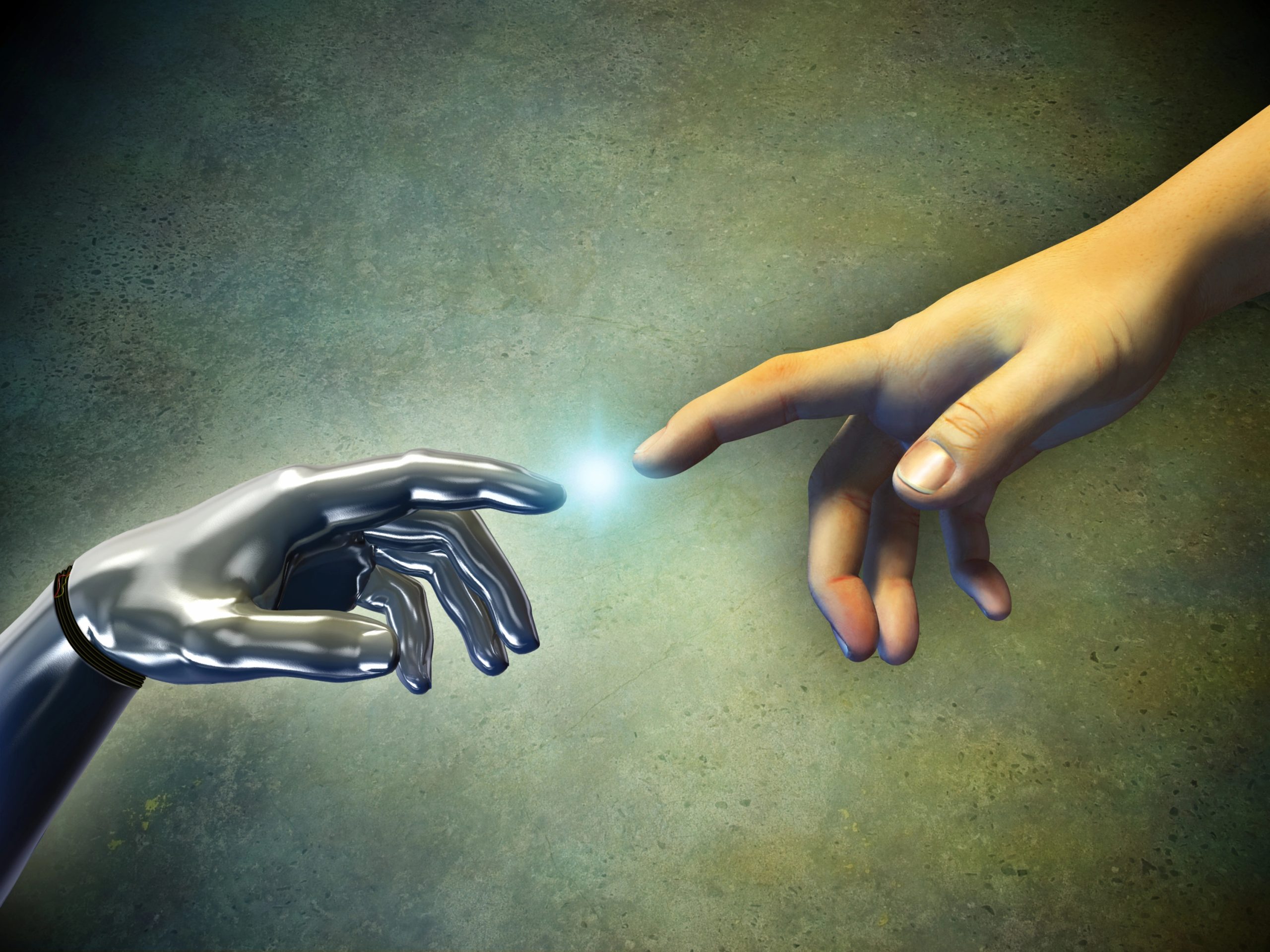
In a July interview with The Economist, Elon Musk predicts that in five years’ time AI will surpass all human intelligence combined, and in ten years, there will be almost nothing that a machine cannot do better than a human. Work will cease to be a necessity – it will become something like a vegetable garden that people tend for pleasure.
You don’t have to agree with Musk to see how fast things are moving. The World Economic Forum estimates that around 40 percent of the skills we use at work today will be different in five years.
I’ve been setting up schools for over twenty years – from computer academies for adults to secondary schools – and I’ve always believed that education should follow the real needs of the market and equip people with practical skills. Today, more and more skills are being taken over by AI. So what is still worth learning?
What is already changing – and how far might this go?
I haven’t written any code for twenty years. Recently, I sat down at my laptop and created a full-fledged AI product that helps parents choose a school for their child. It took me a week and $100 worth of tokens. Previously, by my estimate, it would have taken my team several months to do this.
No wonder graduate hiring at major tech companies has dropped by half. Why bring on juniors when a mid- or senior-level specialist working with AI can now handle most of what they’d do? Anthropic CEO Dario Amodei has said that within five years, AI could take over up to half of all entry-level office jobs.
It is often said that jobs such as driving, assembly work and waiting tables will not be affected, but the market for humanoid robots is not standing still. Investment bank Morgan Stanley forecasts that the number of such robots could reach one billion by 2050.
The pace of AI development and automation leaves little doubt that the demand for human labor will decline. Yuval Noah Harari even envisages the emergence of a “useless class” – people whose labor the economy simply does not need.
If work stops taking up most of the day, technology will be quick to offer ways to fill the free time. AI can produce content, games, virtual worlds, and personalized experiences almost without limit. We may well end up with a world where people can choose what
I call the “easy simple life”: a minimum of obligations, a maximum of accessible entertainment, and fewer and fewer reasons to do anything complicated.
But even a more moderate version of the future breaks the old promise of education: master a fixed body of knowledge, get a profession, and it will secure your place in the world for decades. Not only do we not know how professions will change in a few years’ time, but we also do not know which of them will be left to humans at all.
So what should we learn?
You could learn AI, robotics, or new programming languages, but these are still the same “hard skills” required for a specific job. The problem is that today’s technologies and professions may become obsolete before a person has even finished their studies.
A different kind of skill is becoming more valuable: “high skills,” which aren’t tied to a single profession or technology and which help a person pick up new hard skills, adapt, and act in changing conditions. These include:
- Willpower. We are often driven by external necessity: we have to work and get things done, even when we don’t feel like it. If there is less work and fewer obligations, the need to develop and learn new things may disappear. The ability to consciously choose the harder path and see it through is what allows a person not just to set a goal, but to keep moving toward it when giving up would be easier.
- The ability to learn. AI delivers results quickly, which is excellent for productivity. But a ready-made answer easily creates the illusion that you’ve already grasped the subject sufficiently, even if in reality your understanding is only superficial (which will inevitably be reflected in the outcome of your work later on). That’s why you need to be able to get into an unfamiliar subject, ask the right questions and check whether you have actually understood it deeply enough.
- The ability to work with people. We are entrusting more and more of the technical aspects of our work to machines, but this does not remove the need to understand others’ interests and rally people around a solution. AI can prepare arguments and suggest effective phrasing, but it cannot win trust or unite people around an idea.
In my work, I have long assessed educational programs not only by the knowledge they impart, but also by the “high skills” they develop. For example, in schools we design tasks so that students do not simply repeat knowledge back, but explain their reasoning, defend their position, make decisions and work with others. Because ultimately, these are precisely the skills that will serve them well in adult life.
The Key Question Is: Why?
You can be good at overcoming difficulties, learning new things quickly and persuading others – and still not understand what the point of it all is. In the past, work provided part of the answer. It gave people a rhythm, criteria for success, a reason to get up in the morning – in short, reference points. If work ceases to take up the bulk of one’s life, for some people these reference points will disappear.
And this is where the “easy simple life” becomes particularly tempting. When the easy path is always within reach, how many people will consciously choose the difficult one? How many people will even see the need to choose at all, if they can leave it to AI?
The authors of the Human Development Report 2025, prepared by the United Nations Development Programme, write that for human beings, choice is the foundation of autonomy and one of the manifestations of freedom. They warn that the more decisions we hand over to AI, the greater the risk that we will imperceptibly begin to surrender part of that autonomy to it.
It is not enough for education simply to prepare people to fulfill a given role. The ability to set one’s own goals and understand what really matters is becoming even more significant. Technology is excellent at answering the question “how?”, but if a person does not have an answer to the question “why?”, they will simply move in whatever direction someone else has chosen for them.