Let’s learn about Social Engineering via these 62 free blog posts. They are ordered by HackerNoon reader engagement data. Visit the Learn Repo or LearnRepo.com to find the most read blog posts about any technology.
Social engineering is the psychological manipulation of people into performing actions or divulging confidential information, often used in cybersecurity attacks. Understanding it is crucial for individuals and organizations to defend against phishing, impersonation, and other deceptive tactics.
1. 5 Best Cybersecurity Books for Beginners

These are the five cybersecurity books that you should start with if you are considering a career within the industry.
2. The Nigerian Prince Email and the History of Social Engineering Techniques

This is the origin of one of the most famous online scams in internet history: the Nigerian Prince email.
3. Unmasking VEILDrive: Threat Actors Exploit Microsoft Services for Command & Control

Discover how VEILDrive threat research reveals attackers exploiting Microsoft services for C2, bypassing defenses, and leveraging SaaS infrastructure
4. Why You Should Protect Your Cell Phone Number and How to Do It

With only your cell phone number hackers become you!
5. How To Find Out If A Hacker Has Attacked You

Computer crimes are all those online attacks carried out by a hacker whose purpose is to breach a computer system in order to gain financial gain in some way
6. Inside the Secrets of Physical Penetration Testing

Not every pen tester hacks computers — physical pen testers use people skills, social engineering, and other physical methods to gain access. Here’s how.
7. How My Mother Got Hacked by a Phishing Attack
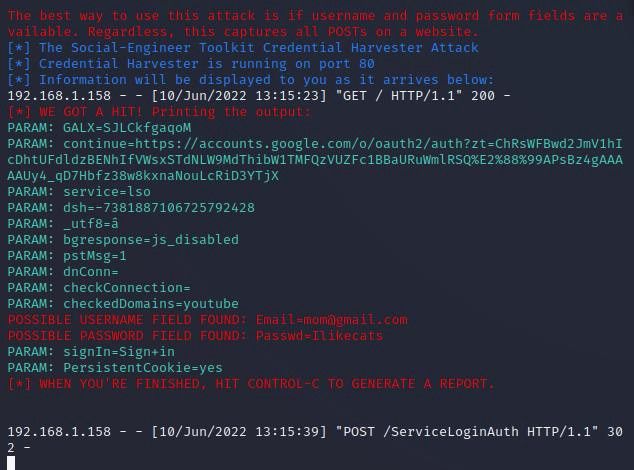
My mom got hacked and probably your mom too. How a social engineering attack works on vulnerable users.
8. Deepfake Phishing Grew by 3,000% in 2023 — And It’s Just Beginning

Deepfake phishing attempts are growing at an alarming rate, with no sign of slowing down. Here’s how you can defend against deepfake phishing attacks.
9. Why Hackers Aren’t Stopped by Account Lockouts
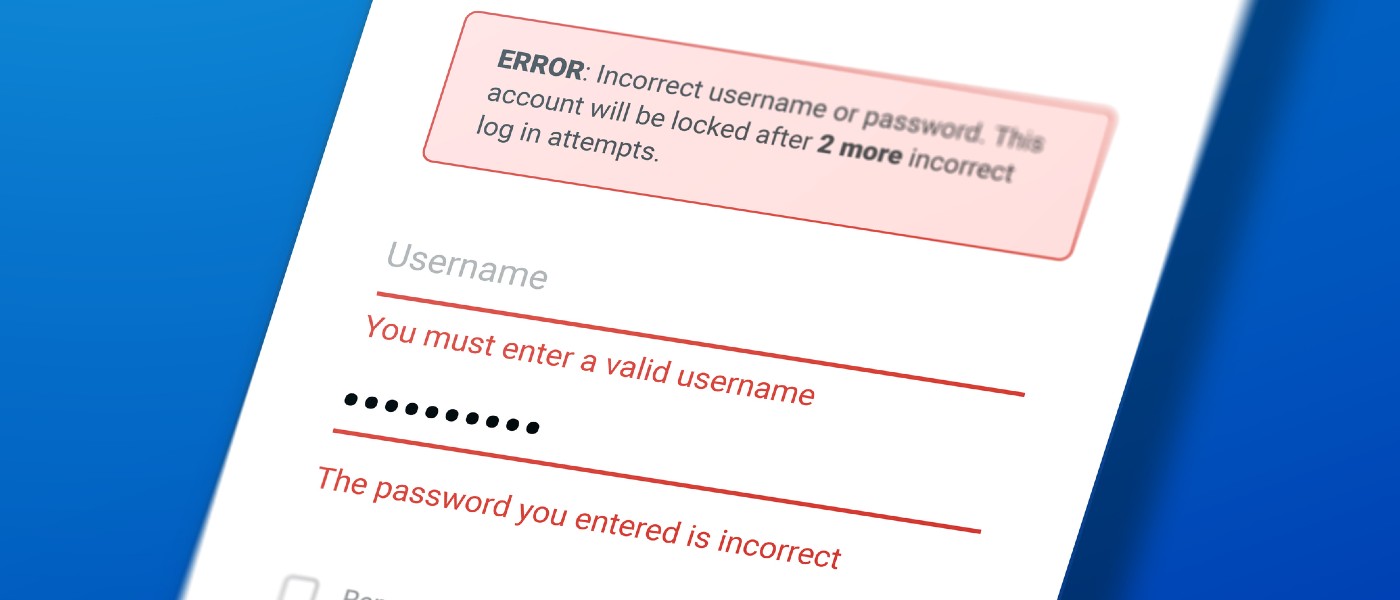
If you mess up your password three times, you may be locked out for several minutes. Why doesn’t that stop hackers trying to guess passwords?
10. How Hackers Bypass Multifactor Authentication

As strong as multifactor authentication is, it’s not perfect. Here’s how hackers are bypassing MFA — and what you can do about it.
11. How to Protect Your Facebook Account From Being Hacked

6 ways to protect your Facebook account from being hacked, including how to protect your password, the best privacy settings, and social engineering protection.
12. How to Reduce Your Chances of Being a Victim of Identity Theft

The major causes of identity theft, along with some simple steps you can take to lower your risk of exposure dramatically.
13. Don’t Let Fraud Cost Your Business

We’ve all probably received a badly worded email in the past promising us a great fortune or claiming we are winners of a prize draw we didn’t enter.
14. Several Social Engineering Tricks

The article is intended for white hats, professional pentesters, and heads of information security departments (CISO). Today, I want to share several methods of social engineering that can be used in targeted attacks, that is, in cases where a specific victim (person or company) is selected.
15. Cybersecurity Risks Worth Considering in Online Trading

As online trading platforms grow in popularity, hackers increase their attacks. Here are the cybersecurity risks in online trading.
16. True Hackers and the Monsters we Invent

Common misconceptions about hacking that makes you vulnerable and how to avoid them.
17. The Three Components of Social Engineering Attacks

What Is a Social Engineering Attack?
18. 10 Common Scams Targeting Healthcare Workers

With AI and telehealth advances come additional ways for scammers to target healthcare workers. Here are the most common scams.
19. No System is Safe

A collection of dialogues and explanations from the movie whoami that give an insight into the world of hacking and cybersecurity.
20. 8 Bizarre Lessons from 8 Years of Branding

Learn the deepest lessons on branding from the smartest man in the world.
21. How Social Engineering is Used to Bypass Your Security…with Ease

Social Engineering uses influence and persuasion in order to deceive, convince or manipulate. As a result, the social engineer is able to take advantage of people to obtain information with or without the use of technology.
22. Psychology of the dWeb: Incentives to cooperate on the decentralized internet

Interest in the dWeb is blossoming, but decentralized systems require cooperation in order to work. If Richard Hendricks’ dream of the new internet is to come to fruition, it’s going to mean we’re relying on our friends, neighbors, and even strangers to provide us with information and connection to the outside world. It’s going to take communities of ultra-cooperation to work. But can we rely on networks of people (some or all of whom are self-interested) to deliver? Call me the optimist, but I think humans actually have the necessary “stuff” to make it work well. Here, I lay out some of our evolved moral fabric, and how that moral fabric can be tailored to socially scale the decentralized web.
23. Decentralised Social Networks Are the Future of Web 3.0

The role of decentralised social networks in addressing the numerous problems that big tech is currently facing is becoming increasingly important.
24. Newton’s Laws in Society: How Social Forces Move Physical Bodies

How Social Forces Move Physical Bodies.
25. Spinning Silk: Embracing the Chaos of Web3 🕷

Learning from spiders, how to build the next stage of the internet. 🕷
26. About My Recent Encounter With a Credit Card Scammer

Last Friday, when I arrived at the office and put down my backpack, I received a phone call with country code “+86,” indicating it was from Mainland China.
27. Understanding Lateral Movement and How to Detect It

Lateral movement broadly applies to an attacker’s activity within the network after penetrating perimeter defenses, using various tactics and techniques.
28. A ‘CEO’ Reached Out to Me For a Smart Contract Job—It Was a Scam

A person calling himself “Joe,” claiming to be the CEO of a company called MindGeek Labs, reached out regarding a supposed project.
29. Social Engineering is the Biggest Cyber Threat

Social engineering is the biggest cyber threat. So why isn’t it being taken seriously yet?
30. 6 Effective Ways to Stay Ahead of Your Competition Using Social AI
MarketsandMarkets forecasts that by 2023, AI in the social media market will be worth $2,197.1 million.

31. How Code-Switching Leads to Imposter Syndrome for WOC in Corporate Technology

Exceptional performance can be highlighted without cultural barriers and division of circumstances.
32. Defi Hacks: How to Detect Vulnerabilities of the Chain

Due to the rise in decentralized finance (DeFi) trade volume and its under-regulated and pseudo-anonymous (or private) nature, many criminals have turned their attention towards this space, where profits are lucrative and chances of detection are slim. DeFi and the wider Web3 arena are still relatively new innovations that the market is coming to terms with.
33. Social Engineering Attacks [Infographic]
Over the years, social engineering assaults have been a regular phenomenon against companies. It has become more and more sophisticated.
34. Hacking or Social Engineering? What You Need to Know to Keep Yourself Safe
What’s the difference between hacking and social engineering? Is hacking in 2023 just a form a social engineering? Find out here.
35. Social Engineering and The Great Twitter Hack of 2020

One of the most significant Twitter hacks of all time has people shook to their core. The attack targeted some of the most influential accounts on Twitter and led some to question the platform’s security capabilities.
36. Cybersecurity Defense Strategies Against Social Engineering

Being steps ahead of cyber attackers matters a lot to companies. As good as this sounds, the required mechanism to deal with the cyber menace appreciates costs.
37. Former NSA Engineer on Addressing the Human Element in Cyber Breaches

In today’s episode of the Brains Byte Back podcast, we speak with Mike Starr, Founder and CEO at trackd, a platform that aims to simplify vulnerability.
38. You Can Hack People, Too: The Art of Social Engineering
Human engineers are experts in human nature. They use these skills to gain access to your networks.
39. Social Engineering Attacks: One of the Biggest and Quietest Threats to Your Business

Protect your small business from social engineering attacks with training, verification, encryption, and awareness of common scams.
40. Personal Security Online Is Not Complicated

Well, if you want to hear something complicated, try to understand the relationship between Beyonce and Jay Z.
41. What’s A Spear-Phishing Attack and To Protect Yourself From It

Do you know what is the most favorite methodology of hackers to break into your security? These are not highly sophisticated zero-days or Advanced Persistent Threats (APTs).
42. Reverse Social Engineering: A Call to Quit Sharing More Than Necessary

Social engineering is the use of a person’s sensitive information to launch a targeted cyber-attack on them. Reverse social engineering mitigates the rate…
43. How Do Hackers Get Phishing Emails Past Filters?

Email spam filters keep getting better — so why do phishing emails keep getting through? Here are the strategies hackers are using so you can protect yourself.
44. Why Automation Is Critical to Fight Social Engineering Attacks
Social engineering attacks are a huge risk for businesses. Here’s how automation can help.
45. Hackers May Not Need Better Skills Anymore—Just Better AI Prompts

Better prompts = bigger threats. How AI is quietly reshaping cybercrime by empowering the average attacker, not just the elite ones.
46. Computer Trojan Attacks: Nature, Development and Prevention

Trojans are nothing more than delivery tactics that cybercriminals employ to further execute any cybersecurity threats—ransomware attacks, spyware attacks etc.
47. Tech Can Only Do so Much to Prevent Today’s Sophisticated Cyber Attacks

As much as we’d like to think that tech will save us, the rapid advance of hacking capabilities shows that only a human approach is effective.
48. The Metaverse is Now Corporate and Depressing

Questioning the true motives behind augmented reality in the workplace
49. Reviewing a Security Incident: A Case Study in Investigation and Response

Emphasizing the significance of implementing security incident phases, employing advanced technologies to intensify incident management capabilities against cyb
50. Social Engineering in Crypto — or, You Can Be Your Worst Enemy

Crypto scams often trick users, not code. Learn how social engineering works and how to protect yourself from wallet-draining traps.
51. Beyond Phishing: How Agentic AI Is Weaponizing the Human Element in Next-Gen Cyberattacks

Security expert analyzes how Agentic AI moves beyond simple phishing to autonomously exploit the human element.
52. Stay Safe: Critical Information Your Employees Should Know Following the Crowdstrike IT Chaos

Discover crucial security tips for employees to protect against social engineering attacks following the recent IT outage.
53. Hackers May Be Using LLMs to Target You

In 2025, AI-powered phishing scams are smarter, faster, and harder to spot. Learn how LLMs are weaponized, and how to defend yourself.
54. How Can You Protect Yourself from Social Engineering in a World Full of Fraud?

Are you susceptible to social engineering? This post covers how these attacks work and how you can avoid them.
55. Why You Should Consider Becoming an Ethical Hacker in 2021

Ethical hackers are skilled people who are given access to the network, by relevant authorities, and then they report the loopholes in the system. If the ethical hackers realize that there is something that is wrong in the network, they report the happening to the relevant authorities and the necessary action is taken. This is a job that requires people with relevant networking skills such as Social engineering, Linux and cryptography among others.
56. The Noonification: Newton’s Laws in Society: How Social Forces Move Physical Bodies (4/3/2024)
4/3/2024: Top 5 stories on the HackerNoon homepage!
57. Hackers Can Teach Us A LOT About Security

Discover how ethical hackers think, why systems get breached, and how you can protect yourself by learning from the very people trying to break in.
58. Deepfake Scams Are Getting Too Good: Would You Fall for One?

Deepfake scams are fooling pros with AI-generated voices and faces. Learn how they work, and how to spot and stop them before it’s too late.
59. Should Social Media Platforms be a Public Utility?

A small issue with Twitter access caused a huge problem for my business. Let’s talk about what access means in an increasingly digitized world.
60. The $1 Billion BTC Whale, A $243K Deepfake, Premature Optimizations, and Yeezy’s Yandhi Leak

$1 Billion Bitcoin
61. Guarding Against the Hidden Threat: Recognizing and Defending Against Malicious Links

Understanding malicious links and knowing how to spot them is paramount, particularly for businesses safeguarding sensative data.
62. The HackerNoon Newsletter: Why SaaS Pricing Pages Fail (9/5/2025)

9/5/2025: Top 5 stories on the HackerNoon homepage!
Thank you for checking out the 62 most read blog posts about Social Engineering on HackerNoon.
Visit the /Learn Repo to find the most read blog posts about any technology.