91 Blog Posts To Learn About Kafka

Let’s learn about Kafka via these 91 free blog posts. They are ordered by HackerNoon reader engagement data. Visit the Learn Repo or LearnRepo.com to find the most read blog posts about any technology. Kafka is a distributed streaming platform enabling applications to publish, subscribe to, store, and process stream records in real-time. It matters … Read more
Your AI Productivity Gains Are Creating a Talent Crisis

AI is transforming the economics of entry-level work. Tasks that once occupied analysts, developers, marketers, lawyers, and other junior professionals for several days can now be completed in a few hours. Research can be summarized instantly, financial models can be reviewed automatically, code can be generated from a prompt, and a rough set of observations … Read more

121 Blog Posts To Learn About K8s

Let’s learn about K8s via these 121 free blog posts. They are ordered by HackerNoon reader engagement data. Visit the Learn Repo or LearnRepo.com to find the most read blog posts about any technology. K8s, or Kubernetes, is an open-source system for automating deployment, scaling, and management of containerized applications. It matters by providing a … Read more

93 Blog Posts To Learn About Json

Let’s learn about Json via these 93 free blog posts. They are ordered by HackerNoon reader engagement data. Visit the Learn Repo or LearnRepo.com to find the most read blog posts about any technology. JSON (JavaScript Object Notation) is a lightweight data-interchange format that is easy for humans to read and write and easy for … Read more

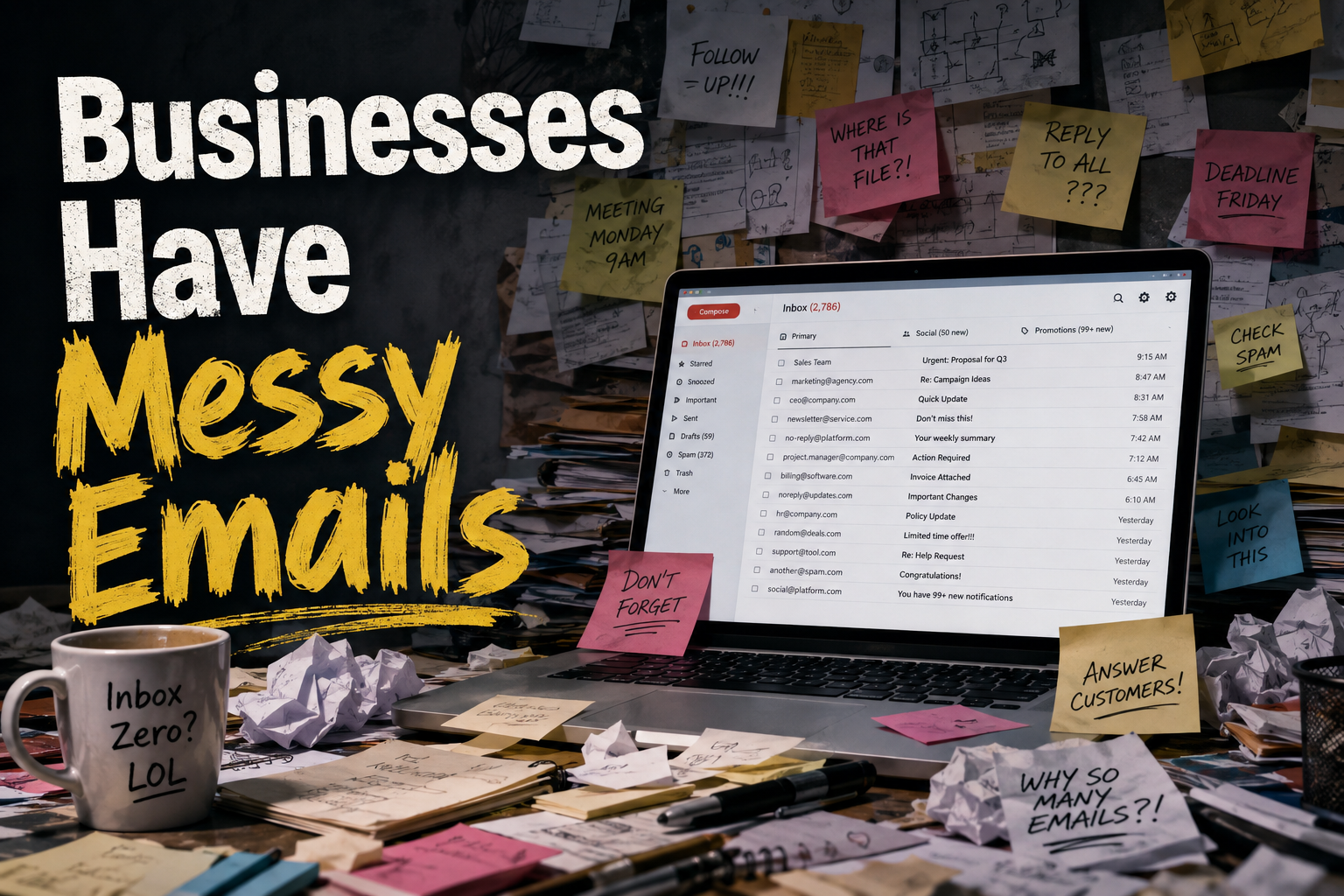
Businesses Have Messy Emails

Years ago, I came across an infographic called Businesses Have Messy Data. It visualized something every growing company eventually discovers: data becomes chaos. Different departments use different tools. Information gets duplicated. Contacts live in spreadsheets, CRMs, inboxes, Slack channels, and random databases nobody remembers creating. Looking at that infographic made me think about emails. Not … Read more

Top 5 Tools for GitHub Notifications in Slack

Slack has given engineering teams many gifts: custom stickers, searchable chaos, and the ability to pretend a thread is not a meeting. Teams exists too, of course, but this article is about Slack, so we can keep morale high. GitHub integrations are one of the best things to happen to Slack since custom stickers. Used … Read more

Using Zmanim-WP Shortcodes for Shabbat

If you’ve been following this blog, you’ll know that I’ve been working on my Zmanim-WP plugin for WordPress for a while now. This blog series is designed to help you dig deeper into the plugin and understand what it does, how it works, and whether it’s right for your needs. In the first 5 parts of this series, I … Read more

118 Blog Posts To Learn About Js

Let’s learn about Js via these 118 free blog posts. They are ordered by HackerNoon reader engagement data. Visit the Learn Repo or LearnRepo.com to find the most read blog posts about any technology. “Not a real programming language” since 1995. 1. A Beginner’s Guide to BFS and DFS in JavaScript Learn BFS and DFS, … Read more

AI Code Review in Regulated Environments: What a Human Expert Still Has to Own

A landmark study of 1,689 Copilot-generated programs found 40% contained vulnerabilities. Every one of those PRs almost certainly had a human’s name on the approval. That’s the part of “human in the loop” nobody likes to examine too closely. A name on a PR isn’t proof that judgment happened. It’s proof someone clicked approve. I’ve … Read more

500 Blog Posts To Learn About Javascript

Let’s learn about Javascript via these 500 free blog posts. They are ordered by HackerNoon reader engagement data. Visit the Learn Repo or LearnRepo.com to find the most read blog posts about any technology. “Not a real programming language” since 1995. 1. How it feels to learn JavaScript in 2016 <em>No </em><a href=”https://hackernoon.com/tagged/javascript” target=”_blank”><em>JavaScript</em></a><em> frameworks … Read more

Prefill/Decode Disaggregation Can Make Tail Latency Worse

Prefill/decode disaggregation has the elegance of a clean architecture diagram. Prompt processing is compute-heavy. Token generation is memory-bandwidth-heavy. Put them on separate GPU pools, scale each phase independently, and stop them from interfering with each other. That logic is sound. Then a burst arrives. Prefill queues grow. Decode GPUs have spare compute but cannot begin … Read more

The HackerNoon Newsletter: Post-Quantum TLS for Cloud APIs and Microservices (8/14/2026)

How are you, hacker? 🪐 What’s happening in tech today, August 14, 2026? The HackerNoon Newsletter brings the HackerNoon homepage straight to your inbox. On this day, Atanasoff Finishes Paper Describing the Atanasoff Berry Computer in 1940, Lunar Obitar 1 began its orbit around the Moon in 1966, Pakistan Independence Day in 1947, and we … Read more

HackerNoon Projects of the Week: Atlarix, Scribe, and Emisary

Hey Hackers! Welcome to HackerNoon Projects of the Week, where we spotlight standout projects from the Proof of Usefulness Hackathon, HackerNoon’s competition designed to measure what actually matters: real utility over hype. This week, we’re pumped to talk about 3 exciting projects that have proven their usefulness: Atlarix, Scribe, and Emisary. The Proof of Usefulness Hackathon … Read more

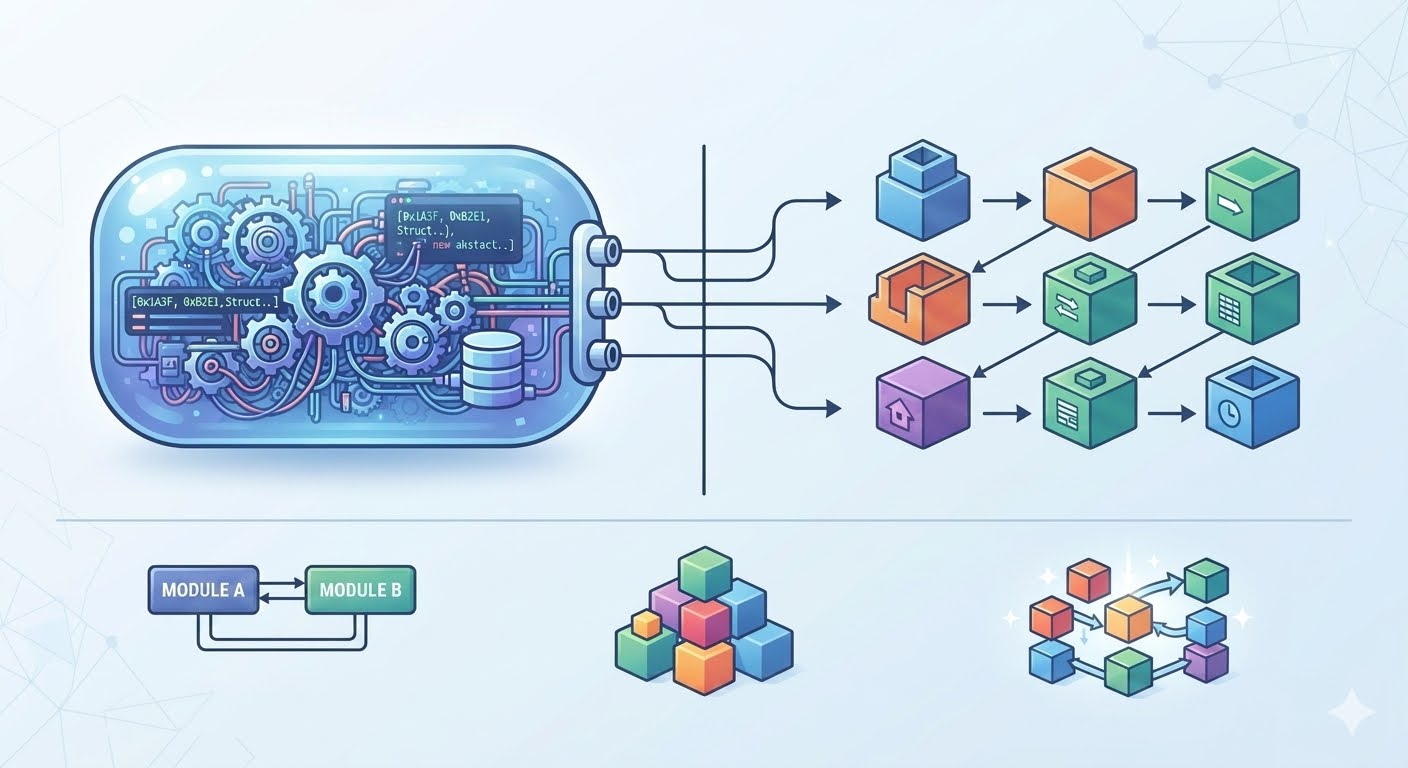
Enhancing Software Design Credibility: Avoiding Clickbait Titles When Discussing Abstract Data Types

Introduction: The Hidden Foundation of Software Beneath the surface of every well-designed software system lies a concept so fundamental, yet so often overlooked, that it shapes the very architecture of code: Abstract Data Types (ADTs). This isn’t just another technical term to memorize—it’s the bedrock that determines whether a system remains modular, scalable, and maintainable … Read more

The Clean Attack Problem: When Nothing Looks Wrong, but Everything Is Compromised

AI agents are being used more in high-pressure situations such as managing email, running code, interacting with financial APIs, and supervising multi-agent pipelines. However, the current taxonomy of adversarial attacks was mostly proposed for classifiers and generative models alone and fails to adequately describe the testbed of an agent with persistent state, multiple tools, and … Read more